Oak Island Secret Revealed: It’s Geology, Not Treasure, Killing Searchers!
Oak Island Secret Revealed: It’s Geology, Not Treasure, Killing Searchers!
For centuries, the allure of Oak Island has driven explorers to financial ruin and death, all in pursuit of a secret supposedly buried by pirates or Templars. This relentless quest, fueled by documentaries and hope, ignores a far more devastating reality. The shocking truth concealed for over 230 years isn’t a booby-trapped vault; it’s the very earth beneath the island—a geological catastrophe waiting to swallow the next dreamer.
Navigate Content
The Deadly Cycle: Why Every Dig Fails at 30 Meters
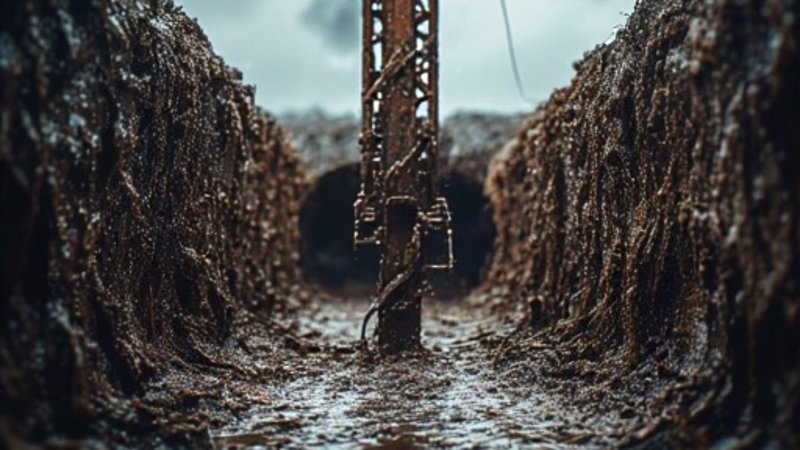
The initial discovery in 1795 pointed to an unnatural sequence: layers of wood, charcoal, and coconut fiber, suggesting deliberate human construction. The enduring mystery centers on the recurring flooding event that occurs precisely when diggers near 30 meters. The popular narrative blames 18th-century engineers who allegedly constructed complex artificial sea channels—the ‘flooding traps.’ But this theory crumbles under geological scrutiny. Why does the pit fill with water every time diggers approach a depth of 30 meters? The simple answer is that they aren’t encountering a man-made valve; they are breaching a natural conduit.
The Geological Deception: Karstification and Natural Voids
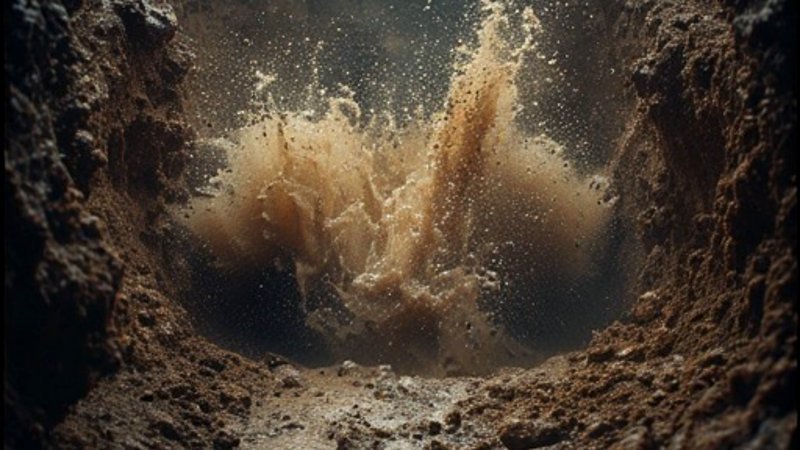
The island sits upon the Windsor Group rock formations, composed primarily of highly soluble limestone, gypsum, and anhydrite. When water interacts with these rocks, it dissolves them, a process known as karstification. This creates vast, subterranean voids, tunnels, and water passages connecting the pit directly to the ocean, often extending hundreds of meters.
- The Myth: Artificial flooding channels built by ingenious 18th-century men.
- The Reality: Natural erosion carving out voids beneath sea level.
- The Consequence: Breaking the thin membrane between the pit and the ocean causes instantaneous flooding.
What appears to be a carefully designed defense system is merely nature’s own physics trap, turning the excavation into a slow-motion sinkhole.
Hubris and Hope: Why Evidence Always Disappears
The ongoing search is less about archaeology and more about psychology—a geological Rorschach test where searchers see what they desire. Every scrap of tangible evidence, like the cryptic inscribed stone found in 1849, vanishes. This disappearance is critical for maintaining the myth. Legends don’t require scientific validation; they only require continued belief to secure further investment.
The financial incentive is clear: If the flooding were proven to be a natural karst phenomenon, the funding would stop. Therefore, credible geological reports detailing the island’s structure atop natural water passages are consistently suppressed or ignored in favor of selling the ‘treasure’ narrative.
Rethinking the Treasure: Logic Versus Obsession
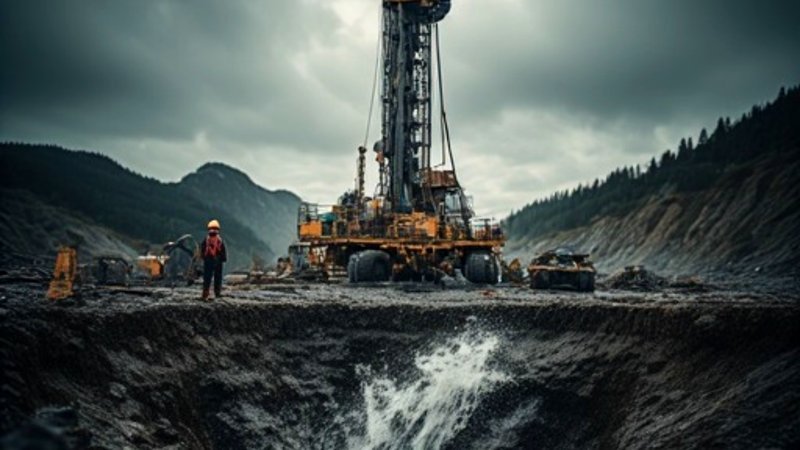
Consider the logic: If a significant treasure existed, would you hide it 50 meters deep on a small, unstable island requiring continuous, complex water engineering to protect? Or would you choose a simpler, more secure location? The extreme complexity observed at Oak Island speaks not of pirate genius, but of millions of years of geological warfare. Any minor finds—scraps of gold or parchment—are easily explained by cross-contamination from two centuries of heavy machinery, dynamite use, and repeated digging, which has shredded the site like an old cloth. Continuing the search is the height of human hubris against overwhelming geological evidence.
Frequently Asked Questions
Generated by AI Content Architect
About The Author