The Octopus: Alien Intelligence with Nine Brains and Self-Rewriting DNA
The Octopus: Alien Intelligence with Nine Brains and Self-Rewriting DNA
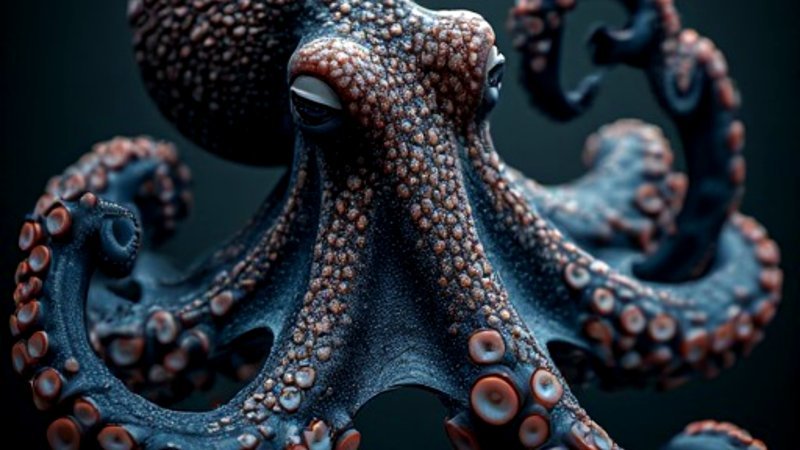
The octopus defies every rule of terrestrial evolution. Possessing three hearts, sky-blue blood, and a nervous system unlike anything else on Earth, this creature forces us to redefine intelligence itself. Separated from our evolutionary path over 500 million years ago, the octopus represents a chillingly advanced, independent consciousness thriving in the deep.
Navigate Content
A Decentralized Operating System: The Nine-Brain Enigma
The concept of a centralized brain is shattered when examining the octopus. With around 500 million neurons—comparable to a dog—the true marvel is their distribution. Two-thirds of these neurons reside in its eight arms. This means:
- Each arm possesses a ‘rudimentary mind.’
- Arms can taste, touch, and make independent decisions.
- A severed arm can continue complex hunting behavior for hours.
This structure challenges the very definition of a single organism versus multiple coordinated entities.

Master of Visual Deception: The Living Algorithm
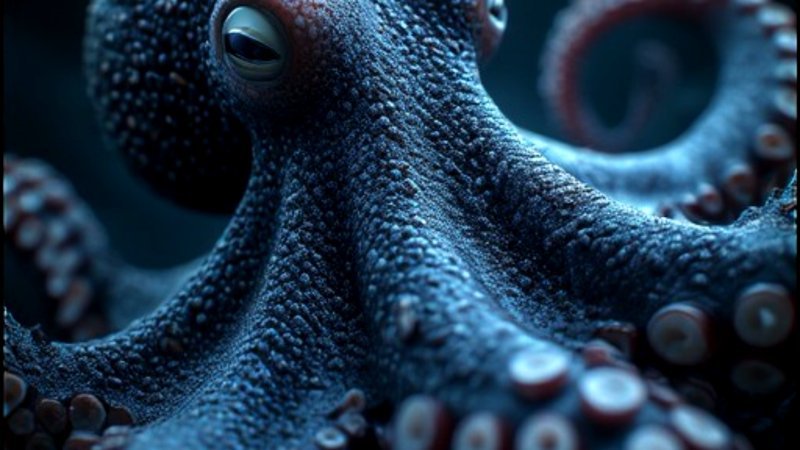
The octopus’s camouflage capabilities surpass any human-engineered system. This is not simple color matching; it is real-time, complex visual processing. The skin contains millions of chromatophores, directly linked to the nervous system. The octopus doesn’t just match the hue of the surroundings; it instantly replicates:
- Precise color variations.
- Surface texture, including bumps and ridges.
- Shadow definition, creating perfect, three-dimensional optical illusions.
This makes the creature a master architect and stealth expert encased in a boneless form.
Abstract Thought and Self-Bioengineering
Beyond mimicry, octopuses demonstrate abstract intelligence through documented tool use, such as carrying coconut shells for armor—a clear sign of planning for future threats. However, their most radical feature challenges biology itself. While many organisms rely on slow genetic mutation, octopuses possess the unique ability to edit their own RNA. They can rewrite their biological instructions immediately in response to environmental shifts like temperature changes. This ‘self-bioengineering’ suggests they hold the source code to their own bodies, a feat rarely seen in the animal kingdom. For more fascinating examples of evolutionary divergence, see our piece on Whales in the Desert.
The Tragic Constraint on Octopus Dominance
If the octopus is so brilliant, why hasn’t it built a civilization or dominated the oceans? The answer lies in a heartbreaking biological constraint: short lifespan. Most species live only one to five years. Furthermore, they are solitary creatures that do not pass knowledge intergenerationally. The mother dies after her eggs hatch, and the father dies shortly after mating. This cycle ensures that every generation starts from scratch, preventing the accumulation of cultural or technological knowledge. This tragic necessity fuels their explosive individual intelligence.
Frequently Asked Questions
Generated by AI Content Architect
About The Author