The Ma’rib Dam: Sabaean Engineering Genius and the Miracle of Ancient Arabia Felix
The Ma’rib Dam: Sabaean Engineering Genius and the Miracle of Ancient Arabia Felix
The history of the Sabaean Kingdom hinges on one colossal feat of engineering: the Dam of Marib. Set against the brutal landscape of Yemen, where life swung wildly between scorching drought and annihilating floods, this structure represented an existential victory. It was here, millennia ago, that a people mastered hydraulics to create ‘Arabia Felix’—a testament to human ingenuity confronting the fury of nature.
Navigate Content
The Existential Vice: Drought and Deluge
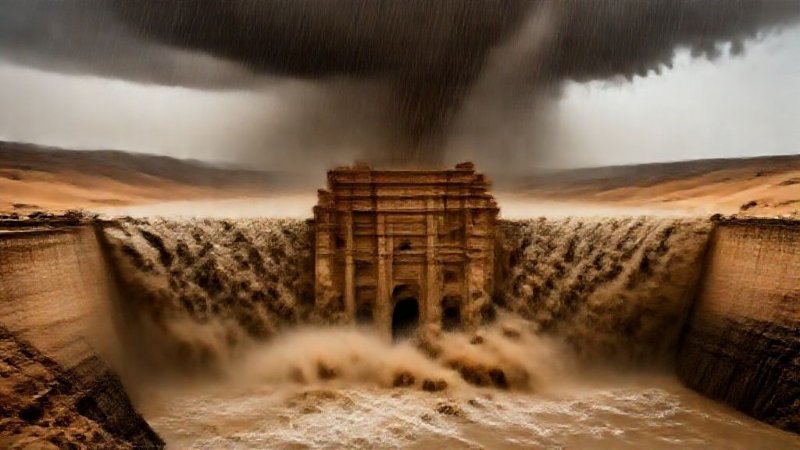
The Sabaean civilization was trapped between two extremes. Months of relentless drought reduced the land to ash, promising slow starvation. This was immediately followed by torrential, overwhelming floods that cascaded from the highlands, powerful enough to sweep away years of labor and life. The choice seemed simple: drown or wither. This impossible environmental pressure, however, forced the Sabaeans to invent solutions unseen elsewhere in the ancient world, turning their greatest threat—the flood—into their most vital resource.
The Visionary Engineer and the Stone Colossus
The response to this challenge was not flight, but mastery. A Sabaean engineer conceived a structure of unprecedented scale across the Wadi Adhnah. This was not merely a barrier but a calculated defense against nature’s wrath. Key elements of this marvel included:
- Massive Scale: The dam spanned over six hundred meters, rising fifteen meters high, built from meticulously carved stone hauled from the Jabal Al-Balaq mountains.
- Structural Integrity: They employed the “Buttress System,” a stepped design engineered to absorb the massive shockwaves of torrents.
- Advanced Binding: Historians marvel at the technique of using molten lead to fuse the stone blocks, creating a singular, impregnable unit resistant to time and seismic activity.
The Vascular Network: Controlling the Water Genie
The true genius of Marib lay not just in containment, but in control and distribution. Behind the formidable wall lay an irrigation network rivaling the complexity of the human body’s vascular system. The Sabaeans ensured no drop was wasted. They achieved this through:
- The Two Great Outlets: The Southern and Northern Outlets acted as sophisticated stone gateways, regulating the release of water into the main canals.
- Precision Gravity Flow: An extensive network of secondary channels stretched for thousands of meters, relying on precise gradient calculations to deliver water to the furthest reaches of the desert.
This infrastructure transformed scorching sands into the legendary “Two Gardens” of Quranic fame, rich with palms, vines, and lucrative frankincense trade.
Sustainability and the Echo of Genius
The Ma’rib Dam system embodied environmental sustainability centuries before the term existed. The Sabaeans established a clear social equity model for water allocation based on land area and crop needs. This remarkable achievement raises profound questions about lost ancient knowledge. While other great civilizations built near stable rivers, the Sabaeans chose to conquer chaos. Their success remains a profound mystery, similar to other engineering puzzles like the Delhi Iron Pillar’s rust-free longevity or the physics-defying construction of Nan Madol, all speaking to a sophisticated understanding of science that we are still trying to fully decode.
Frequently Asked Questions
Generated by AI Content Architect
About The Author