Bioluminescent Caves: Natural Wonders Glowing Without Electricity

0
image_1-175


Bioluminescent Caves: Natural Wonders Glowing Without Electricity
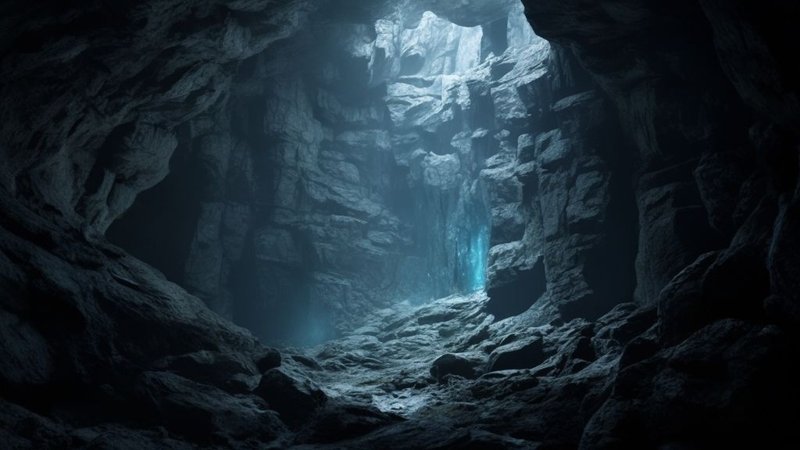
Imagine descending into a dark cavern, only for the gloom to gradually recede, replaced by a soft luminescence emanating directly from the rock formations. No lamps, no torches—only radiance flowing from the Earth’s heart. Is this sorcery? Or science defying comprehension?

You have lived your life believing that light requires an external source: the sun, fire, electricity. This is our established understanding. But what if I told you that concealed realms exist beneath our feet, where walls glow, ceilings sparkle, and illumination originates from the very core of perpetual silence? This is not folklore, my friend, but a latent reality awaiting discovery—the truth of caves that are intrinsically self-illuminated.


The Visual Spectacle of Perpetual Light

Allow me to guide you on an expedition into a world your eyes have never witnessed. A realm of arcane beauty where darkness and light converge in unimaginable ways. Picture “Depths Light Cavern,” a cave system located in a remote region untouched by human hands for centuries. Initially, everything is pitch black. The sound of dripping water echoes off wet stone. Your steps are the sole reverberation in the oppressive silence. You feel an overwhelming chill and a clinging humidity. Then, slowly, your eyes begin to adjust to the void. Suddenly, you perceive the first flicker. A tiny spot of light glowing on the rock face. Then another, and a third. The points multiply, intertwine, forming a shimmering lattice.

These are not optical illusions. This is genuine, living light. The walls slowly radiate illumination. The colors observed in this subterranean galaxy are spectacular:

  • Faint turquoise blue
  • Brilliant emerald green
  • Hints of golden yellow

Every corner, every fissure, every geological formation transforms into a luminous canvas. This cave system, potentially spanning tens of kilometers, is a masterwork of natural architecture.
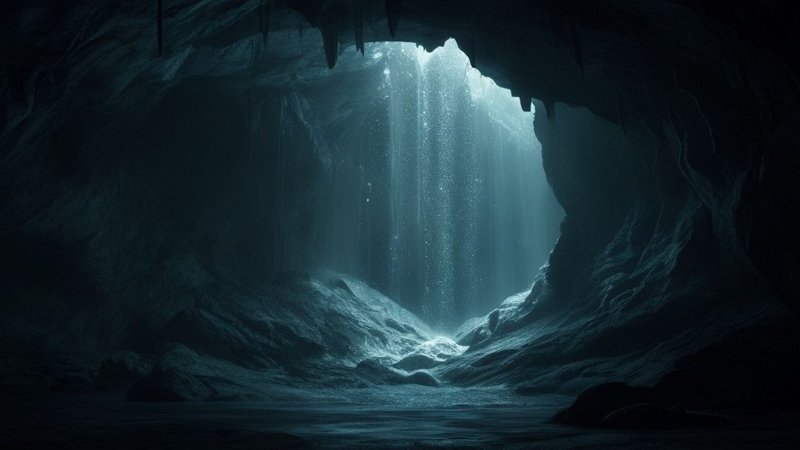
The Visual Spectacle of Perpetual Light


The Secret Engine: Bioluminescent Microbes

How can this be? What is the secret behind this autonomous glow? The answer lies within the astonishing world of microbes. We are referring to bioluminescent bacteria—microscopic organisms capable of producing light as part of their metabolic processes. These are not merely isolated entities; they are part of a complex, living biological fabric. They form massive colonies, covering vast expanses of the cave walls and ceilings. Consider this: millions upon millions of these tiny organisms, working in concert, each releasing its own faint photon, coalescing into a collective radiance that illuminates the entire cavern. Learn more about the scale of microscopic life here: The Invisible Rulers: Astonishing Facts About Earth’s Microscopic World.

However, the phenomenon is not limited to bacteria alone. Certain species of luminous fungi also thrive, growing on decaying wood or organic matter within the cave. Imagine entering a chamber where fungi bloom on fallen logs, emitting a spectral glow that casts long, eerie shadows across the floor. Furthermore, specific insects, such as glow-worm larvae, utilize the light to attract their prey, adding another layer of biological interaction to this luminous system.


A Closed Ecosystem: Sustaining Perpetual Light

What truly renders this discovery astonishing is understanding how this system sustains itself without external intervention. These caverns are completely isolated from the outside world. No sunlight penetrates, and there are no artificial power sources. How, then, do these organisms continuously generate light? The secret lies in a fully self-reliant, closed ecosystem. The bacteria and fungi subsist on organic matter that slowly trickles down from the surface through minute fissures, or is generated by the decomposition of other organisms within the cave itself. It is a complete life cycle:

  • Organisms die and decompose.
  • The decaying matter provides sustenance for others that produce light.
  • The light attracts prey for yet other species (like glow-worms), ensuring the continuation of the food web.

This intricate biological harmony allows the cavern to glow eternally, untouched by human energy grids.
A Closed Ecosystem: Sustaining Perpetual Light


Ramifications and the Bio-Technology Future

The psychological effect of this light on explorers is profound. It evokes a feeling of simultaneous wonder and awe. You are in a place arguably untouched by humans, one that challenges our conventional understanding of the world. You feel intensely small before the majesty of nature. Concurrently, you experience a deep connection to the Earth, to life that finds a way to flourish even under the harshest conditions. This luminescence is not just a scientific phenomenon; it is a spiritual experience.

What are the ramifications of such a discovery? Imagine fully understanding the mechanisms utilized by these microorganisms. We might be able to harness this bio-technology to create sustainable, environmentally friendly lighting sources. Potential future applications include:

  • Creating self-illuminating interior spaces.
  • Designing cities powered entirely by bioluminescent energy.
  • Developing sustainable, zero-energy street lighting based on microbial activity.

This is not distant science fiction, but a practical possibility awaiting full scientific understanding.


Frequently Asked Questions

What is the primary cause of the natural light in these caves?
The light is caused primarily by bioluminescent organisms, mainly specialized bacteria and certain species of luminous fungi, which produce light as a byproduct of their metabolic processes. Glow-worm larvae also contribute to the spectacle.
How do these organisms survive without sunlight or external energy?
They survive within a closed, self-reliant ecosystem. They feed on organic matter that slowly seeps down from the surface through fissures, or on decaying matter from other organisms within the cave itself. They do not require photosynthesis.
What colors of light are typically observed in bioluminescent caves?
The light commonly ranges from faint turquoise blue and brilliant emerald green, with some areas exhibiting hints of golden yellow, depending on the specific mix of bacteria and fungi present.
Can bioluminescence be used as a sustainable energy source?
Scientists believe that by fully understanding the mechanism used by these microorganisms, we could potentially harness this bio-technology to create sustainable, environmentally friendly lighting sources that require minimal energy input.

Generated by AI Content Architect

About The Author

Leave a Reply

Your email address will not be published. Required fields are marked *