The Mandela Effect & Time Travel: Are We Living in an Illusion?

0
image_1-168


The Mandela Effect & Time Travel: Are We Living in an Illusion?
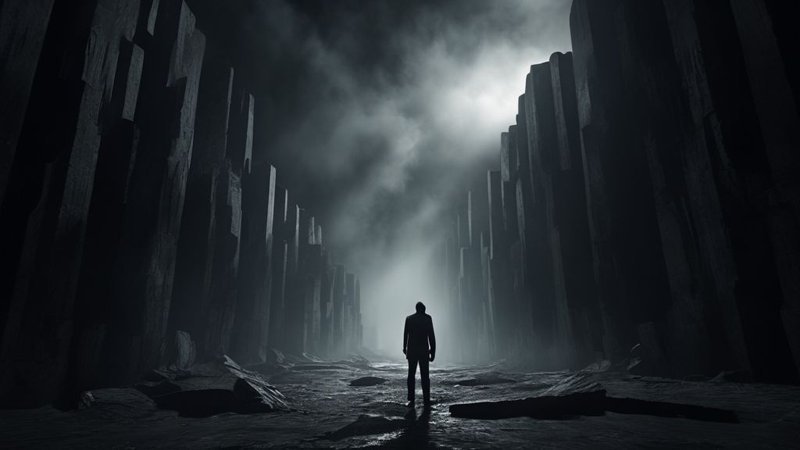
Have you ever experienced a sense of déjà vu, feeling as though you have lived a specific moment before? Have you encountered a situation and become certain that it occurred in a completely different way? These are not mere illusions; they may be unsettling evidence that time does not proceed in the straight line we generally assume.

We exist in a world where we believe in its consistency, but what if this stability is merely a grand illusion? What if there are fissures in the very fabric of reality, or if our collective memory is subject to continuous manipulation? This profound questioning compels us to explore phenomena that defy everything we know about time and existence. Consider, esteemed listener, how you interpret those moments when strangeness seeps into your everyday life.


The Mandela Effect: Cracks in Shared Reality

Let us begin with the gaps in reality manifested in what is known as the “Mandela Effect.” This effect is not simply an isolated error in individual memory, but a collective phenomenon where a vast number of people recall facts or events that never occurred, or that happened in a manner entirely different from their recollection. It directly challenges our belief in a shared reality. Imagine vividly recalling the precise details of a historical event, trusting your memory implicitly, only to discover that everyone around you remembers the same event in a completely contradictory way. This feeling of disorientation—as if a part of your world has changed without your consent—raises deep concern. The idea that our collective memory is subject to continuous manipulation is a truly unsettling one.

The Mandela Effect: Cracks in Shared Reality


Iconic Glitches in Collective Memory

A striking example of the Mandela Effect is the widespread memory that Nelson Mandela died in prison during the 1980s, with some even recalling watching his funeral on television. Yet, the historical truth is that he was released and lived until 2013. How can countless individuals share the same erroneous memory? Is it merely a widespread collective misremembering, or is something more fundamental occurring? These questions linger unanswered.

Another perplexing example is the famous line, “Luke, I am your father,” from the Star Wars film. Millions recall it verbatim. However, the original line is, “No, I am your father.” This minor alteration surprises some, as if something in our collective consciousness has been rephrased. Even the iconic logo of the “Fruit of the Loom” apparel company is remembered by many as featuring a cornucopia, yet this element has never appeared in the actual logo. These examples are not mere mistakes; they are cracks in the wall of our agreed-upon reality. How can our minds fabricate these precise, shared details of events that did not happen? Could this be the result of imperceptible jumps between parallel universes, where minor yet crucial details differ? This possibility opens the door to a new and unsettling perspective on the nature of reality itself, suggesting we might be living within a simulation whose core data can be tampered with. This places us in a perpetual state of doubt regarding everything we see, hear, and feel. Could this be a form of global deception or a simulation at play?


Enigmas from History: Travelers Out of Time?

The anomaly does not end with the Mandela Effect. History itself presents us with curious accounts of individuals who appear to arrive from another era. These stories, whether factual or purely legendary, fuel our curiosity and ignite suspicion. Have you heard of the mysterious man from “Taured”? In 1954, a man arrived at Tokyo Airport carrying a passport from a nation called “Taured,” which did not exist on any map. He spoke several languages but could not locate his country, which he insisted was real. After hours of interrogation, he was placed under guard in a hotel room. The next morning, the man had vanished completely, leaving behind his strange documents, as if the Earth had swallowed him. This incident is astonishing: how can a man appear from nowhere and disappear in the same manner? Was he a time traveler who lost his way, or did he originate from another dimension unknown to us? This unexplained disappearance echoes other great mysteries.

There is also the “Modern Man” who appeared in a photograph dated 1941. Taken in Canada, the picture shows a crowd dressed in period attire. Yet, in the middle of the frame stands a man wearing remarkably modern sunglasses, a printed shirt, and carrying a camera whose style did not exist at that time. These details prompt serious questions: Was this man a visitor from the future, misplaced in time and space? Or is it merely an odd coincidence and a misinterpretation of common elements from the 1940s? These visual anomalies, which challenge the established historical narrative, cause us to question the limits of our understanding of time. They make one wonder: how many such phenomena have passed us by without us realizing their strangeness? And how much hidden evidence, perhaps even related to lost technology or knowledge, lies waiting to be uncovered within the folds of history?

Enigmas from History: Travelers Out of Time?


The Physics of Time Travel and Parallel Dimensions

Moving beyond anecdotal accounts and legends, modern physics offers astonishing theories that might explain the possibility of time travel and the intersection of dimensions. This is not solely the domain of science fiction, but rather logical conclusions derived from some of the deepest physical equations. Einstein, with his profound genius, demonstrated through his theory of General Relativity that time is not absolute but relative, influenced by gravity and velocity. Imagine an old pocket watch dissolving amidst a hazy temporal vortex resembling a black hole. This mental image embodies the idea that time is not a fixed flow, but a flexible fabric that can be distorted. Time dilation, for instance, is a scientifically proven phenomenon; the closer you approach the speed of light or are subject to immense gravity, the slower time passes for you. This fact alone opens doors to concepts unimaginable a century ago.

What is truly intriguing, however, is the concept of “wormholes.” These are theoretical tunnels in spacetime that could connect two distant points in space and time. Think of them as shortcuts across the universe—not just spatial shortcuts, but temporal ones as well. If a wormhole could ever be stabilized, it might allow for instantaneous travel across vast cosmic distances, potentially even facilitating faster-than-light travel and interstellar mysteries.


Frequently Asked Questions

What is the Mandela Effect?
The Mandela Effect is a phenomenon where a large number of people collectively remember facts or events differently from how they actually occurred, challenging the concept of a shared reality.
What are some common examples of the Mandela Effect?
Famous examples include the widespread belief that Nelson Mandela died in prison in the 1980s, the misremembered Star Wars line “Luke, I am your father,” and the incorrect recall of a cornucopia in the Fruit of the Loom logo.
Are there historical accounts of potential time travelers?
Yes, anecdotal accounts include the “Man from Taured” who appeared in Tokyo in 1954 with a passport from a non-existent country and vanished, and a “Modern Man” allegedly seen in a 1941 photograph with anachronistic attire and camera.
How does modern physics relate to the possibility of time travel?
Einstein’s theory of General Relativity shows that time is relative and influenced by gravity and velocity (time dilation). Theoretical concepts like wormholes propose shortcuts through spacetime that could potentially connect distant points in both space and time.
Could the Mandela Effect suggest we live in a simulation or parallel universes?
The collective misremembering characteristic of the Mandela Effect leads some to speculate about imperceptible jumps between parallel universes where details differ, or that our reality might be a simulation whose core data can be manipulated.

Generated by AI Content Architect

About The Author

Leave a Reply

Your email address will not be published. Required fields are marked *