Rabies: How The Most Dangerous Virus Hijacks Your Brain & Turns You Into a Biological Weapon

0
image_1-165


Rabies: How The Most Dangerous Virus Hijacks Your Brain & Turns You Into a Biological Weapon

Imagine a microscopic organism capable of completely hijacking your will. It doesn’t merely kill you; it transforms you into a living vector to disseminate its toxins into the bodies of others. We are discussing the most terrifying virus in human history.


The Invisible Invasion: Rabies’ Silent Ascent
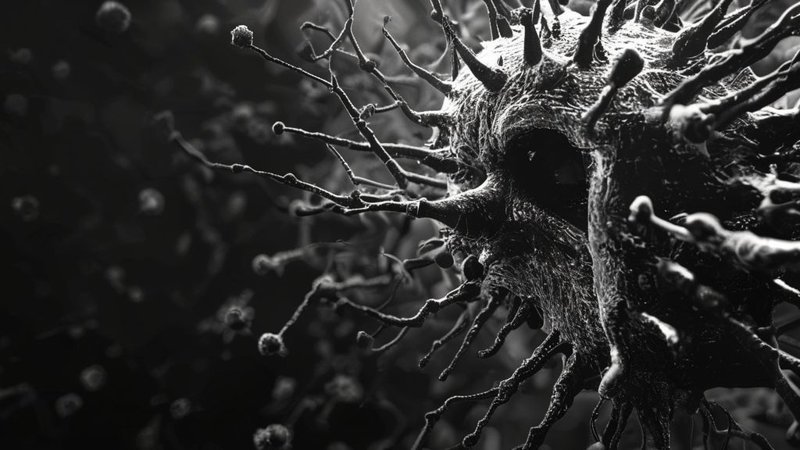
You are now confronting an enemy invisible to the naked eye. An adversary crafted by nature to be a highly precise biological killing machine. The story begins with a single moment of vulnerability: a bite from a rabid animal pierces your skin. At that precise instant, an army of bullet-shaped viruses floods in. These are not merely random viruses; they are organisms programmed to reach your body’s command center. Your central nervous system is the ultimate target. Do not be surprised by the quiet beginning. The virus does not assault your bloodstream like other diseases. It prefers to travel in the shadows, infiltrating your peripheral nerves and hiding within them. It embarks on a slow, deliberate ascent, moving at a rate of a few millimeters each day, creeping towards your spinal cord and then your brain. You feel nothing at this stage. Weeks or even months may pass as you live your life normally. But inside, a train of death is heading toward its final destination.

The Invisible Invasion: Rabies' Silent Ascent


The Brain Under Siege: Manipulation and Aggression

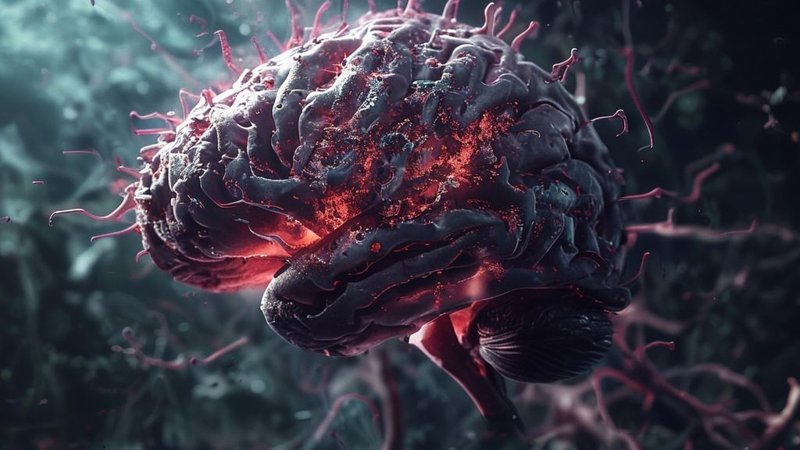
When the virus reaches the brain, horrifying transformations begin. This invader assaults nerve cells and replicates wildly. It does not indiscriminately destroy the brain; instead, it targets specific regions that control your behavior and emotions. Its attack focuses on the limbic system, the part responsible for feelings of fear, anger, and aggression. Here, the virus begins to alter your true identity. You experience inexplicable anxiety. Sudden irritability takes hold in response to the slightest stimuli around you. Light you once loved becomes irritating. Ordinary sounds seem like screams in your ears. You lose control over your brain chemistry. The virus *wants* you to become aggressive. It *needs* you to bite someone for the infection to spread. These are not merely disease symptoms; they are a clever survival strategy employed by the virus to ensure its continuation.


Hydrophobia and the Viral Agenda

Consider now the phenomenon of hydrophobia, one of the most perplexing and terrifying medical mysteries. Why does a person infected with rabies fear a simple sip of water? The scientific explanation lies in the sadism of this virus. The virus accumulates in immense concentrations in your salivary glands. It aims to keep your saliva heavily laden with infectious agents. If you drink water, you would swallow this saliva and dilute the virus’s concentration. Therefore, the virus causes dysfunction in the nerves that control the swallowing process. As soon as water approaches your mouth, or even at the mere sound of it, violent and painful muscle spasms occur in your throat. You feel suffocated merely at the thought of swallowing. Your mind now associates water with the pain of death. This is not a psychological fear but a forced physiological reaction imposed by the virus on your nervous system. You die of thirst beside a spring of water because your hijacked brain refuses to allow you to quench it.

Hydrophobia and the Viral Agenda


The Biological Weapon: Neurobiology & Symptoms

Let us delve deeper into the neurobiology of this threat. The virus manipulates neurotransmitters in your brain, reducing the production of neuro-calming substances and increasing the flow of anxiety and stress-inducing compounds. You enter a state of perpetual alert, transforming from a rational human being into a creature driven solely by primal instincts. Physicians observe this condition with great sorrow. The patient is conscious at times and disoriented at others. They experience terrifying visual and auditory hallucinations, perceiving the world as a battlefield. The salivary glands produce copious amounts of saliva, which emerges from the mouth as white foam. This foam is nothing but a reservoir for thousands of viral copies, ready to transmit to a new victim. Here, the virus has successfully completed its mission: it has transformed the host into a mobile biological weapon.


The Battle for Survival: History, Vaccine & Evasion

The history of preventive medicine has waged long battles against this virus. Before the discovery of the vaccine, exposure to a bite from a rabid dog meant a certain death sentence. The fatality rate after the onset of symptoms reaches 99.9% – the highest among all viruses. In 1885, the scientist Louis Pasteur conducted an experiment that shifted the balance of power. He injected a bitten child with an experimental vaccine and saved his life. That moment marked a new dawn in medical history. However, despite the existence of the vaccine today, the virus still claims tens of thousands of lives annually worldwide. The danger is concentrated in areas lacking immediate healthcare. The virus always gambles on time: if you do not receive the vaccine before it reaches your brain, your chances of survival vanish completely.

Consider the biological complexity of this process. The virus cleverly disables the immune system. It does not cause a significant stir initially, completely evading white blood cells by hiding within nerve cells. Nerves are protected areas in your body, difficult for the immune system to access and destroy. The virus uses your body’s structure against you, employing the neural communication network – which is supposed to protect you – as the bridge upon which death travels. This biological evolution took millions of years to achieve such precision. It is not merely a disease but a complete takeover. When we observe cases of infection in nature, we find that the virus strangely alters the behavior of wild animals. A fox that once feared humans suddenly becomes bold and approaches populated areas. This is not bravery; it is the madness induced by the virus, driving it to seek new victims. Recent research endeavors to understand how the virus penetrates the blood-brain barrier. This barrier is the brain’s faithful guardian, preventing the entry of toxins. However, the rabies virus possesses a secret key; it deceives the barrier…
The Battle for Survival: History, Vaccine & Evasion


Frequently Asked Questions

What makes rabies the ‘most dangerous virus’ in history?
Rabies is considered one of the most dangerous viruses due to its near 100% fatality rate once symptoms appear. It also uniquely hijacks the host’s brain and behavior, turning them into a ‘biological weapon’ to spread the infection through aggressive acts like biting.
How does the rabies virus travel through the body?
After a bite, the bullet-shaped rabies virus does not immediately enter the bloodstream. Instead, it infiltrates peripheral nerves and slowly ascends towards the spinal cord and then the brain, moving a few millimeters a day. This silent journey can take weeks or even months before symptoms begin.
Why do rabies victims experience hydrophobia (fear of water)?
Hydrophobia is a survival strategy of the virus. The virus concentrates in salivary glands to ensure high infectivity. If a person drinks water, they would swallow and dilute this virus-laden saliva. To prevent this, the virus causes violent and painful muscle spasms in the throat upon the sight or sound of water, making swallowing impossible and driving the host to fear water itself.
How does rabies manipulate the brain to change behavior?
The rabies virus targets specific regions of the brain, particularly the limbic system, which controls emotions like fear, anger, and aggression. It manipulates neurotransmitters, increasing anxiety-inducing compounds. This neurological manipulation leads to increased irritability, aggression, and hallucinations, compelling the host to bite and spread the virus.
Is there a cure for rabies, and how effective is the vaccine?
Once rabies symptoms appear, the disease is almost always fatal (99.9% fatality rate). There is no cure for symptomatic rabies. However, the rabies vaccine, discovered by Louis Pasteur in 1885, is highly effective as a post-exposure prophylaxis. If administered before the virus reaches the brain, it can prevent the disease, making prompt medical attention crucial after exposure.

Generated by AI Content Architect

About The Author

Leave a Reply

Your email address will not be published. Required fields are marked *