Shadow Emperors: Unveiling History’s Secret Rulers & Hidden Powers
Shadow Emperors: Unveiling History’s Secret Rulers & Hidden Powers
Have you ever wondered about the hand that pulls the strings when monarchs dance on the grand stage? The history you study in books is merely a thin veneer, beneath which true engines operate in absolute silence. You live in a world designed by emperors who never wore crowns and whose statues were never sculpted in public squares.
Imagine if everything you know about power is an illusion. True power doesn’t shout or flaunt the glitter of gold. True power whispers in dark corridors and writes the destinies of nations with an ink visible only to a select few. You believe armies decide wars. But the truth is, the word spoken behind closed doors is what moves those armies. This is the world of shadow emperors: those who ruled empires from behind the curtain, leaving the official monarchs with the burden of applause and ornamentation.
Navigate Content
The Master of Alamut: Hassan-i Sabbah and the Empire of Daggers
Let us journey with our minds to the desolate peaks of the Alborz Mountains, where Alamut Castle rises like a blade piercing the sky. Hassan-i Sabbah did not need a jewel-encrusted throne to rule the East. He understood that controlling minds was more potent than controlling fortresses. Imagine the heavy scent of incense filling the castle’s narrow chambers. Feel the cold seeping through the cracks of the deaf stone. Sabbah built an empire of fear and absolute loyalty. He had no regular army with thousands of soldiers; he had daggers moving in the dark. When a vizier fell in the heart of Baghdad or a commander was assassinated in his fortified camp, the whole world trembled. These were not mere murders; they were encrypted political messages. His followers believed they held the keys to paradise. This type of governance transcends geographical boundaries; it resides in the very marrow of bones. Do you feel a chill as you realize that a single man in an isolated castle controlled the fate of sultans who owned half the world? This is the first model of a shadow empire: an empire that does not recognize borders drawn on maps but only the reach of its daggers.
The Praetorian Guard: Rome’s Throne Auctioneers
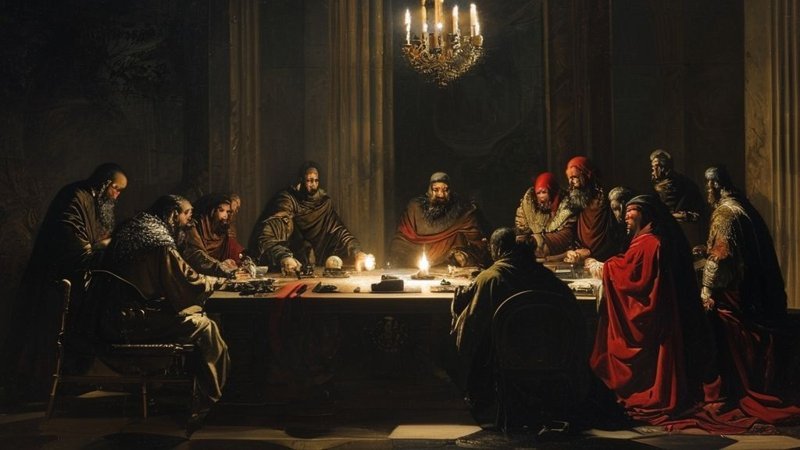
Now, let us move to the heart of mighty Rome, the city that ruled the world with iron and fire. You read about emperors like Augustus, Trajan, and Nero. But behind these men stood the Praetorian Guard. These men were not just personal bodyguards; they were the true owners of the throne. Feel the cold touch of their armor and the heavy thud of their steps on white marble. The Praetorian Guard realized early on that the emperor was merely a facade that could be replaced. In 193 AD, something unimaginable occurred. After the emperor’s assassination, the Guardsmen stood on the walls of their camp and announced a public auction. Yes, they offered the Roman Empire for sale to the highest bidder. Envision the scene clearly: the most powerful state in history being sold like an old piece of furniture. Didius Julianus paid enormous sums of gold to buy the right to wear the imperial purple. But he did not realize that whoever buys power with money loses it by the sword in an instant. The true leaders of the Guard pulled the strings from behind. They chose who lived and who died. They reaped the rewards and enjoyed privileges without anyone daring to hold them accountable. You see the emperor on your coin, but these men were the ones who decided the coin’s value and who owned it.
China’s Eunuchs: The Silent Architects of the Forbidden City
And in the farthest East, within the walls of China’s Forbidden City, we find another type of shadow emperor: the eunuchs. These men, stripped of everything to become loyal servants, transformed into the most dangerous political class in human history. Imagine thousands of interconnected passages in the imperial palace. Listen to the rustle of their silk garments as they move silently like ghosts. The emperor was treated as a god, and this is precisely what made him a prisoner. The eunuchs were his only window to the outside world. They decided which reports reached him and which delegations he met. They built a paper empire within the palace. Bureaucracy was their lethal weapon. With a single stroke of a pen, they could annihilate noble families or elevate commoners. They controlled the economy, the army, and foreign policy. They had no sons to inherit, so their sole loyalty was to their secret network and absolute power. Do you now realize that the grandeur you see in images of Chinese emperors was merely a mask concealing a complex system of endless conspiracies and whispers?
Ivan the Terrible’s Oprichnina: The Black Riders of Terror
And we cannot speak of the shadow without mentioning Tsarist Russia during the reign of Ivan the Terrible. This Tsar created an army of shadows called the Oprichnina. These men were not soldiers in the traditional sense. They wore entirely black clothes and rode black horses. They carried severed dog heads on their saddles as a symbol of their loyalty, which devoured opponents. Imagine the horror of the sight as they stormed villages in the dead of night under heavy snow. Feel the biting cold and the screams of the victims. These men formed a parallel state. They had their own law and their own lands. They shattered the influence of the nobility and reshaped Russian society with blood and fire. Ivan the Terrible knew that official power was weak against the personal ambitions of the nobles, so he created this terrifying shadow to rule through. These men were his eyes that saw everything and his hand that struck down anyone who dared to object. The official empire was crumbling under the weight of wars, but the empire of the shadow grew in strength and savagery.
The Medici: Bankers Who Bought Empires
During the Renaissance, power took on a new and more intelligent form. The Medici family in Florence were not kings and initially wore no crowns. They were bankers. But with gold and debts, they managed to control the Papacy and the thrones of Europe entirely. Inhale the scent of old papers and coins in their dark offices. Power no longer resided in the length of the sword, but in the depth of ledgers. When a king owed vast sums to a banker, the king became merely an employee. The Medici ruled through art an
Frequently Asked Questions
Generated by AI Content Architect
About The Author