Göbekli Tepe: The Enigma That Rewrote Human History & Astonished Scientists
Imagine standing on the precipice of the unknown, where all the truths learned from history books crumble before your eyes. Imagine a colossal structure, resilient for twelve millennia, defying logic and shaking the foundations of modern science with every passing moment. You are no longer merely an observer; you are a time traveler to the zero point of human civilization, to the enigmatic site of Göbekli Tepe in what is now southeastern Turkey.
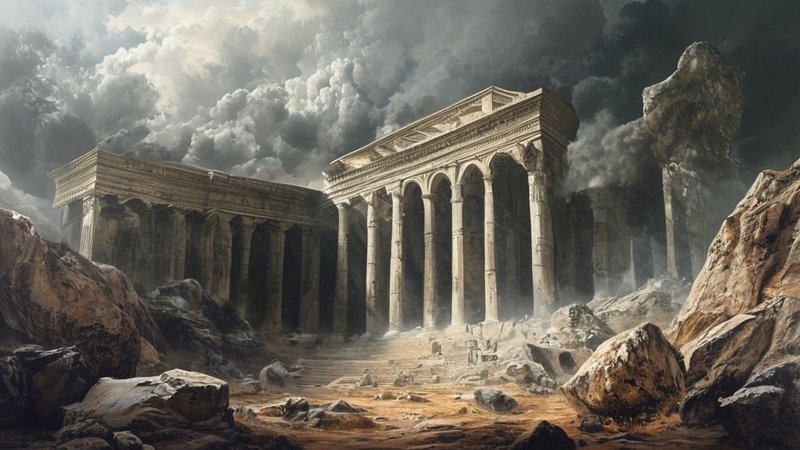
Our story begins in 1994, when German archaeologist Klaus Schmidt decided to explore a peculiar hill known as Potbelly Hill. It was not merely a natural elevation; beneath its soil lay a secret that would forever change our perception of ourselves. When Schmidt set foot there, the prevailing narrative held that humans of that era were primitive hunter-gatherers, living in small groups, with no control over their destiny beyond the daily search for sustenance. But what Schmidt unearthed beneath that soil was a resounding defiance of these theories. He discovered massive T-shaped stone pillars, each weighing up to twenty tons and towering six meters high.
Look closely at those pillars. Feel the rough texture of the limestone beneath your fingertips. How could people who had not yet invented writing, discovered the wheel, or domesticated animals, carve these colossal rock masses? Not only that, but how did they transport them from nearby quarries and arrange them in precise geometric circles? You are now contemplating a feat that demands
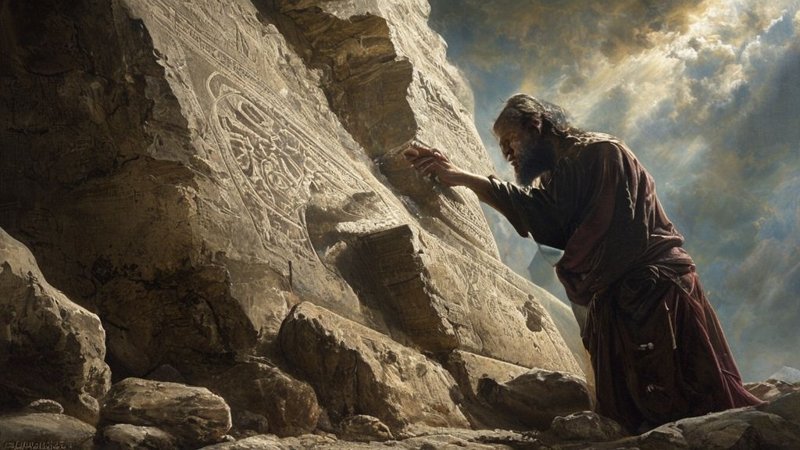
At Göbekli Tepe, the stones speak to you in a language of symbols. On these pillars, you will see elaborate relief carvings of creatures that inspire awe. You will see roaring lions, coiled snakes, venomous scorpions, and birds of prey such as eagles. These are not random drawings; they are a sacred language. The precision in carving the animals’ muscles and intricate bodily details makes you feel as if they might spring to life at any moment to pounce. This artistic prowess points to the existence of a class of specialized artisans—individuals who dedicated their lives to art and symbolism, not merely to the search for food.
The Great Reversal: Religion Before Agriculture
The question that will haunt your thoughts is: Why? Why did these people exert such immense effort to construct these temples at a time when mere survival was the greatest challenge? Here lies the greatest revelation that revolutionized archaeological understanding. For centuries, scientists believed that agriculture led to settlement, and settlement, in turn, led to the construction of temples and the emergence of religion. But Göbekli Tepe tells you precisely the opposite. Humans gathered and built the temples first, and due to their need to feed the thousands of workers involved in the construction, they were compelled to innovate agriculture and domesticate cereals. Religion was the driving force, and the temple was the spark that ignited the flame of civilization, not the other way around.
A Cosmic Hub of Ancient Faith
You now walk among the stone circles, sensing the majesty of the place. This site predates the Egyptian Pyramids by seven thousand years and Stonehenge in Britain by six thousand years. While our ancestors elsewhere in the world struggled for survival in dark caves, the people here at Göbekli Tepe were raising pillars that embraced the sky, embodying their conceptions of the cosmos, the soul, and the afterlife. The T-shaped pillars are not mere stones; many researchers believe they represent faceless humans, sublime beings, or deities silently observing humanity. Look at the hands carved on the sides of the pillars; they extend towards the belts, as if they are living entities standing in a solemn religious ritual.
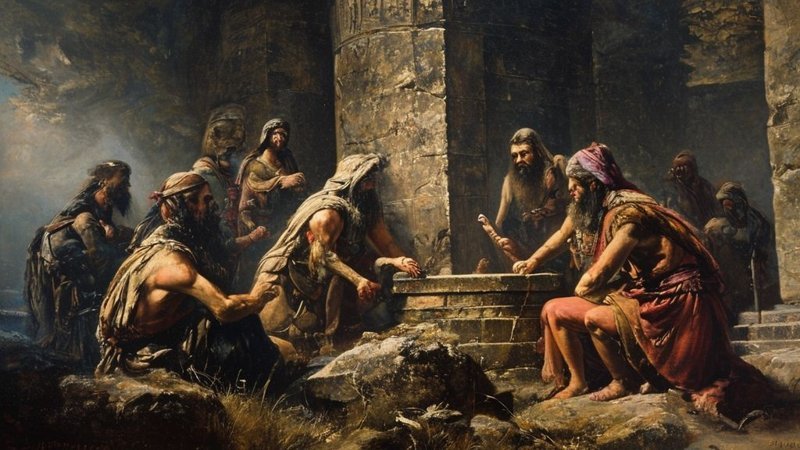
Imagine the sounds that once filled this place: the ringing of stone tools striking rock, the shouts of workers hauling heavy weights, and the chants of priests echoing across the horizon. This was a cosmic center, a convergence point for distant tribes traveling from vast distances to participate in sacred ceremonies. The presence of massive quantities of wild animal bones at the site indicates the holding of enormous feasts. These people did not live here permanently; rather, they made pilgrimages to this sacred site, making it the first temple in human history. To explore other ancient mysteries, consider Sphinx’s Hidden Chambers: The Unsolved Mystery Beneath its Left Paw or Ancient Subterranean Tunnels & Cities: Unraveling Earth’s Deepest Secrets.
The Unsolved Mystery of the Burial
Yet, there is one final enigma that will send shivers down your spine and leave you yearning for understanding. After centuries of use, these people undertook an act that cannot be explained by simple logic. They deliberately buried the site by hand. Yes, they intentionally covered these magnificent temples with earth and stones, as if burying a precious treasure or hiding a dangerous secret from the eyes of time. Were it not for this peculiar act, Göbekli Tepe would not have reached us in such an excellent state of preservation. Why did they bury it? Were they afraid of some power? Did the era of their religion end, and a new one begin? Or was it a message addressed to us, the people of the future, to discover at the opportune moment? This act resonates with other hidden historical questions, such as those discussed in The Forbidden History: Why the World’s Deepest Secrets are Guarded in High-Security Vaults.
Redefining Human Potential
You now realize that your history is not a linear progression from primitivism to civilization, but a complex journey filled with intellectual and spiritual leaps. Göbekli Tepe tells you that the desire to connect with the unseen, and to search for meaning in existence, created humanity before the plow did. It reminds you that your ancestors were ingenious engineers and inspired artists, possessing vast imaginations and a resolve that could shatter rocks. This discovery compels you to reconsider everything you know about the capabilities of the human mind, and how faith in an idea can move mountains and shape unyielding stone.
Frequently Asked Questions
What is Göbekli Tepe and where is it located?
Göbekli Tepe is an ancient archaeological site discovered in southeastern Turkey, known for its monumental stone structures that date back roughly 12,000 years, making it the oldest known temple complex in the world.
How did Göbekli Tepe challenge existing historical theories about civilization?
Göbekli Tepe fundamentally overturned the long-held belief that agriculture led to settled communities and then to the development of religion and monumental architecture. Instead, it suggests that the construction of temples and religious gatherings spurred the need for large-scale food production, thereby leading to the invention of agriculture.
What are the significant features found at Göbekli Tepe?
The site is characterized by massive T-shaped stone pillars, some weighing up to twenty tons and standing six meters high, arranged in precise circular enclosures. These pillars are intricately carved with elaborate relief sculptures of animals like lions, snakes, scorpions, and birds of prey, indicating advanced artistic and symbolic expression.
Why is the deliberate burial of Göbekli Tepe considered a great enigma?
After centuries of use, the people who built Göbekli Tepe intentionally covered the entire site with earth and stones. The reason for this massive burial project remains unknown, leading to speculation that it might have been an act of preservation, a concealment of a secret, or a symbolic end to an era or religion.
How old is Göbekli Tepe compared to other famous ancient sites?
Göbekli Tepe is significantly older than many other renowned ancient sites. It predates the Egyptian Pyramids by approximately seven thousand years and Stonehenge in Britain by about six thousand years, placing it firmly at the dawn of monumental human construction.