Puma Punku: Physics Defied at the City That Puzzled Scientists
Puma Punku: Physics Defied at the City That Puzzled Scientists
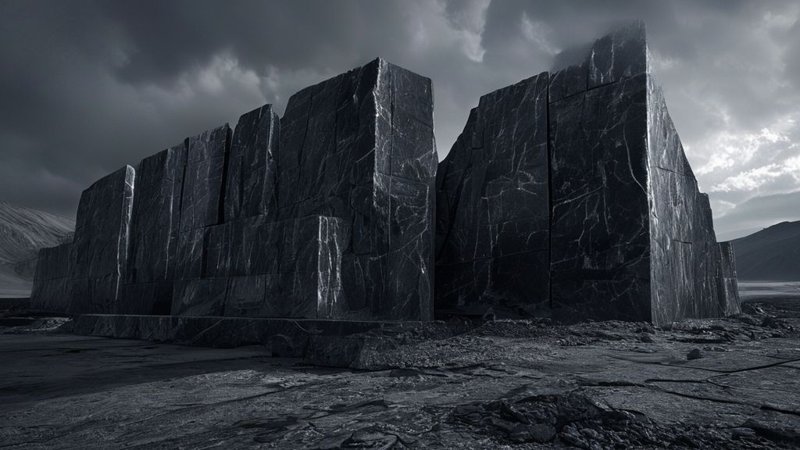
Standing twelve thousand feet above sea level on the Bolivian Altiplano, the ruins of Puma Punku present an engineering enigma that shatters conventional history. These are not mere stone remains; they are monumental proof of an advanced, vanished society whose mastery over geology and physics remains inexplicable by current archaeological standards. Prepare to question everything you thought you knew about ancient capabilities.
Navigate Content
The Impossible Stone Workmanship
The stones of Puma Punku, carved from hard andesite and diorite, exhibit features unattainable by known ancient tools. The surfaces are polished smooth, feeling almost metallic, with edges so sharp and right angles so perfect that modern engineers require laser equipment to replicate them. Furthermore, narrow crevices display constant depth and absolute precision, with no evidence of bronze chisels or primitive hammering. This suggests the use of sophisticated, high-precision machinery.
Key Anomalies:
- Surfaces smooth as glass.
- Razor-sharp edges and perfect right angles.
- Grooves carved with constant depth over millimeters.
The Enigma of Moving the Megaliths
The sheer mass of the construction defies logic given the environment. Consider the massive red platform block, weighing 131 tons, quarried ten kilometers away. Conventional explanations rely on ropes and animal hides, yet the precision achieved when placing these blocks suggests mechanical assistance far beyond human brute force. How were 130-ton blocks lifted and positioned with millimeter accuracy across rugged terrain without wheels or paved roads? This challenge to physics echoes in other ancient engineering feats, such as The Great Dam of Marib.
Modular Construction and Precision Alloys
The H-shaped stone cubes are the true miracle. They exhibit astonishing symmetry, suggesting they emerged from a single mold or were manufactured using Computer Numerical Control (CNC) methods. They fit together perfectly, demonstrating modular construction principles millennia before their supposed invention. Deeper investigation reveals another layer of complexity: small holes drilled along the edges intended for metal clamps. Chemical analyses of the metal residue found within these voids show complex alloys of copper, arsenic, and nickel—all requiring extremely high temperatures for smelting, a technology seemingly impossible in the cold highlands.
Astronomical Dating and Catastrophic End
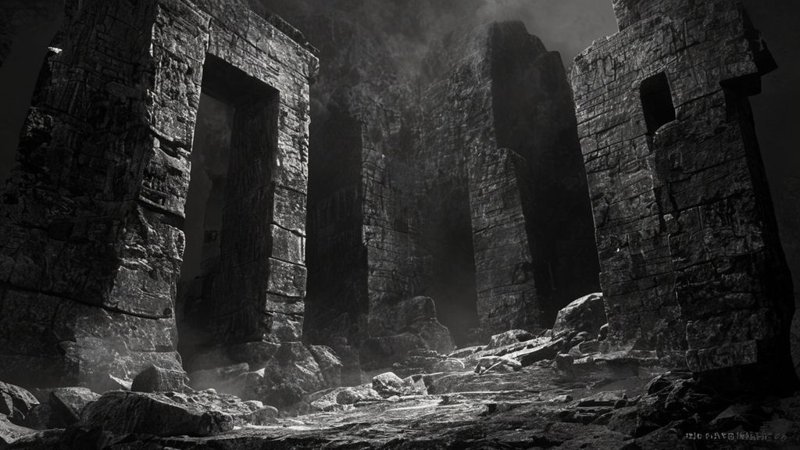
While mainstream archaeology dates the site to around 500 AD, astronomer Arthur Posnansky argued based on astronomical alignments (solstices) that Puma Punku was fully operational in 15,000 BC. This pushes the builders into a lost civilization predating the Ice Age. Adding to the mystery is the site’s current condition: it looks as if a massive explosion or cosmic catastrophe, perhaps a great tsunami reaching those heights, tore the complex apart, scattering hundred-ton blocks chaotically.
Hypotheses: Lost Technology or Extraterrestrial Visitors?
Local Aymara legends speak of deities descending from the sky or the use of a ‘magical flute’ to lift the stones. These myths might be primitive accounts of advanced energy manipulation, possibly acoustic levitation, given the consistent marks suggesting high-speed cutting tools. Was Puma Punku an industrial complex, an energy portal, or a technological station for visitors from another world? The sheer technological gap implies knowledge far surpassing our current understanding of prehistory, a gap that continues to fuel discussion about the world’s deepest secrets.
Frequently Asked Questions
Generated by AI Content Architect
About The Author