Elon Musk vs. Mansa Musa: The Richest Man in History Revealed
Elon Musk vs. Mansa Musa: The Richest Man in History Revealed
Navigate Content
The Modern Zenith vs. The Ancient Monolith
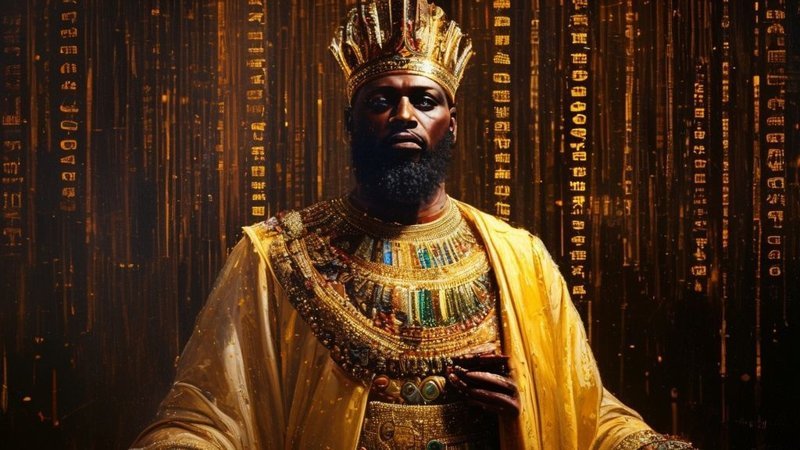
Today, Elon Musk’s fortune, exceeding $250 billion, seems incomprehensible. Yet, this wealth is tethered to investor confidence and fluctuating stock prices. Contrast this with Mansa Musa in 1324 CE, Emperor of the Mali Empire, a territory that spanned modern-day Nigeria, Niger, and much of West Africa. Musa literally possessed half of the ancient world’s gold supply, making his wealth qualitative rather than merely quantitative.
- Musk’s Wealth: Dependent on market volatility and future projections (e.g., Tesla stock).
- Musa’s Wealth: Derived from absolute control over the land itself—the source of the most valuable commodity on Earth.
The Pilgrimage That Broke Cairo’s Economy
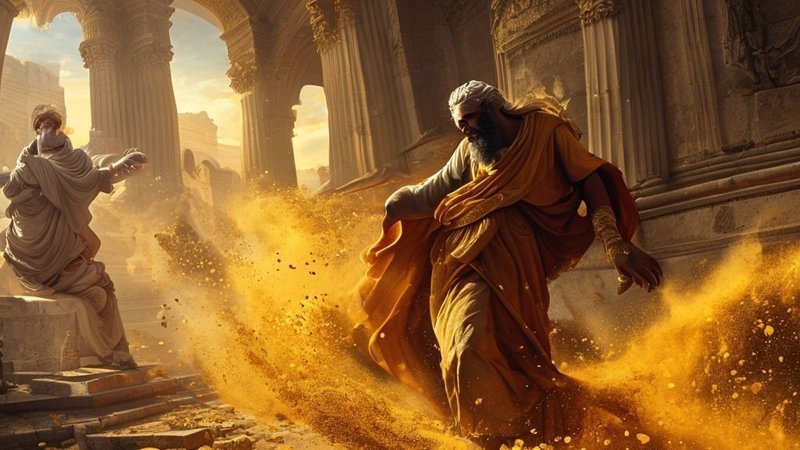
Mansa Musa’s legendary pilgrimage to Mecca serves as the ultimate demonstration of his staggering control. He traveled with an entourage of 60,000 people, including 12,000 slaves adorned with pure gold staffs. Crucially, his caravan carried 80 camels, each loaded with roughly 300 pounds of raw gold, all intended to be given away.
Upon reaching Cairo, his generosity flooded the Egyptian market. This massive, sudden influx caused an economic catastrophe that lasted for a decade. This event highlights the difference between possessing capital and controlling the medium of exchange itself. Can modern finance withstand such a shock? Perhaps not, as explored in discussions about systemic failures like The Bronze Age Collapse, where systemic imbalances led to widespread societal failure.
Nature of Power: Fragile Dreams vs. Absolute Sovereignty
Musk’s ambition lies in engineering the future—Mars colonization and technological advancement. His power is visionary but inherently fragile; it requires constant innovation and market buy-in. Mansa Musa, conversely, embodied absolute sovereignty. He was the law, the state, and the central bank. He needed no corporate board; his word dictated economic reality.
This concept of foundational, almost magical control over resources is often explored in historical contexts, such as the great engineering feats of antiquity like The Great Dam of Marib. Musa’s wealth was foundational; Musk’s is derivative.

Legacy: Building Civilization vs. Selling Technology
While Musk leaves marks through technological innovation, Mansa Musa left an indelible cultural and architectural mark. He invested his wealth into transforming Timbuktu into a global center for Islamic science and culture. He commissioned legendary structures, like the Djinguereber Mosque, which still stands today.
- He summoned scholars and engineers from across the known world.
- His wealth financed centuries of intellectual development.
- In contrast, Musk sells essential tools and services for the modern era, but Musa built a civilization whose remnants defy time.
The Verdict: Control Over Quantity
Historians struggle to put a modern dollar value on Mansa Musa, suggesting his wealth was essentially unlimited because he owned the source material of all value. Elon Musk operates within a capitalist system defined by competition (Bezos, Chinese tech giants). Mansa Musa had no contemporary rivals; he was the ecosystem.
To receive gold from the King of Mali meant acquiring wealth that defined a lifetime; today, we pay Musk for services and technology. The fundamental difference lies in the nature of their control: Musk is a product of the system; Mansa Musa was the system itself.
Frequently Asked Questions
About The Author