Ancient Viruses Awaken: The Terrifying Permafrost Threat in Siberia
Ancient Viruses Awaken: The Terrifying Permafrost Threat in Siberia
Navigate Content
The Biological Pandora’s Box Opens
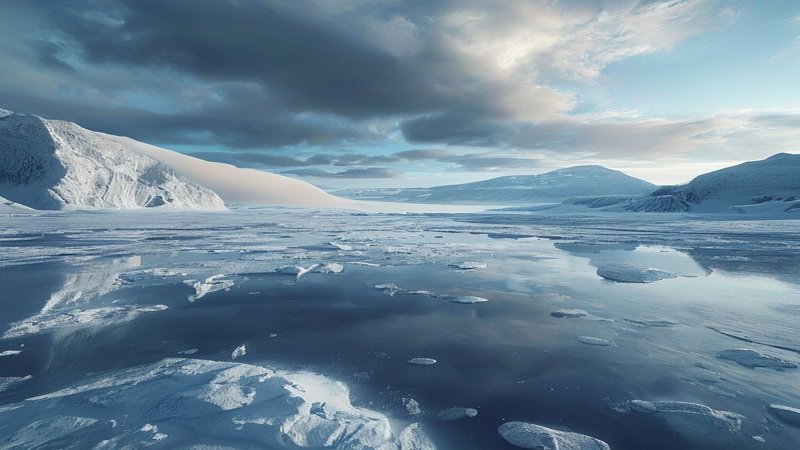
The Earth’s permafrost acts as the ultimate biological time capsule, holding life in a state of complete stasis called cryptobiosis. However, accelerating climate change is rapidly reversing millennia of containment. Ice that took ages to form is vanishing, allowing ancient microbes to return to active life. This is more than just melting snow; it signifies the reintroduction of evolutionary relics into modern ecosystems.
- Cryptobiosis: The survival mechanism allowing microbes to halt all vital processes indefinitely.
- Acceleration: Ice that took millennia to form is disappearing in decades.
- Exposure: Humanity is entering an era of forced, uncontrollable biological contact.
A Deadly Precedent: The 2016 Yamal Incident
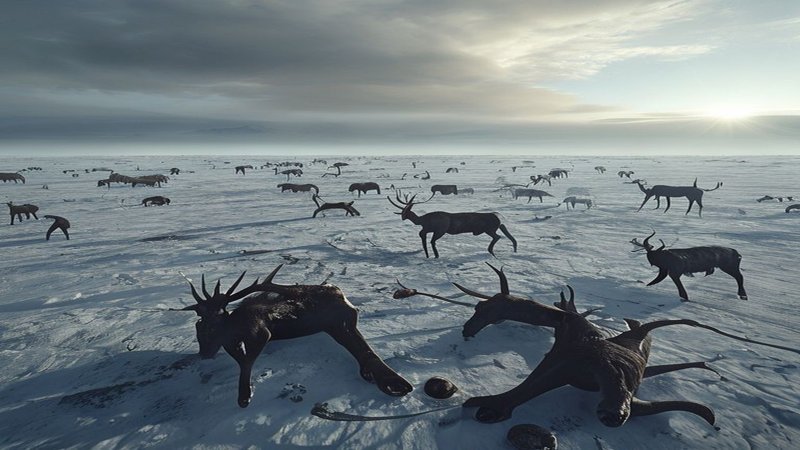
The threat is tangible, proven by real-world events. In 2016, a tragedy struck the Yamal Peninsula. A local boy died, followed by massive reindeer herd collapses. The culprit? Spores from a 75-year-old carcass, perfectly preserved in the permafrost, which melted and released its deadly cargo. This event proved that ancient contagions can quickly resurface and wreak havoc, demonstrating the immediate danger of thawing layers.
Confronting ‘Giant Viruses’ from Prehistory
Scientists exploring these desolate regions have unearthed entities so large they are termed ‘giant viruses,’ such as Pithovirus and Mollivirus. These organisms were trapped for an astounding thirty thousand years—since the time humans lived in caves. When subjected to warmth in laboratory settings, they instantly reanimated, attacking living cells aggressively. These are microscopic giants that our modern immune systems have absolutely no blueprint to defend against. We are facing enemies from a bygone geological era.
Ecosystem Collapse and the Unmonitored Threat
The danger extends far beyond immediate human epidemics. The introduction of ancient, foreign microbes can fundamentally corrupt our finely balanced contemporary ecosystems. These organisms could target vital agricultural crops, decimate necessary wildlife, or destroy beneficial soil bacteria essential for sustenance. Furthermore, melting ice releases massive greenhouse gases like methane, alongside these forgotten plagues. We must consider the possibility of contamination spreading globally, as illustrated by the scenario where a bird carries an Ice Age disease from the Arctic to a densely populated city.
The Race Against Time: Monitoring the Unknown
Global health bodies are equipped to handle current threats, like seasonal influenza or novel coronaviruses. But who is monitoring the ancient ice tombs? Current global laboratories lack the genetic mapping required to recognize these entities. Investment in proactive Arctic monitoring is not optional—it is a survival imperative. We are walking blindfolded through a biological minefield. If we fail to prepare, we face a ‘Disease X’ that doesn’t come from recent evolution but from deep history.
While efforts are beginning to collect and study these samples in high-containment labs, the race against the speed of melt is precarious. For further reading on ancient environmental shifts that impacted humanity, consider exploring articles like The Great Toba Volcano, which details an event that nearly wiped us out in the deep past.
Frequently Asked Questions
About The Author