The Voynich Manuscript: Unraveling History’s Most Enigmatic Undeciphered Book
The Voynich Manuscript: Unraveling History’s Most Enigmatic Undeciphered Book
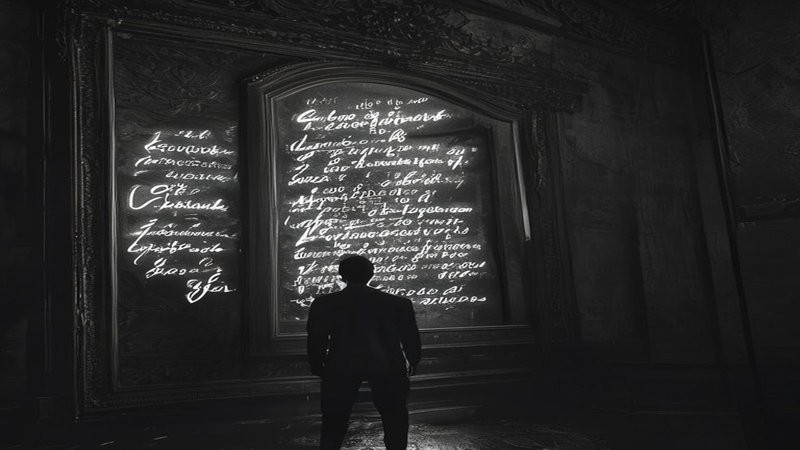
Imagine standing before a mirror reflecting a language never spoken by humans, yet written with a mastery that sends shivers down one’s spine. This is not merely a book; it is a paper prison where an unknown author confined their secrets six centuries ago, leaving behind a silent enigma that stares coldly at modern civilization. We are not merely discussing an ancient manuscript here, but the greatest challenge humanity has faced in the history of cryptography and linguistics.
Navigate Content
The Unveiling of an Age-Old Enigma
Your story with this enigmatic volume begins in 1912, when the Polish book dealer Wilfrid Voynich acquired a suspicious treasure from a Jesuit college in Rome. The moment your fingers touch the calfskin pages of the Voynich Manuscript, you will feel the weight of history and mystery. The manuscript consists of 240 pages, though experts believe a number of pages have been lost over the centuries. Each page is a journey into a parallel world, a world that speaks a language for which we hold no key, and illustrates creatures and plants whose roots have never touched our earth. Scientists subjected this manuscript to radiocarbon dating, and the result confirmed that it dates to between 1404 and 1438. We are talking about the early 15th century, the late Middle Ages, when alchemy intertwined with magic and the pursuit of truth.
The Baffling Language of “Voynichese”
When you examine the script closely, you will find it flows with astonishing smoothness, as if the writer knew exactly what they were inscribing. There is no trace of erasure, correction, or hesitation, suggesting that the language was natural for the author. Scientists call this language “Voynichese.” It comprises a peculiar alphabet with letters ranging from twenty to forty unique symbols. If you try to trace the lines with your eyes, you will notice that words repeat in a statistical pattern resembling real human languages, and this is the most unsettling part. If the manuscript were merely a random hoax, it would not obey Zipf’s Law, which governs word frequency in genuine languages like Arabic or English. This implies that behind these mysterious symbols lies an organized intellectual structure, and a message waiting to be freed from its silence.
An Illustrated Compendium of the Unknown
But where did it come from? And who wrote it? The illustrations within the manuscript point to a mind obsessed with classification. There are entire sections dedicated to plants, but upon contemplating these drawings, you will be astounded. The plants are not entirely real. They appear to be fusions of parts from different plants; a root from one type, leaves from another, and flowers that exist in no known botanical atlas. You are looking at an imaginary garden, or perhaps plants from a lost continent yet to be discovered. Then your eyes move to the astronomical section, where you find circles and celestial maps filled with stars and constellations. You see traditional zodiac signs like Taurus and Aries, but they are surrounded by crowds of small, naked women swimming in strange green pools, connected by a network of complex tubes resembling human organs or perhaps sophisticated chemical apparatus. Is it a medical message? Is it a secret fertility ritual? Or is it an attempt to describe how the soul moves within the body? The ink used by the author has endured for centuries, with blue, green, and brown pigments still retaining their enigmatic luster, reflecting advanced chemical knowledge in color production.
The Unconquered Cipher: Codebreakers and AI
The world’s greatest codebreakers have attempted to breach this paper fortress. During World War II, William Friedman, the man who deciphered the complex Japanese code, labored over the Voynich pages for many years. He dedicated his life to understanding this language, but ultimately admitted defeat, suggesting that the manuscript might be written in an early artificial language. Even artificial intelligence in our current era, with all its computational power, has stood helpless. Some algorithms have suggested it is an encrypted Hebrew language, while others posited it is an ancient Turkish language, but all these theories collapse when applied to the entire text. The manuscript refuses to comply with any rules we impose. You are now wondering, could this be the greatest hoax in history? Some believe the manuscript is a work of genius art designed to deceive kings and wealthy individuals of that era, as people paid fortunes for magical and mysterious books. But why would someone exert extraordinary effort to write 170,000 characters with precise statistical patterns and stunning visual details merely for deception? The effort invested far exceeds what any simple hoax would require. There is a spirit inhabiting these pages, a spirit that wants to say something, but chose to remain behind a solid wall of encryption.
Lingering Clues and Intriguing Hypotheses
Look at the small details, at the way words end. In Voynichese, certain words appear only on specific pages, just as we use specialized terminology in medical books that differs from astronomy books. This thematic segregation of vocabulary reinforces the hypothesis that the text carries genuine meaning. Linguistic researchers have found that the text lacks clear articles and prepositions, making it resemble a condensed language or a secret telegraph. Could it be a language entirely lost with the extinction of a small European populace? Or perhaps it is a language created by a reclusive scholar, escaping persecution from the Church at the time, to record their forbidden research? When you browse the section referred to as “Balneological,” or the bathing section, you will feel an indescribable strangeness. The simply drawn women appear to be in communion with nature or with some cosmic force through those green liquids. The tubes and waterways are not random; they are designed with engineering precision suggesting the flow of energy. You are not reading a book, but observing the dreams of someone who lived six hundred years ago and chose to record them in a way no one else could understand. This manuscript is the black hole in the world of unsolved mysteries.
Frequently Asked Questions
Generated by AI Content Architect
About The Author