The Great Toba Volcano: How Humanity Almost Vanished 74,000 Years Ago

0
image_1-89


The Great Toba Volcano: How Humanity Almost Vanished 74,000 Years Ago
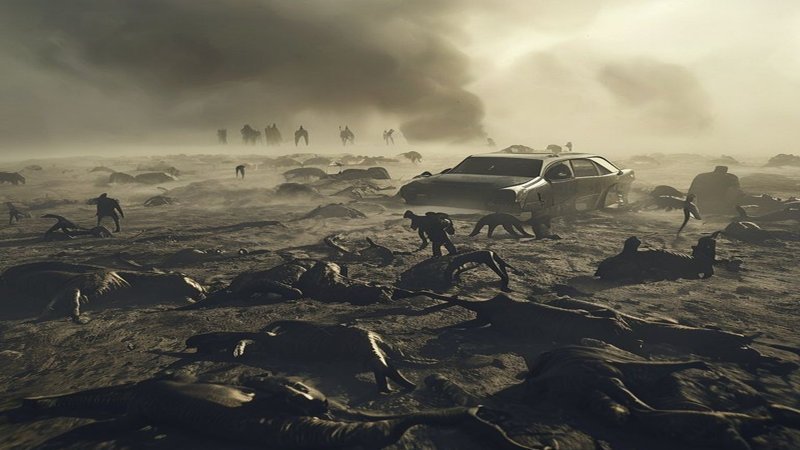
Imagine a world where everything you know vanished in the blink of an eye, with only a few thousand of your kind left, struggling to breathe amidst toxic ash. Seventy-four thousand years ago, your ancestors faced an apocalyptic moment that nearly erased humanity’s name from the annals of existence forever. You are here today because a handful of humans refused to surrender during Earth’s darkest and most lethal era.


The Apocalyptic Roar of Toba

Our story begins on the Indonesian island of Sumatra, where a sleeping beast lay beneath the earth, poised to roar. It wasn’t merely an ordinary volcano; it was a supervolcano, harboring millions of years of accumulated fury within its depths. When the Toba volcano erupted, it unleashed energy equivalent to millions of atomic bombs exploding simultaneously. A column of ash and smoke soared into Earth’s atmosphere, completely obscuring the sun. In that moment, nature was not just angry; it was deciding who deserved to survive.

The Apocalyptic Roar of Toba


Earth Plunged into Darkness: The Volcanic Winter

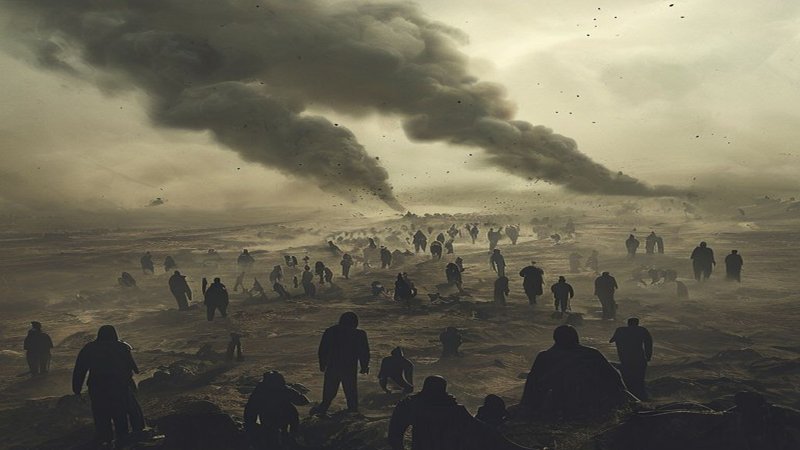
Imagine looking up at the sky, seeing a gigantic black cloud covering the horizon, stretching to envelop the entire globe. Volcanic ash fell like deadly black snow, blanketing vast swathes of India and Southeast Asia in layers several meters thick. This was no fleeting cloud; it was the dawn of a prolonged volcanic winter that lasted for a decade. Temperatures worldwide plummeted by fifteen degrees Celsius. Forests froze, crops perished, and life-giving rivers ran dry.

You are now at the heart of the catastrophe. Envision bone-chilling cold, zero visibility, and gasping for breath as sulfur particles and volcanic glass filled the air. Animals crucial for human hunting died en masse. Fruit-bearing plants withered under the crushing weight of perpetual darkness. Your ancestors found themselves confronting an enemy that could not be fought with whips or spears: hunger, cold, and darkness.


Humanity’s Near Extinction: The Genetic Bottleneck

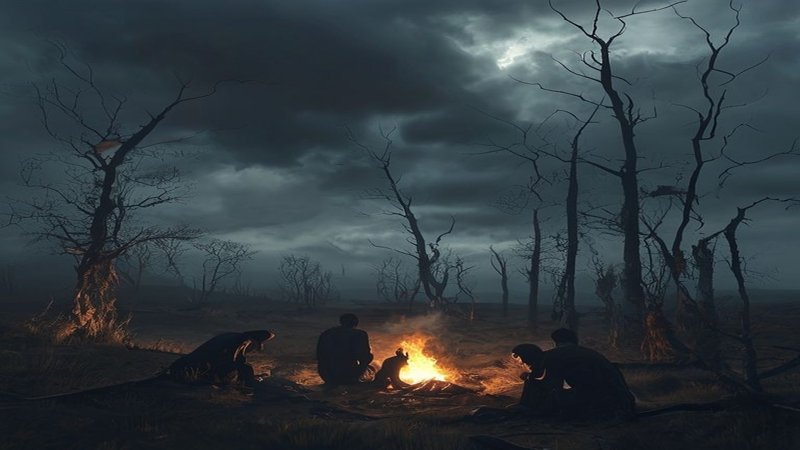
Modern genetic studies reveal a terrifying truth that shook the foundations of science. During that epoch, a ‘genetic bottleneck’ occurred. The number of reproductively viable humans dwindled to a mere three to ten thousand individuals across the entire planet. Can you comprehend the magnitude of this figure? The entirety of the human species, now numbering eight billion, could have vanished completely had those few individuals perished. You exist today because a few thousand humans in East Africa, and perhaps other sparse regions, clung to life with every fiber of their being.

Why are we, as a species, so genetically similar compared to other organisms? The answer lies in that catastrophe. Humanity’s genetic diversity was largely erased, and only the progeny of that small group who survived the Toba catastrophe endured. This explains the astonishing DNA similarities found between a person in the far north and one in the far south. We were all one small family, trapped on a dying planet. For more on our ancient lineage, explore You Are a Living Ghost: The Haunting Science of Your DNA & Ancestral Legacy.
Humanity's Near Extinction: The Genetic Bottleneck


The Seeds of Survival: Intellect, Cooperation, and Coastal Refuges

But how did these survivors manage to overcome this dark era? The secret wasn’t solely their physical strength, but their intellect and capacity for cooperation. Small human groups began developing complex survival strategies. They learned to:

  • Share limited resources
  • Craft more sophisticated tools for hunting in harsh conditions
  • Communicate clearly to devise plans for survival, potentially sparking the evolution of complex language and deep social bonds

You feel the bitterness of life at that time, realizing that death surrounded them on all sides. The rains that fell were not water, but caustic acid, killing what little life remained in the soil. The water they drank was contaminated with ash and heavy metals. Yet, they pressed on.

They migrated long distances in search of a patch of land that still offered warmth, or a seashore providing some fish and shellfish less affected by the catastrophe than the landmass. Archaeological evidence in South Africa suggests that humans took refuge in coastal caves. There, they found safe haven, as the oceans acted as a thermal regulator, mitigating the severity of the biting cold. They began exploiting marine resources with astonishing ingenuity. This shift in diet and environment likely stimulated human brain growth and the development of novel cognitive abilities. The ordeal didn’t kill us; it reshaped who we are.


A New Humanity Forged in Fire and Ash

Consider the psychological stress endured by those few. Witnessing family members succumb to respiratory illnesses caused by the ash. Gazing at the sky for years without a clear glimpse of the sun’s disk. Their resilience is the greatest success story in natural history. We owe our very existence to every man and woman of that era who chose to take another step forward despite the despair. They preserved the flame of human consciousness from extinguishing amidst storms of ash and sulfur.

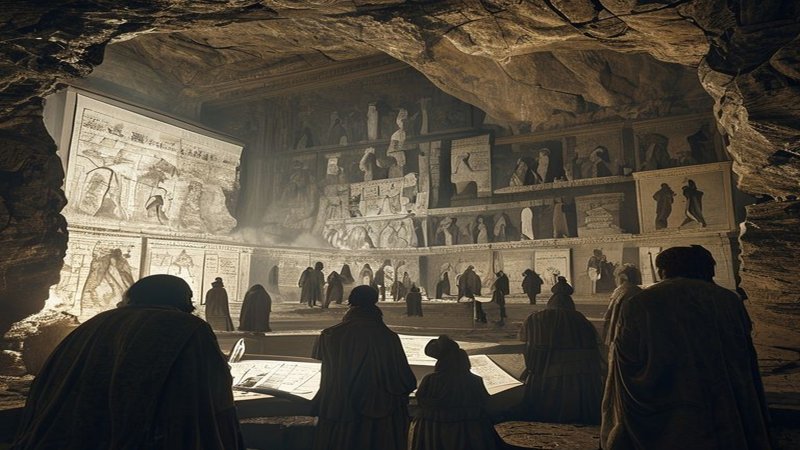
When the dust finally settled, and the sun began to shine anew on a transformed planet, the humans who emerged from their refuges were different. They had become smarter, more cohesive, and more adaptable. They repopulated the Earth, carrying with them that genetic scar which forever reminds us of our fragility. Toba was not merely a natural disaster; it was a cosmic test that forged human mettle and refined it of impurities.

This history, inscribed in your very cells, tells you that you are a descendant of great survivors. That within you lies an astonishing strength capable of overcoming the impossible. Studying the Toba volcano is not just a geological inquiry; it’s a journey to explore our origins and how catastrophes shaped our current identity. We are beings born from the crucible of fire and ash, and this is what makes us unique in this vast universe.

Our understanding of what happened 74,000 years ago opens our eyes to the volatile nature of our planet and the potentially temporary peace we now enjoy. Supervolcanoes still exist beneath iconic locations such as Yellowstone National Park in the United States. Science today strives to predict the moment another such beast might decide to awaken. This reminds us of the planet’s volatile nature, a topic also explored in Earth’s Magnetic Shield Collapse: Threat to Digital Civilization.
A New Humanity Forged in Fire and Ash


Frequently Asked Questions

What was the Great Toba Volcano eruption?
The Great Toba Volcano eruption was a supervolcano event that occurred approximately 74,000 years ago on the island of Sumatra, Indonesia. It was one of the largest volcanic eruptions in Earth’s history, unleashing energy equivalent to millions of atomic bombs and triggering a global volcanic winter.
What was the ‘genetic bottleneck’ caused by the Toba eruption?
The ‘genetic bottleneck’ refers to the drastic reduction in the human population after the Toba eruption. Genetic studies suggest that the number of reproductively viable humans dwindled to a mere 3,000 to 10,000 individuals worldwide, leading to a significant loss of genetic diversity in our species.
How did early humans survive the Toba catastrophe?
Humans survived by developing complex survival strategies, including enhanced intellect, cooperation, and the creation of sophisticated tools. They migrated to more hospitable areas, such as coastal caves in South Africa, where oceans acted as thermal regulators and marine resources provided a crucial food source, stimulating brain growth and cognitive abilities.
What impact did the Toba event have on human evolution?
The Toba catastrophe had a profound impact on human evolution, leading to a genetic bottleneck that explains the remarkable genetic similarity among humans today. It also forced our ancestors to become smarter, more cohesive, and adaptable, potentially sparking the evolution of complex language and deep social bonds necessary for survival.
Are there still supervolcano threats today?
Yes, supervolcanoes still exist today, with iconic examples such as Yellowstone National Park in the United States. Scientists continuously monitor these sites to predict potential future eruptions, reminding us of our planet’s volatile nature.

Generated by AI Content Architect

About The Author

Leave a Reply

Your email address will not be published. Required fields are marked *