The Toba Catastrophe: How a Supervolcano Nearly Wiped Out Humanity

0
image_1-75


The Toba Catastrophe: How a Supervolcano Nearly Wiped Out Humanity
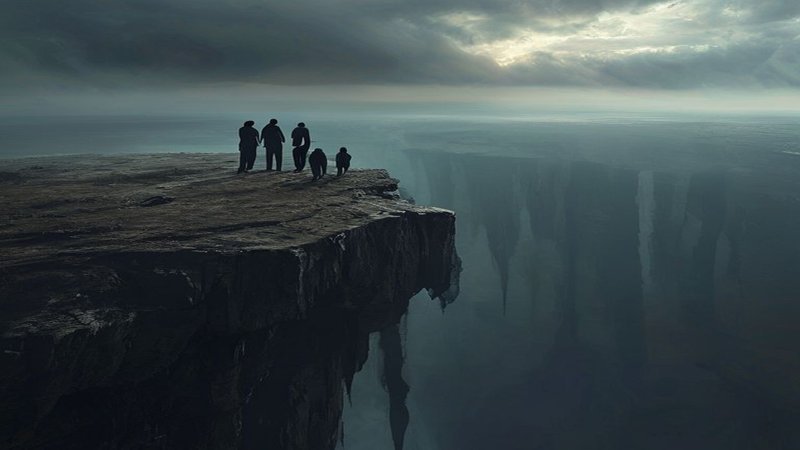
Imagine standing at the precipice of absolute oblivion. Seventy-four thousand years ago, humanity was but a faint flicker on the brink of eternal extinction. You breathe today because a handful of your ancestors survived an inferno unlike any the Earth had witnessed in millions of years.


The Earth’s Fiery Rebellion: Toba’s Colossal Eruption
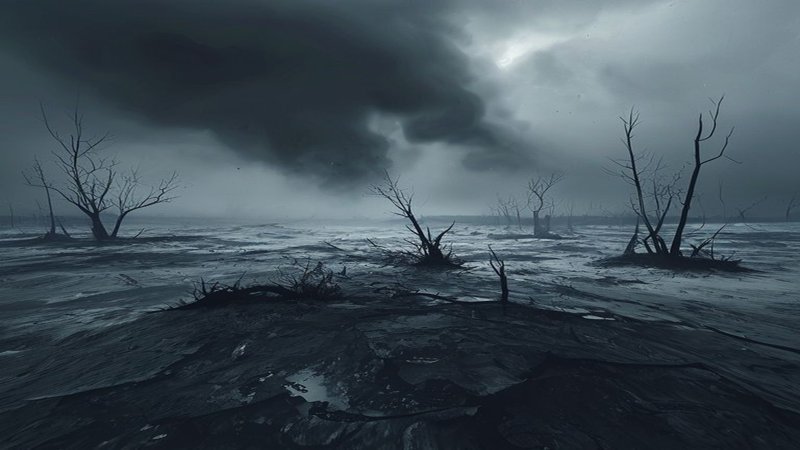
In what is now a tranquil part of the Indonesian island of Sumatra, the Earth was preparing for its grand revolution. This was no ordinary volcanic eruption; it was a rebellion from the planet’s depths against all life. The Earth’s crust split open, forming a colossal caldera stretching one hundred kilometers. Lava surged forth, not as rivers, but as waves of molten hell, inundating vast areas. At that moment, the Toba volcano ejected approximately two thousand eight hundred cubic kilometers of volcanic material into the atmosphere. Can you truly comprehend this volume? It was enough to blanket an entire continent in a thick layer of ash and death.

The Earth's Fiery Rebellion: Toba's Colossal Eruption


Plunging into Perpetual Night: The Volcanic Winter

When you gaze at the clear blue sky today, recall that your ancestors saw it black for many years. Volcanic ash ascended into the stratosphere, completely obscuring sunlight. Day turned into perpetual night, and the Earth plunged into a harsh volcanic winter.

  • Temperatures plummeted by as much as fifteen degrees Celsius in some regions.
  • Forests withered, light-dependent plants perished, leading to a complete collapse of the food chain.

You might feel the chill of a normal winter now, but imagine a winter lasting ten consecutive years, without a single glimmer of the sun’s warmth.


Humanity on the Brink: The Genetic Bottleneck

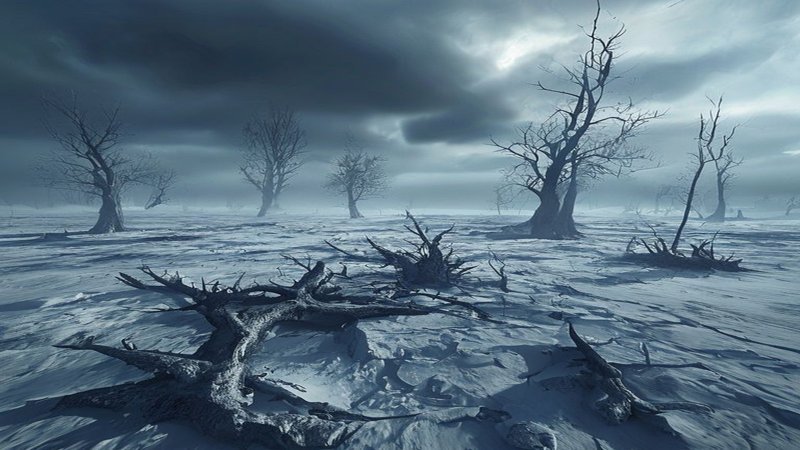
At that critical juncture, humanity faced the most formidable test in its history. Genetic studies indicate what is known as a genetic bottleneck. The number of reproductively viable humans dwindled to just a few thousand, perhaps between one thousand and ten thousand individuals worldwide. Consider this figure carefully. The population of a small modern residential complex represented all that remained of humanity’s hopes. Had it not been for the resilience of these few, you would not be here reading these words, nor would there be civilizations, languages, or technology.

The suffering was beyond description. Freshwater sources dried up due to acid rain, laden with sulfur, falling from the sky. Animals, on which humans depended for hunting, either migrated or perished en masse. Your ancestors were forced to scavenge for dead plant roots or marine snails remaining on the coasts. Skin shivered from the cold, stomachs cried out from hunger, and eyes peered into a dark sky that promised no immediate dawn. Yet, in that isolation and darkness, something astonishing occurred. The human mind began to evolve rapidly to confront extinction. For more on early human innovation, see Göbekli Tepe: The 12,000-Year-Old Enigma That Rewrites Human History.
Humanity on the Brink: The Genetic Bottleneck


The Resilience Code: Innovation, Unity, and Our Shared DNA

Some scientists posit that this catastrophe propelled humans toward innovation and intensive social cooperation. To survive a decade-long winter, one had to plan, store resources, and communicate with others with unprecedented ingenuity. In those dark shelters and caves, the seeds of civilization were sown. Language began to grow more complex to convey survival strategies. Stone tools became more refined. Humans transformed from mere creatures living within nature to beings who contended with and harnessed nature for their benefit.

Examine the genetic diversity of humans today. You will find it remarkably low compared to chimpanzees or gorillas. The reason traces back to that event. We are all descendants of that small group who survived in some corner of Africa or along the Indian Ocean coasts. We are one family in the literal biological sense. The fissures of ash in Sumatra left their mark on your DNA, telling you every day that survival is not always for the strongest, but for the most adaptable and unified.


Echoes from the Past: Lessons for a Fragile Future

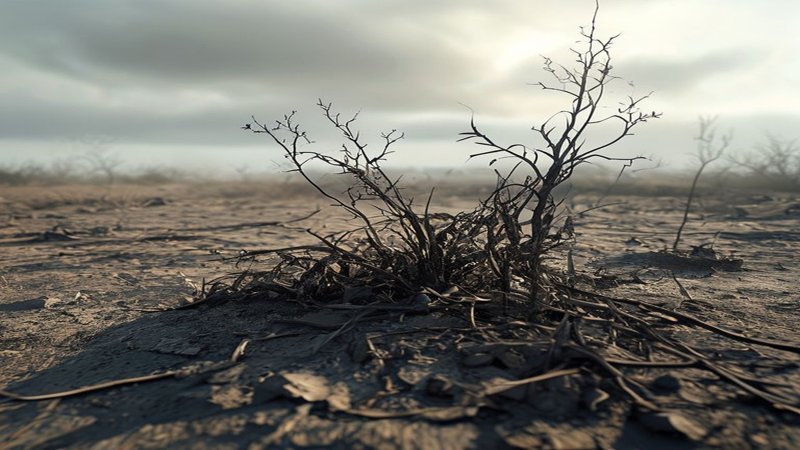
It took thousands of years for the Earth to recover. The ash slowly began to settle, and the sun once again pierced the gray clouds. Plants began to grow anew in soil enriched by volcanic minerals. Humans emerged from their shelters to find a changed world. They had lost many companions, but gained astonishing resilience. They set forth once more to populate the Earth, carrying in their genes the memory of those dark days that almost erased their existence.

The Toba catastrophe stands as a stark reminder of the fragility of our existence on this planet. We reside on a thin crust above an inferno of magma, beneath a sky that could transform into a prison at any moment. Yet, it is also a story of hope and the latent strength within the human spirit. When options narrow and the world darkens, the capacity to perform miracles emerges. Your very existence today is a mathematical and biological miracle; use this existence to leave a legacy worthy of the epic struggle endured by your early ancestors.

Studying this catastrophe opens avenues for understanding the future. Are we prepared for similar challenges? Science informs us that supervolcanoes still lie dormant beneath our feet in regions like Yellowstone in the United States or the Phlegraean Fields in Italy. History is not merely stories we tell, but lessons we must learn to protect our sole home in this vast universe. Awareness of the past is the primary shield against future dangers, such as those discussed in Zombie Viruses: Ancient Pathogens Unleashed by Thawing Permafrost, and every piece of information you acquire today is part of your arsenal to preserve the continuity of a species that refused to surrender seventy-four thousand years ago. As you reflect on the magnitude of this story and the power of human resilience, we invite you to become part of our community dedicated to unraveling the mysteries of the past and fostering a better understanding of the future. Subscribe and enable notifications to join us on future journeys through the depths of history. We also encourage you to share your thoughts in the comments on how this catastrophe influences your perspective on your connection to the rest of humanity on this planet. Your engagement helps us continue delivering content that connects us to our shared roots. Do you believe that humanity in our current era, with all its t
Echoes from the Past: Lessons for a Fragile Future


Frequently Asked Questions

What was the Toba catastrophe?
The Toba catastrophe was a supervolcanic eruption 74,000 years ago in Sumatra, Indonesia, that ejected an estimated 2,800 cubic kilometers of volcanic material, leading to a decade-long volcanic winter and a severe genetic bottleneck for humanity.
How did the Toba eruption impact human survival?
The eruption caused global temperatures to plummet by up to fifteen degrees Celsius, obscured sunlight for years, collapsed food chains, and reduced the reproductively viable human population to an estimated 1,000 to 10,000 individuals worldwide.
What is the ‘genetic bottleneck’ caused by Toba?
The ‘genetic bottleneck’ refers to the drastic reduction in the human population to a very small number of survivors (a few thousand), which significantly limited genetic diversity in modern humans, tracing all of us back to this small ancestral group.
How did early humans survive the decade-long volcanic winter?
Survival necessitated rapid innovation, intensive social cooperation, advanced planning for resource storage, and more complex communication strategies. Humans were forced to adapt by finding new food sources and seeking shelter in caves.
What lessons does the Toba catastrophe offer humanity today?
The Toba catastrophe serves as a stark reminder of our existence’s fragility, the immense power of natural disasters, and the critical importance of adaptability, unity, and preparedness for future global challenges, including dormant supervolcanoes like Yellowstone.

Generated by AI Content Architect

About The Author

Leave a Reply

Your email address will not be published. Required fields are marked *