The Epic Journey: How Early Humans Reached America 20,000 Years Ago

0
image_1-66


The Epic Journey: How Early Humans Reached America 20,000 Years Ago

Imagine standing atop a towering glacial cliff, the biting winds of death lashing your face as you glance behind you to witness an entire continent vanishing before your eyes. You are now on the precipice of humanity’s greatest adventure, with no maps to guide you and no compass to lead, save for the primal instinct of survival. This is not merely a migration; it is the genesis of a new world, one that your descendants will inhabit for millennia to come.


The World of the Last Ice Age: Crossing Beringia

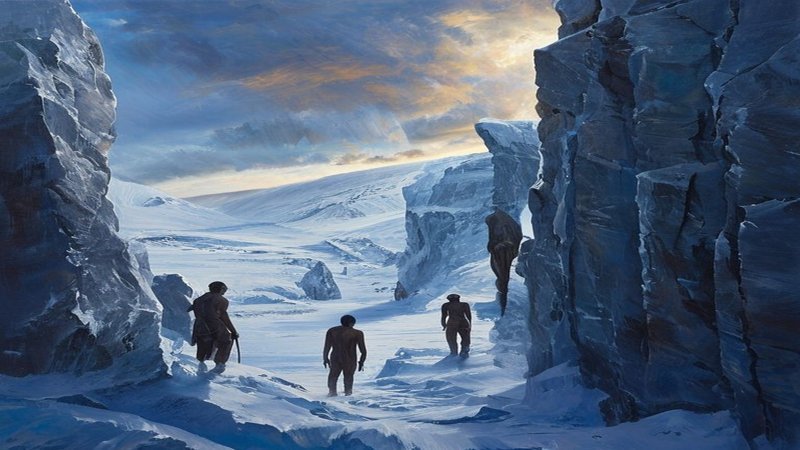
You are living in the Last Ice Age, approximately twenty thousand years ago. The Earth around you is not as you know it today. Oceans have receded, revealing lands once submerged, and vast expanses of ice have enveloped most of the planet’s northern hemisphere. In these trying times, small groups of humans moved slowly and steadily across what we now call the Bering Strait. These were not simply refugees fleeing the cold; they were innate explorers and skilled hunters, following the tracks of mammoth and caribou herds, their sole source of sustenance. Consider the immense courage required to propel your family into the absolute unknown, where land ends and horizons, whose secrets no one knows, begin.

This land bridge you traversed is known as Beringia. It was not merely a narrow passage but a self-contained world, stretching hundreds of kilometers from north to south. It was an arid and harsh land, yet teeming with wildlife. Imagine the dust stirred by the hooves of colossal animals and the incessant sound of the wind. You and your tribe relied on your sharp intellect to master this unforgiving environment. You fashioned clothing from the hides of animals you hunted, used bones as sewing needles, and meticulously crafted flints as lethal weapons. Every step you took eastward brought you closer to a continent previously untouched by human foot. You were not just migrating; you were redefining the very boundaries of human existence.
The World of the Last Ice Age: Crossing Beringia


The Treacherous Paths: Ice-Free Corridor and Coastal Routes

As the snows began to recede slightly, natural corridors opened up before you, winding between colossal ice sheets. Scientists today refer to these as the ice-free corridor. However, the path was not paved with ease. The ground was muddy and slippery, and apex predators such as American lions and short-faced bears lurked at every turn. Your fear was palpable, yet your desire to discover what lay beyond the horizon was stronger. Can you envision the moment when these first humans beheld verdant forests for the first time, after thousands of years of living in absolute white? That moment was the culmination of a journey that spanned generations.

But the story does not end with land routes alone. Evidence suggests you may have taken an alternative path: the coastal route. Imagine navigating a rudimentary boat crafted from wood and hides, sailing along the western coast of the Americas. You relied on abundant marine resources, including fish and seals. This “kelp highway” allowed you to move much faster than traversing rugged mountains. Recent discoveries at sites like Monte Verde in Chile have proven that your ancestors reached the southernmost tip of the continent much earlier than previously believed. This indicates you were skilled navigators and adventurers undaunted by high waves.


Masters of Adaptation: The Clovis Culture and Early Innovation

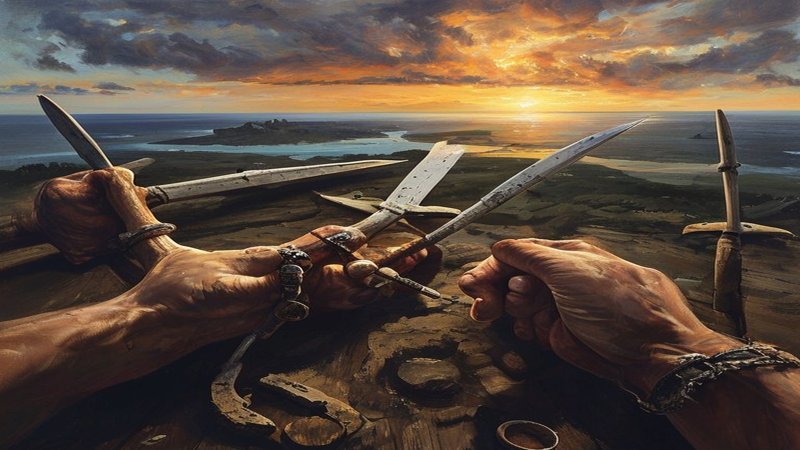
Over time, you began to settle and form unique cultures. The Clovis culture emerged, renowned for its astonishingly sophisticated fluted projectile points. These points were not merely hunting tools but represented the pinnacle of technology for that era. Consider the precision required to flake chert to be thin and sharp enough to penetrate thick mammoth hide. These tools enabled your dominance over this new land. You were masters of the hunt and unparalleled artisans. Every archaeological site we uncover today narrates your struggle and triumph over nature.

The impact of this migration extends beyond history, influencing our understanding of how the human mind operates under pressure. You demonstrated an extraordinary capacity for innovation in record time. How did you distinguish edible plants in an entirely new continent? How did you learn the migration seasons of animals you had never seen before? This collective intelligence kept the flame of civilization alight. You were not just discovering land; you were discovering your latent capabilities. Your journey is a perpetual reminder that humanity is not confined by geography but only by its imagination.
Masters of Adaptation: The Clovis Culture and Early Innovation


A Journey Beyond Geography: Psychological and Social Transformation

However, the Great Migration was not just a physical journey; it was a profound psychological and social transformation. You learned to adapt to vastly different climates, from the arid deserts of Arizona to the dense rainforests of the Amazon. In each new environment, you developed new languages, new customs, and traditions that bound you to the land. You are not merely a transient passerby; you are the original founder of every cultural legacy we see in the Americas today. The genetic diversity carried by indigenous peoples today is the map that guides us to understand your long journey. Every cell in their bodies carries an echo of your footsteps on the ice thousands of years ago.

Reflect on the psychological challenges you faced. The separation from the past and the severing of ties with relatives who remained in Asia. You were alone on a vast, endless continent. This geographical isolation fostered extraordinary cultural uniqueness. You would build magnificent cities in the future, such as Tenochtitlan and Cusco, but the seeds were sown at that moment you decided to cross the glacial boundaries. Your will shaped the continent’s destiny. And when you gaze at the stars in the clear night sky of the Americas, remember that your ancestors looked to those same stars for guidance on their journey south.

As we reach the conclusion of this documentary, we realize that the crossing of continents was not merely a fleeting historical event but the cornerstone upon which an entirely new world was built. Those arduous steps across the ice paved the way for the emergence of some of humanity’s most resilient and innovative cultures.


Frequently Asked Questions

When did early humans migrate to America?
Early humans migrated to America approximately 20,000 years ago, during the period known as the Last Ice Age.
What were the main routes early humans took to reach America?
The primary routes included the Bering Land Bridge (Beringia) and an inland ice-free corridor. Evidence also suggests an alternative coastal route, sometimes called the ‘kelp highway’, along the western coast of the Americas.
What was Beringia?
Beringia was a vast land bridge, hundreds of kilometers wide, that connected Asia and North America during the Last Ice Age when sea levels were significantly lower. It was an arid and harsh but wildlife-rich environment.
What was the Clovis culture known for?
The Clovis culture is renowned for its astonishingly sophisticated fluted projectile points. These were advanced hunting tools for their era, demonstrating remarkable precision in craftsmanship and enabling effective hunting of large game.
What kind of challenges did early humans face during their migration?
Migrants faced extreme cold, treacherous terrain, apex predators like American lions and short-faced bears, the psychological burden of leaving their past behind, and the constant need to adapt to new environments and find sustenance.

Generated by AI Content Architect

About The Author

Leave a Reply

Your email address will not be published. Required fields are marked *