Alchemists’ Gold: How Nuclear Physics Achieved the Impossible Transmutation

Alchemists’ Gold: How Nuclear Physics Achieved the Impossible Transmutation
The quest to transmute base metals into gold was the obsession of medieval alchemists, a pursuit viewed as both mystical and mad. Yet, the core belief that matter could be fundamentally changed—that lead could become gold—was not just wishful thinking; it was a profound, albeit intuitive, scientific hypothesis. Today, humanity has realized this ancient dream, not through magical elixirs, but through the raw, energetic power of nuclear physics, proving that the boundaries between magic and science are often just matters of scale and understanding.
Navigate Content
The Alchemist’s Philosophy: Seeking Perfection
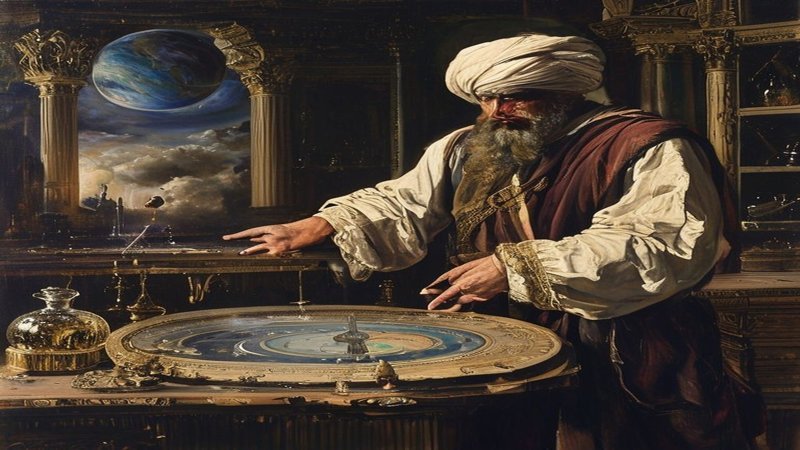
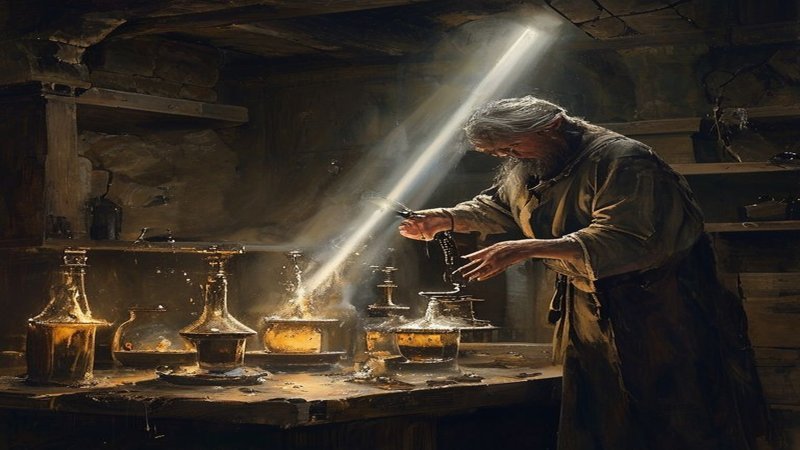
For alchemists like Jābir ibn Hayyān, the universe operated on a principle of perfection. Metals were seen as being in various stages of sickness or immaturity within the Earth. Gold, being incorruptible, represented the ultimate, perfected state. Their goal, the Great Work, was to accelerate this natural maturation process using the legendary Philosopher’s Stone. This was more than chemistry; it was a holistic philosophy where transformation was spiritual as well as physical. Alchemists employed rigorous processes such as distillation and calcination, driven by the belief that manipulating elemental components (sulfur and mercury) could unlock nobility in base metals.
From Elemental Theory to Atomic Reality
The foundational theories of alchemy clashed dramatically with 20th-century physics. Where alchemists saw elements defined by observable properties, modern science identified elements by the immutable number of protons in the nucleus. The gap between lead (82 protons) and gold (79 protons) seemed insurmountable to ancient minds. This microscopic difference, however, revealed that the ancient dream was mechanically achievable. If one could simply remove three protons from a lead nucleus, transmutation would occur. This realization shifted the focus from philosophical purity to sheer nuclear force.
The Modern Great Work: Particle Accelerators and Nuclear Force
The successful transmutation of elements was finally demonstrated in 1980 by Glenn Seaborg at Lawrence Berkeley National Laboratory. Using a particle accelerator, scientists subjected bismuth (atomic number 83) to high-speed nuclear collisions. This violent process stripped away the necessary protons, creating genuine gold atoms. While this triumph validated centuries of aspiration, it highlighted the immense energy requirements: Nuclear transmutation requires energies comparable to those found in stars. The cost and complexity dwarf any potential profit, making laboratory gold thousands of times more expensive than mined ore. For context on cosmic energy, read about What Happens When Stars Die? The Astonishing Secrets of Black Holes and Neutron Stars.
The Paradox: Stardust, Decay, and Modern Understanding
We now understand that matter is inherently dynamic. Radioactive decay naturally transforms elements over vast timescales—uranium eventually becomes lead. The gold we cherish is, in many cases, cosmic debris forged in massive celestial events, like the collision of neutron stars, as described in the article on Spacetime’s Unheard Scream. The paradox lies here:
- The alchemists were ridiculed for believing matter changes.
- Modern science confirms matter is constantly changing via nuclear reactions.
- The alchemists sought an inexpensive, magical shortcut; science requires stellar amounts of energy.
The dream was possible, but the method imposed a profound economic and energetic barrier.
Frequently Asked Questions
Generated by AI Content Architect
About The Author