Forgotten Steam Man Robots: Electricity’s Secret War Against 19th Century Automata
Forgotten Steam Man Robots: Electricity’s Secret War Against 19th Century Automata
The 19th century was on the cusp of a mechanical revolution, not with silent electrons, but with roaring, coal-fed giants. Before the age of the lightbulb, behemoths of steel and steam strode the streets, promising a future built on tangible, audible force. This era of mechanical robotics, spearheaded by inventions like the Steam Man, was deliberately erased from public memory as a fierce commercial battle was waged against it.
Navigate Content
The Birth of the Mechanical Titan: Zadok Dederick’s Steam Man
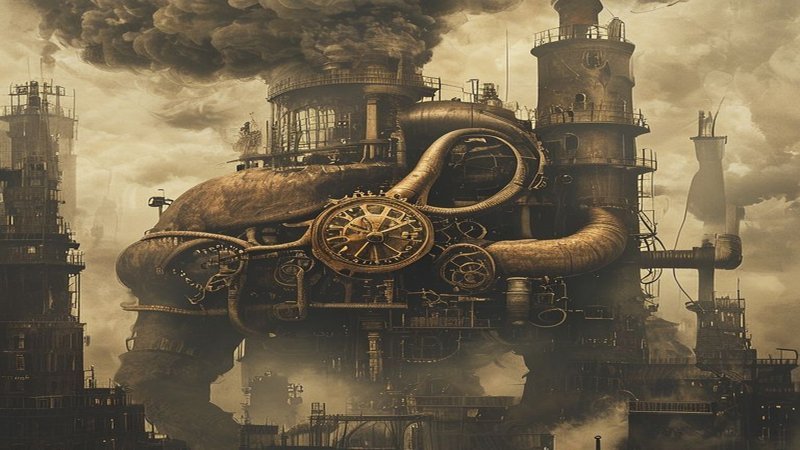
In 1868, Newark witnessed the unveiling of Zadok Dederick’s ‘Steam Man,’ a mechanical marvel clad in iron that could pull a carriage. This was not a parlor trick; it was a declaration of a new age driven by tangible, material force. These machines operated on the visible, noisy principles of steam pistons and blazing boilers. Engineers designed these robots with frighteningly accurate emulation of human motion, bending mechanical knees and moving arms in complex harmony, a level of physical mechanics often surpassing modern complexity. The sheer presence of these beasts—their metallic groan and furnace heat—announced their power.
The Struggle for Dominance: Steam’s Tangible Might vs. Electric Silence
The conflict between steam and electricity was not just technical; it was ideological. Steam proponents argued for autonomy: ignite the fire, and the machine runs, requiring no vulnerable external networks of wires. This represented the pinnacle of technical self-sufficiency. Conversely, figures like Edison and Tesla offered cleanliness and silence. Yet, the transition was driven by commercial interests. Steam robots, like Louis-Philippe Perre’s mechanical horse, were inherently dangerous due to the ever-present threat of boiler explosions, yet they embodied a raw human connection to power that modern tech lacks. We lost that sensory link, the feeling of the mechanical pulse.
The Suppression: Why Steam Robotics Vanished
The silent executioner of steam robotics was ultimately energy efficiency and commercial centralization. Transmitting power through wires proved cheaper and easier to distribute widely than building massive, mobile power sources. Major power companies found the centralized electrical model far more profitable than supporting decentralized, self-sufficient steam-powered automatons. As a result, steam innovations were actively suppressed, portrayed as dangerous novelties rather than foundational pillars of automation. Their legacy retreated into the pages of old journals and the fiction we now call ‘Steampunk’.
The Psychological Cost of the Electrical Transition
Living in the age of the ‘black box’ machine carries a psychological price. Steam robots possessed a legible mechanical soul; one could understand movement by observing the gears. Today’s smart devices conceal their function. We lost the ability to grasp the engineering intimately. Consider the alternative path: steam development could have led to cities balanced on colossal steel pillars, or flying palaces driven by superheated gases. The history of steam robotics is a profound story of lost opportunities shaped by commercial forces determining our technological fate, forces that suppressed inventions not aligned with rapid consumption models. For comparison regarding lost ancient knowledge, one might look into Sumerian Copper Cups: Ancient Batteries, Cosmic Communicators, or Lost Tech? or the secrets buried in Lost Mero Inscriptions: Unknown Monarchs and Suppressed Egyptian History.
Frequently Asked Questions
Generated by AI Content Architect
About The Author