Great Pyramid’s Construction Secrets Unveiled: The Merer Papyrus Discovery

Great Pyramid’s Construction Secrets Unveiled: The Merer Papyrus Discovery
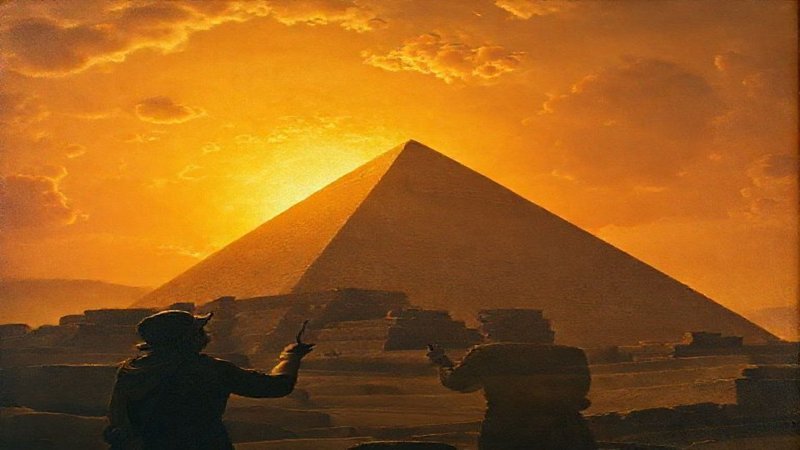
Imagine standing now before the greatest engineering marvel ever known to humanity. A monument weighing six million tons of solid stone, rising skyward to defy the laws of time and physics. For centuries, a question has puzzled scientists, researchers, and adventurers: How did the ancient Egyptians transport such immense masses of limestone and granite without modern machinery or giant trucks? Did hidden forces from space intervene, or is there a secret buried in the sands yet to be uncovered? The answer was not hidden within the pyramid’s secret chambers, but awaited us in a remote cave on the Red Sea coast.
Navigate Content
The Unveiling of Merer’s Journals
In 2013, winds lashed the sands of Wadi al-Jarf, the oldest known port in human history, when French archaeologist Pierre Tallet discovered an invaluable treasure. This was no gold or jewel-encrusted statues, but torn papyrus scrolls dating back to the reign of King Khufu. These are the journals of Inspector Merer, the man who witnessed the construction of the Great Pyramid with his own eyes and meticulously documented the precise details that put an end to the debate forever. This document is not merely a historical text; rather, it is the chronological and logistical blueprint for the creation of one of the Seven Wonders of the World, shedding light on a monumental undertaking that rivaled the complexity of other great ancient civilizations, much like Aksum: The Forgotten African Empire That Rivaled Rome and Persia. As you gaze upon these papyri, a shiver runs through you. They are the oldest written papyri ever discovered, dating back to the 26th year of King Khufu’s reign. Merer was no ordinary worker; he supervised a team of forty elite sailors and laborers.
The Ingenious Waterway Network
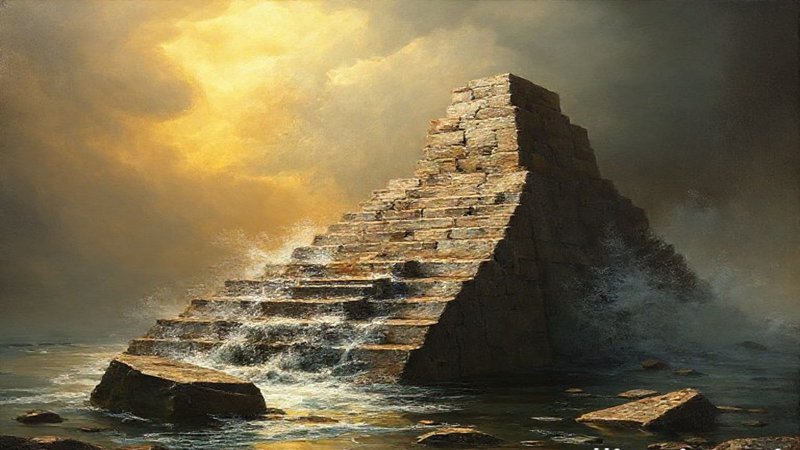
Let us delve into the engineering details Merer meticulously recorded. You ask yourself how these heavy loads traversed vast distances. Merer reveals the secret: It is the Nile. But not the Nile we know today. The ancient Egyptians engineered a complex network of artificial waterways that reached directly to the base of the Giza plateau. Merer describes how he would open a water lock, allowing water to flow and enabling stone-laden boats to dock in a vast inner harbor named Ru-she-Khufu, or “Mouth of the Lake of Khufu.” This hydraulic engineering was millennia ahead of its time, as they utilized the buoyancy of water to reduce the apparent weight of the stone blocks. Merer records on the seventh day of the month how he led his team to load stones onto massive wooden boats. These were no ordinary stones; they were pure white limestone, intended to clad the pyramid and make it shimmer under the sun like a diamond.
An Elite Workforce and State Mobilization
Consider the figures Merer cited in his journals. His team transported approximately thirty stone blocks per trip, each weighing between two and three tons. The journey from the Tura quarries to Giza took two days, sailing with the current, and the return trip took one day. Merer managed this operation with a precision akin to modern-day air traffic controllers. There was no room for randomness. He recorded the quantities of food distributed to the workers, including loaves of bread, beer, and meat. This entirely refutes the myth that the pyramid was built by forced labor or slaves; the workers were a skilled elite, receiving the best care and provisions, a stark contrast to common misconceptions about ancient labor, as seen in other historical accounts like the First Labor Strike: Deir el-Medina Workers Defy Pharaoh Ramesses III in 1159 BCE. You are now witnessing the truth unfold before you, far removed from alien theories. Merer mentions the names of officials he interacted with, including Vizier Ankhhaf, King Khufu’s half-brother and the general supervisor of the pyramid’s construction. This indicates that the entire Egyptian state was mobilized for this national project. It was not merely a tomb for a king but a demonstration of organizational power and the ability to harness nature.
Precision, Competition, and Logistical Integration
Think of the challenges Merer and his team faced. North winds aided them on their return journey, while they had to row vigorously on the outbound trip. Merer refers to his companions by their group names, such as “The Skilled Ones” or “The Elite Ones.” There was healthy competition among the teams to complete tasks in record time. The papyrus reveals a strict administrative system: each shipment was numbered and marked with signs indicating its placement in the pyramid’s construction. This organization enabled them to lay two million three hundred thousand stones with such extreme precision that a razor blade could not pass between them. But why Wadi al-Jarf, and why were the journals found there? The answer lies in the project’s comprehensive nature. After completing their mission in Giza, Merer and his team moved to the Red Sea coast, where they worked in the copper mines of Sinai. Copper was essential for making the chisels and saws that cut hard rock. You now see a complete logistical cycle, starting from the heart of Sinai and reaching the Giza plateau. Merer served as the logistics operations manager, connecting the different parts of the kingdom. Look at the map of the pyramid site, drawn by contemporary engineers based on Merer’s journals. You will find that the waterways extended to within a few meters of the Great Pyramid.
Debunking Myths: Tools and Human Ingenuity
When skeptics speak of the impossibility of cutting granite with copper tools, they disregard what Merer recorded about the use of sand and water as abrasives. Pressure and friction with quartz sand were sufficient to cut the hardest rocks. Merer did not explicitly write this as an instructional lesson but rather in his notes on tool consumption and supply requests. Every word in this papyrus is a nail in the coffin of myths that attempt to diminish the Egyptians’ magnificent achievement, much like historical analysis debunks other long-held beliefs, such as the Trojan Horse Enigma. You are before tangible, material evidence: black and red ink on plant-based paper, surviving millennia of decay to tell you that the human mind knows no limits.
Frequently Asked Questions
Generated by AI Content Architect
About The Author