The Silent End: Why Earth’s Volcanoes Must Erupt to Sustain Life
The Silent End: Why Earth’s Volcanoes Must Erupt to Sustain Life
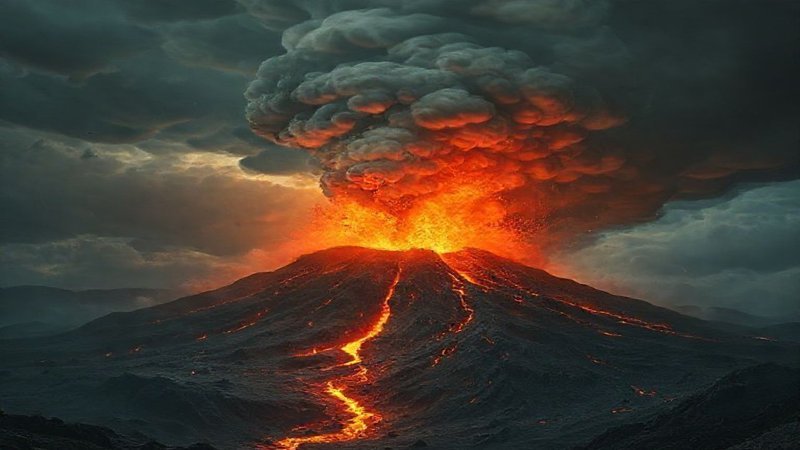
We view volcanoes as destructive forces, symbols of chaos, but what if their cessation signaled a far greater, silent catastrophe? If Earth’s fiery vents went dormant, the planet would begin a slow, irreversible slide toward becoming a frozen, lifeless rock, illustrating that destructive power is sometimes essential for sustaining life.
Navigate Content
The Collapse of the Global Carbon Cycle
The immediate relief from ash clouds would quickly be overshadowed by a profound chemical shift. Volcanoes are the planet’s primary mechanism for replenishing atmospheric carbon dioxide (CO2). While often targeted for global warming, a baseline level of CO2 is crucial for trapping planetary heat. Without volcanic replenishment, atmospheric CO2 would be slowly absorbed by oceans and rocks, triggering a dramatic drop in global temperatures. Over millennia, the Earth would descend into a snowball state, mirroring ancient glacial epochs. This essential gas exchange is regulated by volcanic outgassing, proving that what we fear is also what keeps us warm.
The Erosion of Landmasses and Habitats
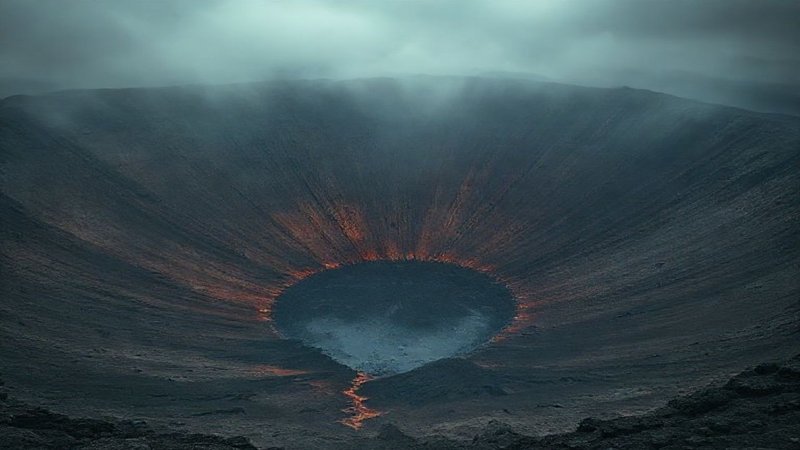
Volcanic activity is the Earth’s construction engine. Islands like Iceland and Hawaii exist solely because magma constantly replenishes the crust against the forces of erosion. A worldwide cessation of volcanism means that wind and waves would relentlessly wear down existing landmasses without replacement. Over geological time:
- Island nations would disappear beneath the rising oceans.
- Coastlines would recede dramatically.
- The planet would lose its essential mechanism for tectonic and geographic renewal.
This gradual erasure would lead to the vanishing of countless human habitats.
Sterile Soil and Underwater Oases Extinguished
Our sustenance relies heavily on volcanic gifts. Volcanic ash deposits create the most fertile soils on the planet, rich in vital minerals like phosphorus, potassium, and magnesium, which revitalize agriculture around volcanoes like Vesuvius. Without replenishment, these soils would quickly deplete, leading to widespread famine as crop yields plummet. Furthermore, this catastrophe extends beneath the waves. Hydrothermal vents—underwater volcanoes—are oases supporting chemosynthetic life forms independent of sunlight. Their extinction would cause entire deep-sea food webs to collapse, radically altering ocean chemistry and disrupting crucial marine currents that stabilize global climate.
Losing the Magnetic Shield: The Martian Fate
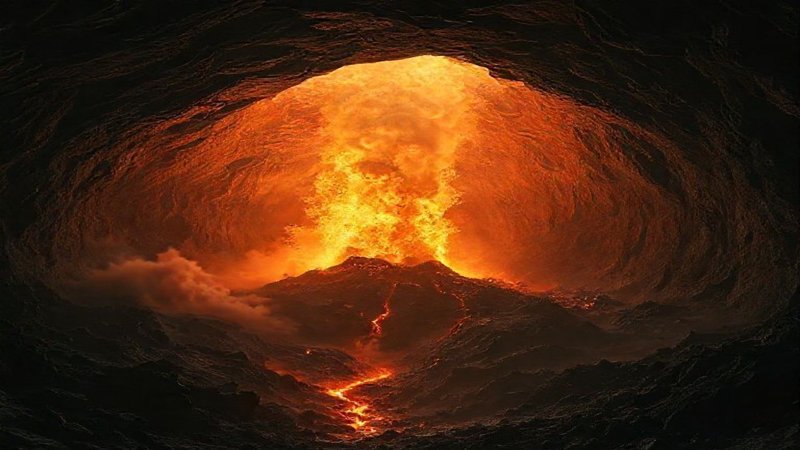
The most terrifying consequence is internal. Volcanic activity confirms that Earth’s core is active—a churning, liquid engine generating our magnetic field. A halt in volcanism signals the core is cooling and solidifying, leading to the loss of this magnetic shield. This shield is vital, protecting us from lethal solar winds and cosmic radiation. As seen on Mars, once its volcanism ceased and its core solidified, it lost its magnetosphere, allowing solar winds to strip away its atmosphere and water, turning it into a desolate desert. Earth would face the same fate, not quickly, but surely.
The End of Topography and Essential Resources
A complete halt in volcanism implies that the underlying tectonic engine has stopped moving. This means no new mountains—no future Himalayas or Andes—will ever form. The planet would eventually flatten under the relentless abrasion of weather, resulting in a monotonous world largely covered by water, as landmasses lack the elevation to resist sea level. Moreover, the very elements that build our modern civilization—gold, copper, and diamonds—are brought to the surface via volcanic processes. These treasures would remain forever locked deep within the cooling mantle. We built our world upon ancient fire; its silence means our resources vanish too. This necessary planetary respiration is vital for the very atmosphere we breathe, a product of billions of years of volcanic exhalation. If you want to learn more about historical collapses, you might explore The Enigma of the Sea Peoples.
Frequently Asked Questions
Generated by AI Content Architect
About The Author