1923 Great Kanto Earthquake: Fire Dragon, Massacres, and Tokyo’s Collapse
1923 Great Kanto Earthquake: Fire Dragon, Massacres, and Tokyo’s Collapse
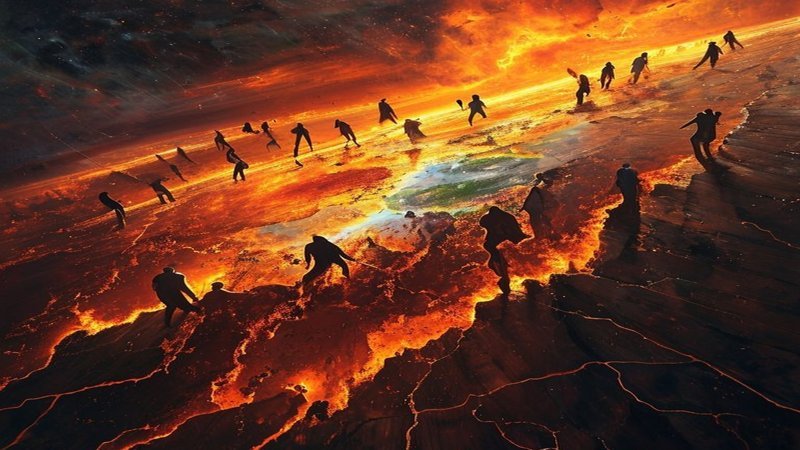
Imagine the ground beneath your feet is not as solid as you believe, but a thin crust over an unyielding hell. In just two minutes, the capital of a burgeoning empire transformed into an open tomb beneath a sky of flame. The Great Kanto Earthquake was not merely a natural catastrophe that crumbled walls; it was the earthquake that shattered Japan’s morale and social fabric. Was what followed merely spontaneous mass panic, or a stark indication of modernity’s failure to contain the beast within humanity?
Navigate Content
The Initial Shock and the Birth of the Flames
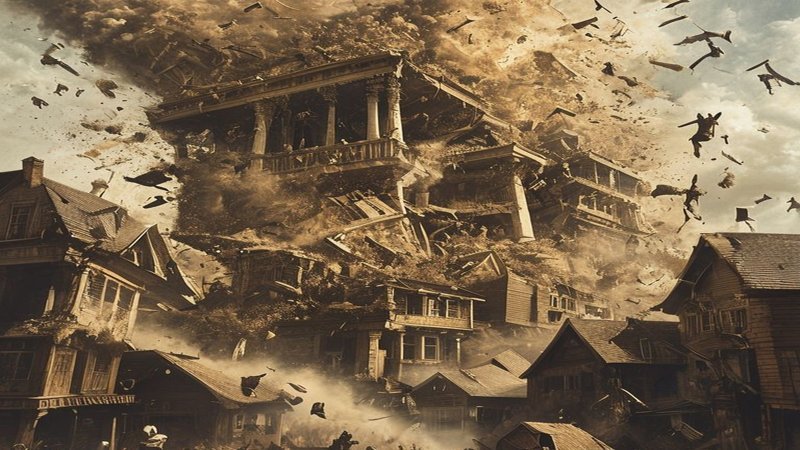
On the morning of September 1, 1923, Tokyo was at the peak of its prosperity during the Taisho era. The streets bustled with life, people were preparing lunch, and the dense wooden houses exuded the aromas of food. No one knew that beneath their feet, in the deep Sagami Trough, tectonic plates were poised for an indescribably violent shift. At precisely 11:58 AM, the earth shook with a magnitude of 7.9 on the Richter scale. You watch as large stone buildings crumble like biscuits, and wooden houses collapse upon their inhabitants in mere seconds. The initial shock was enough to kill thousands, but the true horror had only just begun beyond the horizon. For a terrifying perspective on seismic forces, read about the potential for human influence on geological events: Deep Echo Technology: The Secret Seismic Weapon. Due to the earthquake’s timing, cooking hearths were alight in most homes, ensuring that the destruction would continue long after the shaking stopped.
The Wrath of the ‘Fire Dragon’
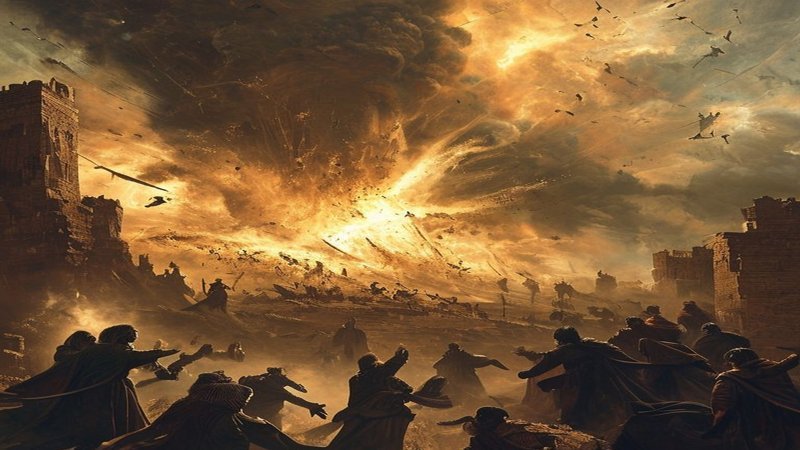
With the collapse of wooden houses, hundreds of fires erupted simultaneously. These were no ordinary fires that could be extinguished; they were walls of fire fed by powerful winds from a typhoon near the coast. These winds transformed the blazes into what are known as fire whirls or ‘fire dragons.’ The most devastating tragedy occurred in the Ryogoku district. Over thirty-eight thousand people sought refuge in a large open square, believing it to be a safe haven. But fate had a destiny in store for them that defies description. The resulting firestorm demonstrated nature’s sheer power:
- Sudden Collapse: Initial shock killed thousands instantly.
- Fire Whirls: Typhoon winds combined with hundreds of isolated blazes to create massive, oxygen-sucking vortexes.
- Mass Cremation: Fire whirls encircled the Ryogoku square, and within a few minutes, thirty-eight thousand human beings turned to ash in a single spot.
This scene makes you realize the insignificance of humanity before nature’s wrath, yet it poses a deeper question: how do humans behave when order suddenly vanishes?
The Information Vacuum and the Surge of Hatred
In the hours following the earthquake, all means of communication ceased. Telegraph lines were destroyed, newspapers stopped, and the city plunged into utter darkness, interrupted only by the glow of the flames. In this information vacuum, a monster no less dangerous than the earthquake was born: rumor. Whispers began in the camps and amidst the rubble. It was said that foreigners, specifically Koreans, were exploiting the chaos to poison wells, ignite more fires, and loot property. Can you feel the bitter fear filling the hearts of the survivors? This fear transformed with astonishing speed into blind hatred. In the absence of authority and security, ordinary people decided to take the law into their own hands. Groups of citizens armed with swords, sticks, and knives formed, beginning to scour the streets in search of a scapegoat for their suffering.
The Failure of Modernity: State Complicity and Massacres
What happened next was a stain on the history of Japanese modernity. Thousands of Koreans were killed, along with some Chinese and Japanese who were suspected due to their accents or appearance. The social experiment of modernity, which Japan had embraced for decades, collapsed before one’s eyes. The nation that prided itself on its organization and discipline became a jungle where killing based on identity prevailed. Social psychology explains this collapse by noting that when humans perceive an unknown existential threat, their minds automatically tend to personalize the enemy. Instead of blaming the trembling earth, they blamed the ‘other’ who could be seen and killed. The Japanese government at that time was not innocent of this failure. It imposed martial law, but initially allowed rumors to spread and did little to protect minorities. The implicit objective was to divert public anger away from the government’s inadequacy in dealing with the disaster and towards an imaginary enemy. This historical moment served as the starting signal for the growth of extremist nationalism and militarism in Japan.
Rebuilding Concrete, Ignoring the Cracks in the Psyche
When you look at photos of Tokyo after the earthquake, you will see a city resembling the surface of the moon, utterly flattened and devoid of life. Yet, from amidst this wreckage emerged the idea of reconstruction, led by Shinpei Goto. Goto wanted to build a new Tokyo, a city resistant to fire and earthquakes, with wide streets and public parks serving as firebreaks. Japan spent vast sums, amounting to hundreds of millions of yen at the time, to transform the capital from a medieval wooden city into a modern metropolis of concrete and steel. But did architectural engineering succeed in mending what social engineering had broken? Walls were built with greater strength, but the cracks in the human psyche remained, awaiting the next catastrophe to reappear. This earthquake confronts you with a terrifying truth about the nature of the civilization we inhabit today: our complex systems are extremely fragile. In the 1923 earthquake, the first killer was fire, the second was ignorance, and the third was hatred. Tokyo’s failed experience in maintaining civil peace remains a stark warning.
Frequently Asked Questions
Generated by AI Content Architect
About The Author