What Happens When Stars Die? The Astonishing Secrets of Black Holes and Neutron Stars
What Happens When Stars Die? The Astonishing Secrets of Black Holes and Neutron Stars
Navigate Content
The Cosmic Struggle: A Star’s Fiery Life and Inevitable End
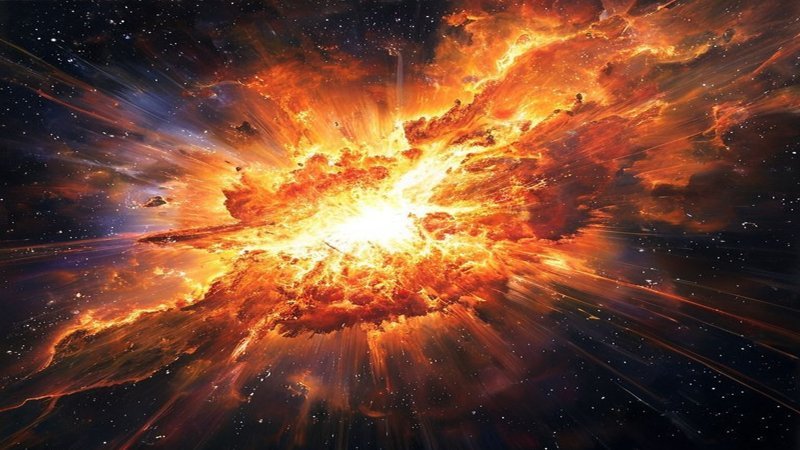
Supernovae: The Universe’s Ultimate Fireworks
Neutron Stars: Density Beyond Imagination
These neutron stars are not merely silent spheres of dense matter. They rotate on their axes at astonishing speeds, sometimes hundreds of times per second. Due to this rotation and their immense magnetic fields, they emit beams of radiation from their poles. When these beams intersect Earth’s trajectory, we observe them as regular pulses, akin to a lighthouse beacon in the dark oceans. Scientists have termed this phenomenon “pulsars.” They are the most precise clocks in the universe. However, an even more terrifying variant exists: the magnetar. This object possesses a magnetic field a thousand trillion times stronger than Earth’s. Should you approach a magnetar within a mere thousand kilometers, its magnetic force would tear apart the chemical bonds in your body’s molecules, transforming you into a cloud of atomic dust in the blink of an eye.
Black Holes: The Ultimate Gravitational Abyss
Black holes are not merely monsters that devour everything; they are powerful cosmic engines. When gas or an unfortunate star approaches a black hole, it does not fall directly in. Instead, it forms a superheated, swirling disk called an accretion disk. Friction within this disk elevates temperatures to millions of degrees, causing it to emit X-rays and radiation visible across galaxies. At the centers of large galaxies reside supermassive black holes, weighing millions or billions of times our Sun’s mass. These behemoths govern the fate of entire galaxies. They regulate star formation and gas flow, positioning them as the grand architects of cosmic construction. Without these black holes, galaxies would not exist in their current form, and perhaps the stable environment necessary for the genesis of our solar system would never have materialized.
We Are Stardust: Why Stellar Deaths Matter
Here’s a breakdown of elements created:
- Light elements (Hydrogen, Helium): Formed in the Big Bang.
- Medium elements (Carbon, Oxygen, Iron): Forged in the cores of stars through nuclear fusion.
- Heavy elements (Gold, Platinum, Uranium): Created during supernovae explosions and neutron star mergers.
Frequently Asked Questions
About The Author