The Wood Wide Web: Secret Communication, Altruism, and the Hyper-Intelligent Forest Network

The Wood Wide Web: Secret Communication, Altruism, and the Hyper-Intelligent Forest Network
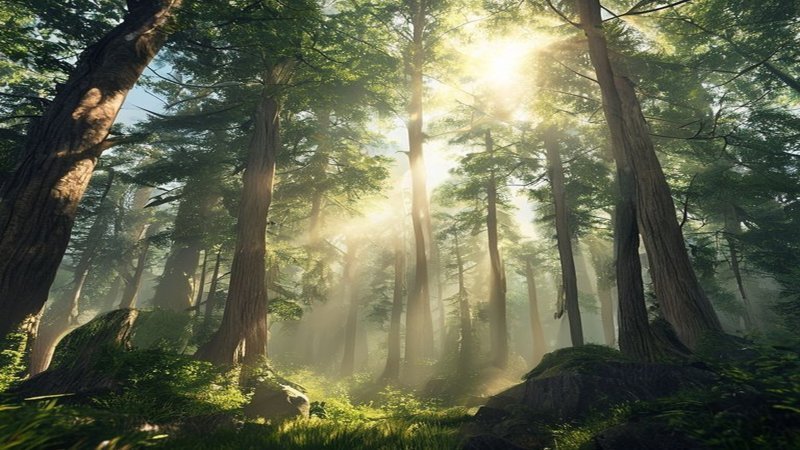
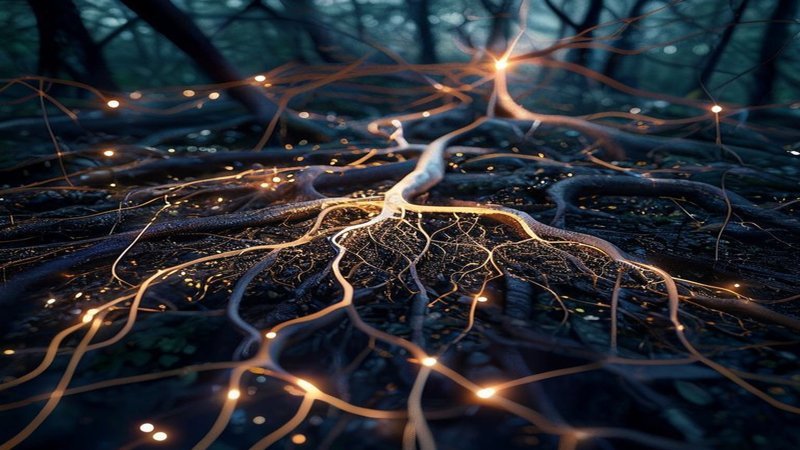
Imagine traversing a densely forested area, enveloped by profound silence. One might instinctively assume they are amidst organisms passively resigned to their biological destiny. However, the astonishing truth is that, directly beneath the surface, biological technological revolutions and communication processes—ranging from the incredibly simple to the profoundly complex—are unfolding. You are not walking merely on soil and stone. You are treading upon the largest biological communication network the Earth has known for millions of years. This network, which scientists term the ‘Wood Wide Web,’ is not just a poetic metaphor; it is a tangible reality composed of incredibly fine fungal filaments (hyphae) that connect tree roots in an astonishing cooperative system. These fungal threads function like the fiber optics of our digital world, but instead of transmitting zeros and ones, they transport sugars, carbon, and complex chemical information.
Navigate Content
The Mother Tree and the Altruism Paradigm
Have you ever wondered how small saplings survive beneath giant trees that completely block the sunlight? Traditional logic suggests they should inevitably perish due to lack of nutrients. However, modern science has unveiled a secret that redefines our understanding of the struggle for existence. Massive trees, known as ‘Mother Trees,’ actively pump nutrients and sugars through this fungal network to support weak, young seedlings. This behavior challenges the fierce competition paradigm often taught. The forest is not merely a battleground; it is a cooperative society governed by biological altruism. Key aspects of this behavior include:
- Kin Recognition: Mother Trees are capable of distinguishing the roots of their progeny from those of other species.
- Life Support: They provide weak seedlings with the essentials for life until they grow strong enough to reach the canopy.
- Resource Balancing: This sharing mechanism ensures genetic survival and strengthens the overall stability of the local ecosystem.
Fungal Fiber Optics: Chemical Warnings and Immune Systems
These biological networks allow trees to transmit immediate warnings when danger is imminent. When a tree is attacked by harmful insects, it instantly begins emitting specific chemical compounds. These signals travel through the fungal threads, reaching neighboring trees within minutes. Upon receipt of the message, the other trees begin bolstering their immune defenses. They increase the concentration of toxic substances in their leaves, making them bitter and unpalatable to insects before the pests arrive. This is an uninterrupted early warning system operating with extreme precision. The network acts with complexity and speed, much like the sophisticated, tiny operations detailed in articles such as The Beetle’s Brain: Microscopic Bio-Computer Surpassing Human Technology.
Nature’s Grand Bargain: Mycorrhizal Symbiosis
The relationship between fungi and roots constitutes a highly sophisticated reciprocal exchange. Fungi cannot produce sugars because they lack photosynthesis. Conversely, trees possess an abundance of sugar but struggle to efficiently acquire phosphorus and nitrogen from deep within the soil. This forms one of nature’s greatest agreements. Trees grant the fungi up to thirty percent of their sugar production. In exchange, the fungi supply the trees with minerals and water, which they collect from distant areas. This symbiosis supports the stability of the entire ecosystem, solidifying the forest as a unified entity.
Forest Consciousness: Memory, Wisdom, and Collective Mind
Consider this from a profound philosophical perspective. Humans often believe we are the sole creatures possessing social consciousness and sophisticated communication networks. Yet, the forest demonstrates that awareness can take forms we cannot perceive with our limited senses. The forest is not merely a collection of individual trees; it is a single, hyper-intelligent organism—a collective mind working to protect itself and pass down ecological wisdom to future generations of trees. This silent intelligence manifests in the method of resource distribution. During periods of drought, strong trees share their water reserves with thirsty ones. There is no selfishness in this system, as the death of any single tree compromises the entire network. Botanical research conducted over the past two decades has established that trees possess a form of memory. They recall past periods of harsh conditions and store this information in their genetic and chemical composition. When this data is transmitted through the fungal network, it alerts younger trees to potential future threats. This constitutes a biological educational system where accumulated experience is transferred across thousands of years.
The Danger of Disconnection: Why Monocultures Fail
This discovery compels us to re-evaluate every tree we encounter. It is not just wood and leaves; it is a repository of information and a vital node in an astonishing universal network. Consider the devastating harm inflicted when we indiscriminately clear-cut an entire forest. We are not just killing trees; we are destroying the infrastructure of life’s communication. We sever the wires of nature’s internet, isolating organisms from one another. Trees growing in artificial plantations (monocultures) lack these complex networks. Consequently, they exhibit:
- Weakness and Vulnerability: They are highly susceptible to disease and pests.
- Isolation: They live akin to a person confined to a dark room without external contact.
This explains why ancient natural forests exhibit far greater resilience and strength against climate change compared to human-planted forests. Furthermore, the subterranean fungal connections also act as a recycling platform. When an old tree dies, it begins pumping all its remaining energy and nutrients into the network, bequeathing its resources to its neighbors and associates.
Frequently Asked Questions
Generated by AI Content Architect
About The Author