The Waratah Mystery: Magnetic Anomaly and the Sinking of the Titanic of the South
The Waratah Mystery: Magnetic Anomaly and the Sinking of the Titanic of the South
The disappearance of the SS Waratah in 1909 remains one of maritime history’s most profound enigmas. Nicknamed the ‘Titanic of the South,’ this seemingly unsinkable vessel vanished without a trace off the coast of South Africa, leaving behind no debris, no oil, and no survivors. While conventional wisdom points to rogue waves, this account delves into the theory that a far more invisible, powerful force—the Earth’s submerged magnetism—was the true executioner.
Navigate Content
The Unsinkable Ship and Its Final Voyage
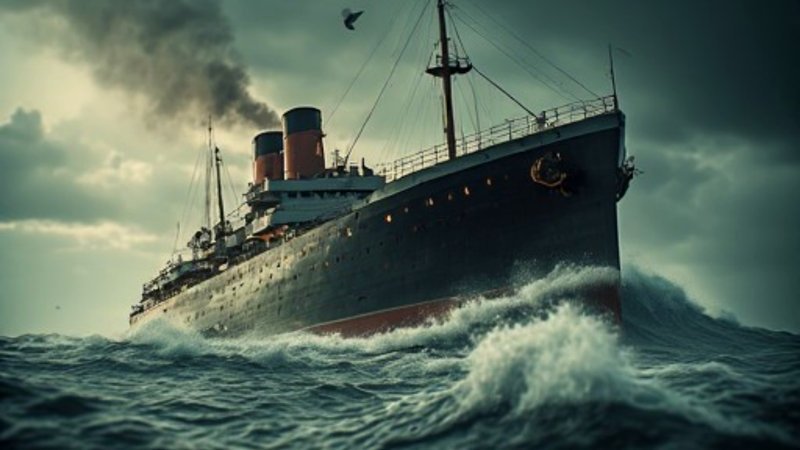
The Waratah, a nine-thousand-ton pride of the Blue Funnel Line, departed Durban Harbour on July 26, 1909, bound for Cape Town. Carrying 211 passengers and crew, she was lauded for her size and luxury. However, structural imbalances—design compromises made for increased cargo and luxury—may have already doomed her. After a brief sighting by the vessel Guelph the following day, the Waratah simply dissolved into the ocean, leading investigators to question how a large steel vessel could vanish so completely. Unlike typical sinkings, there was no floating wreckage or oil slick.
The Magnetic Trap: South Africa’s Deceptive Waters
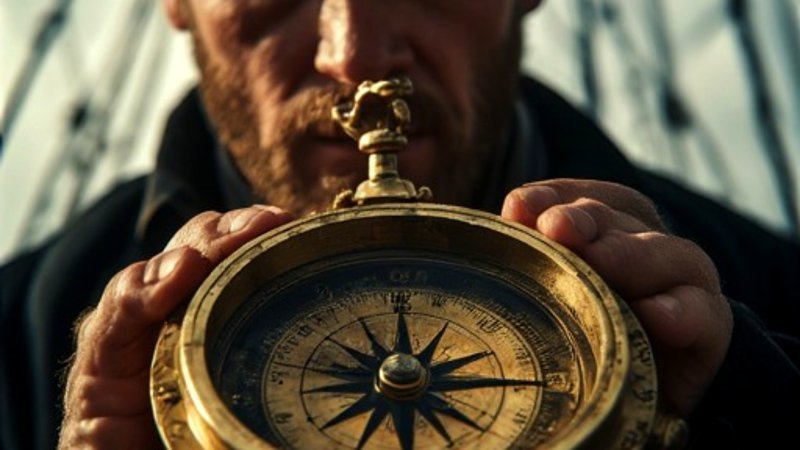
The core of the mystery, according to some analyses, lies in the complex electro-magnetic environment off the South African coast. Here, the warm Agulhas Current clashes with frigid Antarctic waters, creating immense energy. The author posits that the local magnetic declination in this area shifts erratically. For Captain Leupold, relying on his compass, these sudden magnetic variations would mean believing he was on a safe course while actually being steered toward disaster by invisible forces acting upon his navigation instruments. This phenomenon is further complicated by potential mineral deposits creating localized magnetic fields beneath the seabed.
The Theory of Magnetic Engulfment
The lack of evidence suggests something more violent and immediate than a slow sinking. The theory suggests that the magnetic shifts, coupled with the severe weather and the powerful Agulhas Current, created a perfect storm of physical and magnetic interference. If the ship strayed into the ‘Giant Wave Trap,’ the combination of structural top-heaviness (slow ‘period of roll’) and sudden magnetic deviation could have caused a catastrophic sequence:
- The Captain loses accurate heading due to magnetic anomaly.
- The ship is caught by vertical waves intensified by the current.
- The steel hull interacts with generated electric currents, effectively being ‘pulled’ by the magnetic field rather than simply sinking due to wave damage.
This suggests an ‘organized engulfment orchestrated by the Earth itself.’
The Passenger Who Listened to Intuition
Amidst the tragedy, one man, Claude Sawyer, survived by chance—or by intuition. Sawyer disembarked in Durban after having a vivid dream featuring a knight with a blood-stained sword emerging from the sea behind his sinking ship. While others dismissed him as mad, he abandoned the voyage. His escape is contrasted with the fate of those who trusted only technology. This highlights the contrast between reliance on the compass (magnetism) and reliance on inner sensing, a theme explored in articles concerning unexplained premonitions, such as those detailing psychological insights found in The Split Brain Secret.
A Phantom Unwilling to Be Found
Decades of searching using advanced technology—sonar, aircraft, and AUVs—have yielded nothing conclusive regarding the Waratah. The explanation provided is that the ship lies in a deep oceanic trench, shielded by sands constantly shifted by the same continuous magnetic current that likely led to its demise. The currents acted as a conveyor belt, dragging any debris far from the original loss point, ensuring the vessel remains a phantom of the deep, its steel hull forever subject to the planet’s unseen forces.
Frequently Asked Questions
Generated by AI Content Architect
About The Author