The Voynich Manuscript: 600 Years of Unsolved Code and Cryptography’s Greatest Failure
The Voynich Manuscript: 600 Years of Unsolved Code and Cryptography’s Greatest Failure
Navigate Content
The Physical Enigma: A Renaissance Relic of Unknown Origin
You stand before a small codex, its vellum cover cool to the touch, holding secrets composed between 1404 and 1438. Discovered by Wilfrid Voynich, this book has yielded its age but not its author or title. Examination reveals intricate sections, starting with botany, featuring illustrations of plants that defy all known taxonomy—hybrid species with roots like dragons and geometric leaves. This immediately suggests either a record of completely extinct life or an imagination far beyond the medieval norm.
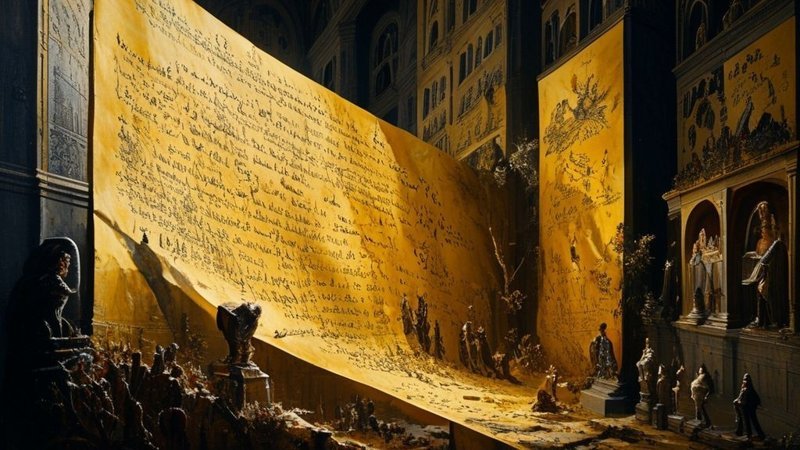
The Voynich World: Illustrations Baffling Science
The manuscript is a visual labyrinth:
- Botanical Section: Features unidentified, bizarre flora, suggesting a lost world or extreme fantasy.
- Astronomical Section: Contains star charts where the sun and moon possess mocking human faces, surrounded by the intractable script.
- Biological Section: Depicts diminutive women bathing in complex pools connected by tubes resembling human organs—hinting at obscure medical or alchemical rituals.
These images, coupled with the text, suggest a comprehensive, albeit alien, body of knowledge. If you are interested in other relics defying explanation, consider learning about Nan Madol: The Enigma of the Floating Stone City.
Linguistic Structure That Defies Translation
The greatest challenge lies in the text itself. It is not random scribbling; it adheres strictly to Zipf’s Law, a statistical feature common to all functional human languages. This implies genuine linguistic structure—grammar, rules, and functional words—yet the language is spoken by no known community. Even the World War II codebreakers who famously cracked the Nazi Enigma cipher failed to penetrate its meaning. This adherence to linguistic principles makes the hoax theory difficult to sustain given the colossal effort required for such consistency.

Modern Failures: Cryptography vs. Artificial Intelligence
The quest for decryption has moved into the digital age. Artificial Intelligence models, capable of predicting complex behavior, have been deployed against the manuscript. Researchers at the University of Alberta found the closest linguistic match was coded Hebrew, yet the resulting partial translations yielded no coherent meaning. This failure suggests the cipher may operate on a logical framework entirely outside contemporary models. If you are intrigued by hidden patterns, you might explore the mysteries surrounding AI Secret Language.
The Hoax Argument and the ‘Voynich Curse’
Could this all be an elaborate forgery, perhaps created to swindle a wealthy collector like Rudolf II? Opponents argue that forgers rarely exhibit such meticulous, page-by-page novelty across 240 pages of expensive vellum. This leads to the psychological toll known as the ‘Voynich Curse’—the overwhelming pressure on researchers to impose patterns onto chaos. Theories abound, ranging from lost Mexican dialects to mystical texts, proving that the obscurity of the book fosters endless speculation rather than unified conclusion.

Frequently Asked Questions
About The Author