The Martian Paradox: Why Our Search for Life on Mars Might Be Fundamentally Flawed
The Martian Paradox: Why Our Search for Life on Mars Might Be Fundamentally Flawed
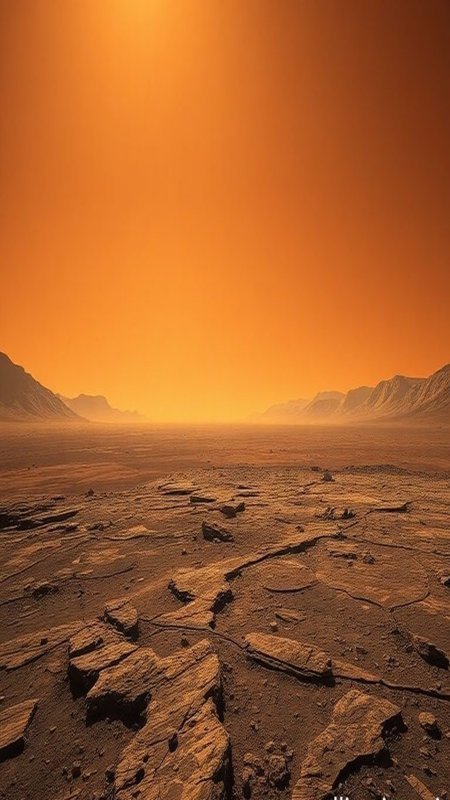
What if all our efforts to find life on Mars have been fundamentally wrong? For millennia, humans have dreamed of other worlds and beings similar to us. Mars, the Red Planet, has always been the most captivating celestial body. Billions of dollars and dozens of advanced spacecraft have launched there, yet… there is absolute cosmic silence! Why? The secret lies in our sole foundational assumption: the methodology of the search itself.
Navigate Content
The Golden Rule of Earth: Where Water Was, Life Must Be
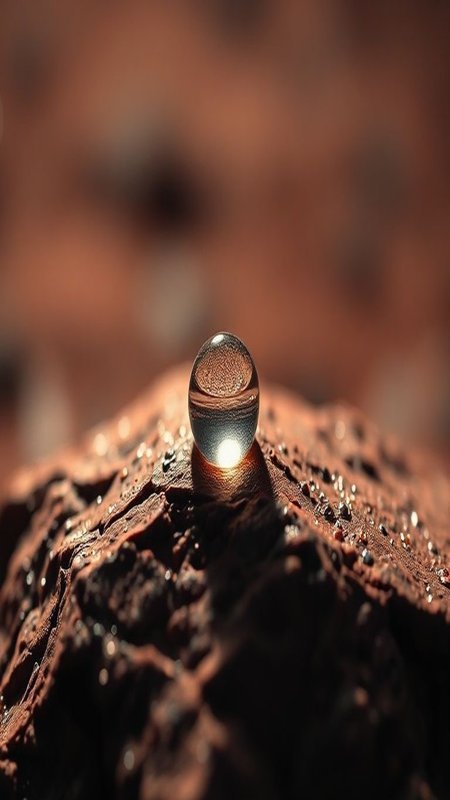
The belief that ‘where there is water, there is life’ is the golden rule governing our search for extraterrestrial biology. Early speculation about Martian water channels was quickly debunked by the disappointing results of the Viking missions in the 1970s. However, modern rovers like Curiosity and Perseverance delivered a massive scientific triumph: they proved that Mars was once a profoundly watery world, complete with lakes, vast rivers, and potentially even drinkable fresh water. If liquid water was stable for millions of years, the genesis of life seems statistically inevitable. But despite this confirmation, we have found absolutely no evidence of past or present biology. This paradoxical silence suggests a deep flaw in our current approach.
Error 1: The Bias for Surface Life
Our first and perhaps most limiting assumption is that Martian life must be similar to life on Earth, requiring stable liquid water on the surface. But Mars today is an unforgiving environment. It is drastically arid, unbearably cold, and, crucially, lethally irradiated by cosmic rays due to the lack of a global magnetic field and thin atmosphere. Conditions that preclude the existence of surface water or surface biology. By focusing only on surface samples or recent past surface conditions, we ignore the geological reality. If life did evolve, it was likely driven underground very quickly to escape the radiation.
Error 2: Searching in the Shallows
If Martian life retreated, where did it go? The answer is likely subsurface. Our search has been criticized for being too superficial. Most of our missions, even those designed to drill, have only probed a few centimeters or inches deep. This is barely scratching the surface of a potential habitat. What if Martian life retreated to greater depths—meters below the regolith? This deep subsurface layer offers multiple advantages:
Error 3: The Chemistry Blindspot and the Methane Mystery
The third critical error relates to our narrow definition of life itself. We have almost exclusively looked for ‘terrestrial’ biosignatures—chemistry reliant on carbon, water, and DNA/RNA structures as we know them. What if the chemistry of Martian life is fundamentally different, evolving in ways we haven’t imagined? The Hunt for Alien Life requires open minds. Have we overlooked genuine evidence because it didn’t fit our Earth-centric checklist? The most compelling clue for overlooked life remains the Martian methane: levels fluctuate mysteriously, spiking in certain seasons and locations. While this could be geological, it could also indicate biological activity.
- Geological vs. Biological Source: Methane on Earth is overwhelmingly produced by biology, often microbes.
- The Fluctuation Enigma: If the source were ancient geology, the levels would likely be stable. The mysterious seasonal fluctuations suggest something currently active.
- A New Definition: Is Mars concealing forms of life based on chemistry we have yet to conceive of?
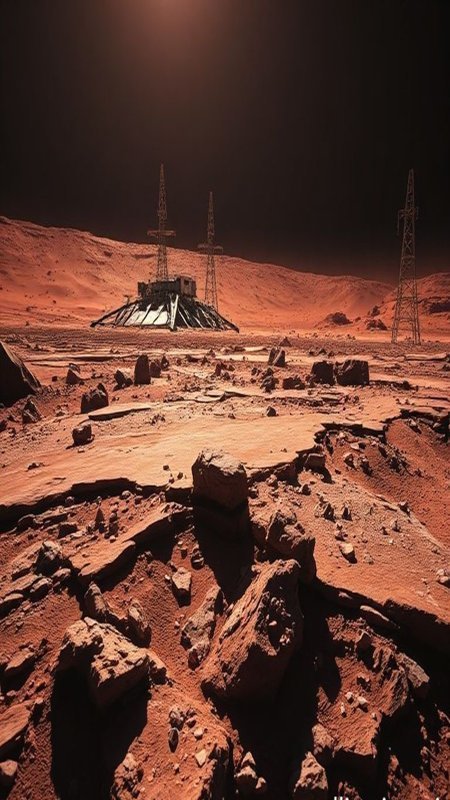
New missions must incorporate advanced drilling technology and broadened definitions of biosignatures if we are ever to answer this cosmic question.
Frequently Asked Questions
Generated by AI Content Architect
About The Author