The Lost Colony of Roanoke: Unraveling the ‘CROATOAN’ Mystery

0
image_1-51


The Lost Colony of Roanoke: Unraveling the ‘CROATOAN’ Mystery
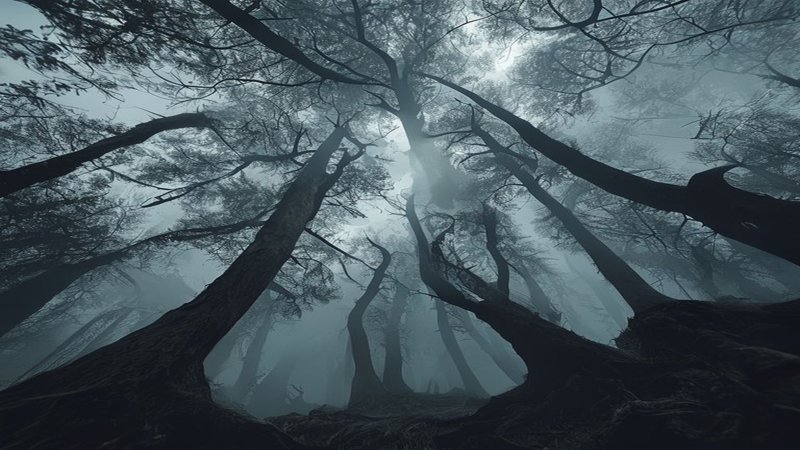
Imagine standing at the edge of a desolate forest where the wind whispers secrets of the dead, and only the echo of your trembling voice answers. You are now in the year 1590, watching Governor John White take his first steps toward the Roanoke Colony after a three-year absence. What he encounters is not destruction or scattered corpses, but a terrifying void that strips the mind of its sound reason.


The Fateful Return of Governor White

Pause for a moment and envision the English ships traversing the Atlantic Ocean in 1587. Aboard them were 115 souls, driven by the hope of building a new life in the New World. Men, women, and children fleeing the harsh confines of Europe for the vast unknown of the American continent. Among them was Eleanor White, the Governor’s daughter, who gave birth to Virginia Dare, the first English child born on that virgin land. However, this idyllic dream soon collided with the harsh reality. Resources were scarce, and tensions with local tribes had escalated, forcing Governor John White to return to England for supplies. He could not have known then that the farewell he believed temporary would transform into an eternal separation spanning centuries.

Recall those three years White spent stranded in England due to the war with Spain. The roar of cannons and the clamor of warships prevented his return to his family and colony. When he finally set foot on the island’s sands again, he found the settlement completely deserted.
The Fateful Return of Governor White


The Cryptic Clue: CROATOAN

There were no signs of battle or invasion; instead, houses had been meticulously dismantled and moved. The only clue left for him was a single word, clearly carved into a massive tree trunk: “CROATOAN.” Additionally, three letters were carved on another tree: “CRO.” The agreed-upon cross, signifying distress in case of danger, was conspicuously absent. This pervasive silence is what prompts a profound questioning of the fate of those souls who vanished as if the earth had opened and swallowed them whole. The enduring enigma surrounding this event has made it one of history’s greatest unsolved mysteries.


Unraveling the Theories: Drought, Archaeology, and Assimilation

A precise review of historical records reveals that this disappearance was not merely a fleeting incident but a complex enigma interwoven with environmental and social factors. Recent studies of ancient tree rings in the region indicate a devastating drought between 1587 and 1590. This drought was the worst in 800 years, implying withered crops and depleted freshwater sources. You now comprehend the immense suffering endured by these colonists. Hunger gnawed at their insides, thirst parched their throats, trapped in an unforgiving foreign land. Was this environmental pressure the impetus behind a collective decision to depart in search of a more sustainable location?

Let us shift our inquiry to the archaeological evidence discovered in recent years. At a site known as “Site X,” researchers uncovered pieces of English pottery from that era, buried deep in the soil. This site is approximately fifty miles from the original colony, located in an inland area far from the stormy coasts. The presence of these artifacts strongly suggests that the colonists did not all perish but rather divided into small groups and ventured inland. Imagine the disorientation they must have felt, abandoning their only fortification and heading into dense forests where they knew not what awaited them, be it wild beasts or hostile tribes.

The social mechanisms governing community survival inform us that integration is the sole means of survival under harsh conditions. Here, the hypothesis of integration with indigenous tribes, such as the Croatoan tribe residing on present-day Hatteras Island, emerges. The word carved on the tree was not a cry of terror but a clear indication of their destination. There are historical accounts from the 17th century describing sightings of indigenous individuals with blue eyes and light hair who could read English books. Consider this astonishing possibility, where European identity melted into the crucible of local culture for the sake of survival. Did the dreams of English sovereignty transform merely into inherited genes within the bloodlines of American continent tribes?
Unraveling the Theories: Drought, Archaeology, and Assimilation


Lingering Questions: Despair, Neglect, and the Unseen Forces

As a historical researcher, you recognize that the surviving texts from that journey are few and ambiguous. John White’s diaries overflow with pain and bewilderment as he searches through the ruins for any trace of his daughter and granddaughter. He found his personal chests broken and scattered in the forest, suggesting that the departure was not entirely peaceful, or perhaps the colony was subjected to looting after its abandonment. Environmental factors, such as the frequent tropical storms in that region, may also have contributed to the obliteration of remaining physical traces. Nature has no respect for history; it erases city lines and swallows fortresses beneath its shifting sands.

You must delve into the psychological analyses of these individuals who found themselves forgotten at the edge of the world. The feeling of isolation and abandonment by the motherland could drive any community toward disintegration or radical decisions. There were no airplanes or rapid communication, but hope was tethered to the sail of a ship that might never arrive. This despair is the fundamental driver that may have led to the disappearance of an entire community. They did not vanish as ghosts but transformed into atoms within a larger historical fabric whose threads historians have yet to fully grasp.

In your quest for truth, you will inevitably confront the barrier of time. Colonial records of that era lacked precision, and political motivations tainted many reports. Queen Elizabeth I was preoccupied with safeguarding her throne from Spanish ambitions, and the lives of a few hundred colonists in a distant land were not a top priority. This official neglect directly contributed to Roanoke’s transformation from an ambitious colonial project into one of humanity’s greatest historical mysteries.


Frequently Asked Questions

What was the Roanoke Colony?
The Roanoke Colony was one of the first English attempts to establish a permanent settlement in the New World. Founded in 1587, it consisted of 115 men, women, and children, including Virginia Dare, the first English child born in America.
What was the ‘CROATOAN’ clue found at the deserted colony?
Upon Governor John White’s return in 1590, he found the colony deserted. The only clues were the word ‘CROATOAN’ carved into a tree trunk and ‘CRO’ on another. This was the agreed-upon word indicating the colonists had moved to Croatoan Island (present-day Hatteras Island), though the lack of a distress cross raised concerns.
What are the main theories behind the disappearance of the Roanoke colonists?
The main theories include:

  • Environmental pressure: A severe drought between 1587 and 1590 may have forced the colonists to relocate in search of resources.
  • Integration with indigenous tribes: The ‘CROATOAN’ clue suggests the colonists may have assimilated with the friendly Croatoan tribe.
  • Looting or conflict: John White found his personal chests broken, hinting at a non-peaceful departure or subsequent looting.
  • Isolation and abandonment: Prolonged despair due to lack of supplies and communication with England could have led to radical decisions or dispersion.
Who was Virginia Dare?
Virginia Dare was the first English child born in the New World, specifically in the Roanoke Colony in 1587. She was the granddaughter of Governor John White, and her fate remains one of the many unanswered questions of the Lost Colony.
How did the war with Spain affect Governor John White’s return to Roanoke?
Governor John White was stranded in England for three years (1587-1590) due to the ongoing war with Spain. The conflict severely limited available ships and resources for a return voyage, delaying his relief mission to the colony and ultimately contributing to its mysterious disappearance.

Generated by AI Content Architect

About The Author

Leave a Reply

Your email address will not be published. Required fields are marked *