The Enigma of the Sea Peoples: How Ancient Civilizations Collapsed in a Catastrophic Era
Imagine a world you know suddenly vanishing in a catastrophic blaze. Great civilizations, enduring for centuries, evaporated within a few decades at the hands of an unknown, nameless foe. Who were these invaders who erased the history of global powers from the face of the Earth?
The Golden Age of Globalization and Its Sudden End
You now stand in 1200 BCE, an era that represents the pinnacle of human achievement in the Late Bronze Age. Great powers controlled vast swathes of land:
The Egyptian Empire was at its zenith under mighty pharaohs.
The Hittites in Anatolia governed with an iron fist, thanks to their advanced chariots.
The Mycenaeans in Greece built fortified palaces and massive walls, said to have been constructed by giants.
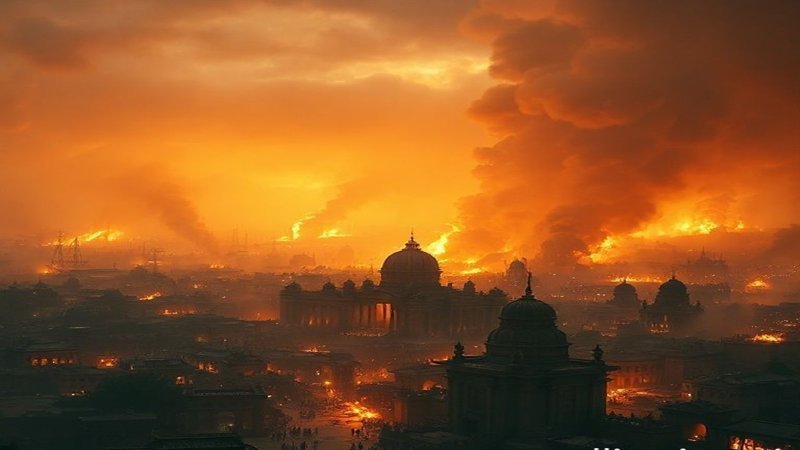
The world was astonishingly interconnected through complex trade networks stretching from the mountains of Afghanistan to the coasts of Spain. Tin and copper flowed across the seas to produce bronze, which was the lifeblood of technology and daily life at the time. This was history’s first true globalization. But in a fleeting moment, everything collapsed. Suddenly, great cities began to burn one after another. Mycenae, Thebes, Ugarit, and Hattusa all fell within a few years. Writing disappeared, trade ceased, and the world entered a dark age that lasted for centuries. The culprit behind this grand crime remained a mystery, baffling scholars for millennia. They are the Sea Peoples – these enigmatic invaders who emerged from the distant horizon aboard their warships to forever alter the course of human history.
Unfathomable Destruction: Empires Obliterated
First, you must understand the nature of the world these invaders attacked. The kingdoms of that era were not weak or primitive. Rather, they were highly complex bureaucratic empires possessing well-trained standing armies. The Hittites, for example, were masters of warfare in the north. Their capital, Hattusa, was a city fortified with impregnable walls. Yet, archaeologists discovered that this city was completely incinerated. It did not fall in a typical battle; it was obliterated from existence. The last letters found in the coastal city of Ugarit, in present-day Syria, tell a story of terror. The King of Ugarit wrote a letter to the King of Cyprus, pleading for help. He stated that enemy ships had arrived, burning villages and committing horrific acts in the land. The king mentioned that his army and fleet were far away in Hittite lands, leaving no one to protect the city. This letter was never sent. It was found in a pottery kiln where it was drying when the city fell and burned over its inhabitants. This scene was repeated everywhere. You are now looking at a map of devastation, from Greece to Gaza, from Anatolia to the coasts of Egypt. There was a human earthquake striking everything civilized and stable.
Who Were the Enigmatic Sea Peoples?
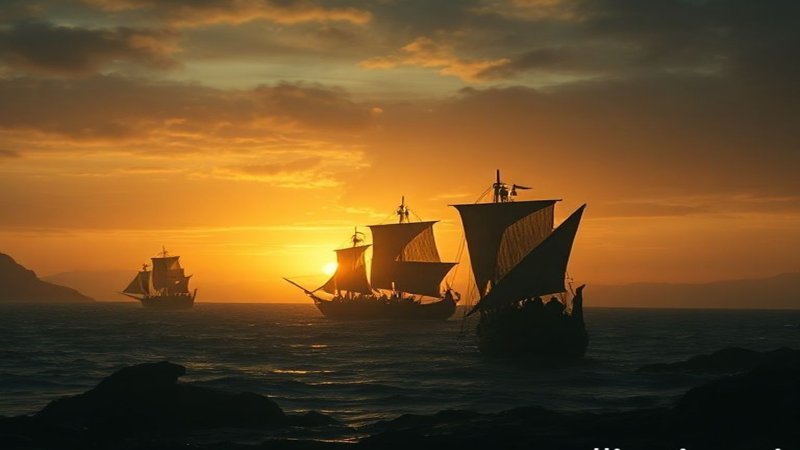
Where did these invaders come from? This is the question every historian asks. Egyptian sources are the only ones that have given us names for these invaders. King Ramesses III immortalized his victory over them in his mortuary temple at Medinet Habu. Inscriptions on the walls list the names of tribes such as the Peleset, Sherden, Denyen, Weshesh, and Shekelesh. Ramesses describes them as an alliance of foreigners who embarked from their distant islands and homelands. He states that their hearts were confident, and their plans aimed at conquering the entire world. The Sherden, for example, wore horned helmets and carried long swords and round shields. These fighters were not mere passing pirates. Egyptian inscriptions show them moving with their families. You see ox-drawn carts carrying women, children, and belongings in the carvings. This means we are not talking about a purely military invasion but a mass migration. An entire people fleeing their homeland in search of new territory. You are now witnessing a desperate people possessing immense destructive power because they had nothing left to lose.
The Environmental Trigger: A Catastrophic Drought
Have you ever wondered why these people decided to leave their homes and risk everything? Modern analyses point to a major environmental catastrophe. Pollen studies taken from the bottom of lakes and caves in the Mediterranean region show severe drought that lasted for nearly three hundred years. This wave of drought began to strike the world around 1250 BCE. Imagine the rains stopping for many years. Crops withered, and hunger spread to every corner. When people starve, the system collapses. Farmers who once fed armies and kings had nothing left to offer. Internal revolts began to gnaw at the body of empires. At the same time, great migrations began from Central and Northern Europe towards the warmer south. These migrants pressured the settled peoples in Greece, Italy, and the Mediterranean islands. These affected peoples, in turn, transformed into invaders. It was a destructive domino effect. You now see how nature can bring down the strongest armies without firing a single arrow. Hunger was the true driver of history at that moment.
Egypt’s Pyrrhic Victory and the Dawn of a Dark Age
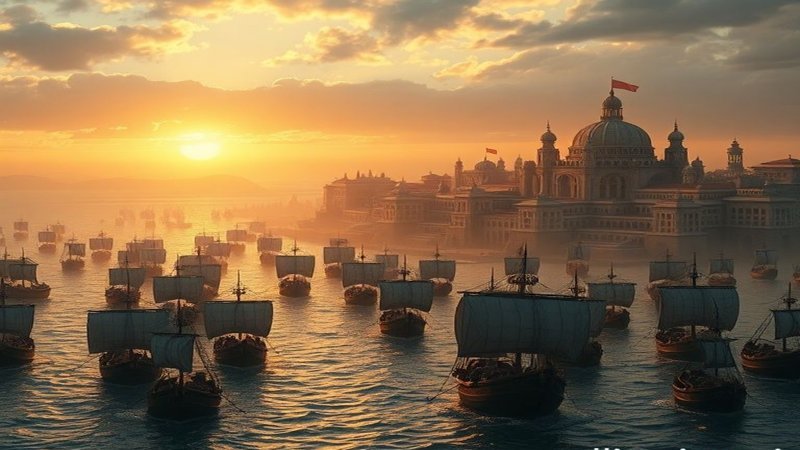
The decisive battle occurred in Egypt. In the eighth year of Ramesses III’s reign, Egypt faced the greatest threat in its history. The Sea Peoples’ coalition had already destroyed the Hittite kingdom and reached Egypt’s eastern borders by land and sea. Ramesses III did not wait for their arrival but prepared a clever trap. In the famous naval battle at the mouth of the Nile, he lured enemy ships into shallow waters they did not know. Egyptian infantry on the shores showered the invaders with an incessant barrage of arrows. The Egyptians used grappling hooks to pull enemy ships and capsize them. It was a true massacre. Ramesses III states in his texts that he made the invaders “as if they had never been.” He destroyed their ships and captured thousands of them. But even this great victory came at a heavy price. The war completely drained Egypt’s resources. Central authority weakened, and the great Egyptian Empire began to erode from within. After Ramesses III, Egypt was never the same again. It lost its influence in Canaan and retreated to its ancient borders, ushering in centuries of internal strife and decline.
Frequently Asked Questions
Who were the Sea Peoples?
The Sea Peoples were an enigmatic coalition of foreign tribes (including the Peleset, Sherden, Denyen, Weshesh, and Shekelesh) described in Egyptian sources. They emerged from distant islands and homelands, appearing as a migrating people rather than just a military invasion, seeking new territories and possessing immense destructive power.
What caused the collapse of Late Bronze Age civilizations?
Modern analyses suggest a major environmental catastrophe, specifically a severe drought lasting nearly 300 years, began around 1250 BCE. This led to widespread crop failure, hunger, internal revolts within empires, and mass migrations, creating a destructive domino effect that brought down powerful civilizations.
Which major civilizations collapsed during the Late Bronze Age collapse?
Among the great civilizations that fell were the Hittite Empire, the Mycenaean civilization in Greece (with cities like Mycenae and Thebes), and the coastal city of Ugarit. While the Egyptian Empire survived, it was severely weakened and entered a period of decline after its costly victory against the Sea Peoples.
How did Ramesses III confront the Sea Peoples?
Ramesses III faced the Sea Peoples’ coalition in the eighth year of his reign. He prepared a clever trap at the mouth of the Nile, luring enemy ships into shallow waters. Egyptian infantry on shore barraged them with arrows, while Egyptian ships used grappling hooks to capsize enemy vessels. This resulted in a decisive victory for Egypt, though it came at a heavy cost, draining Egyptian resources and leading to the empire’s eventual decline.