
The Dyatlov Pass Incident: The Horrifying Truth Concealed by the Soviet Union for 60 Years!
The Dyatlov Pass Incident: The Horrifying Truth Concealed by the Soviet Union for 60 Years!
Navigate Content
The Ill-Fated Expedition and Harrowing Discovery
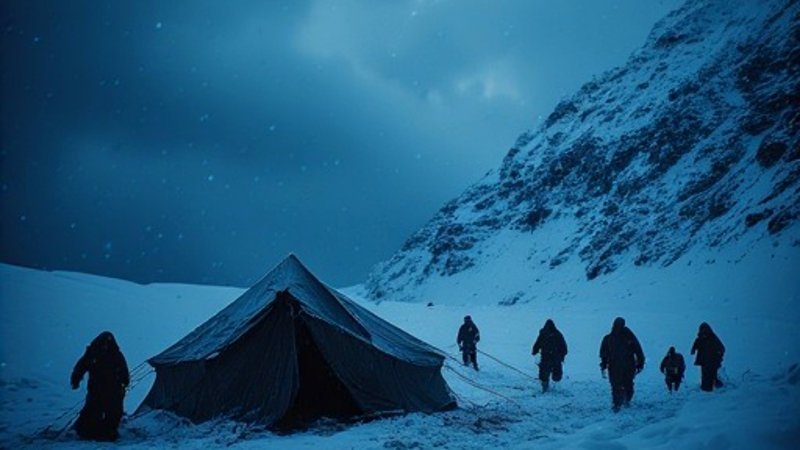
However, that expedition did not end successfully. Days after their news ceased, search and rescue operations began. What was discovered on the slope of Kholat Syakhl, which means “Dead Mountain” in the indigenous Mansi language, was an unforgettable scene: a torn, abandoned tent, slashed from the inside. Their personal belongings, shoes, and even their heavy coats were all inside the tent. But their owners were nowhere to be found.
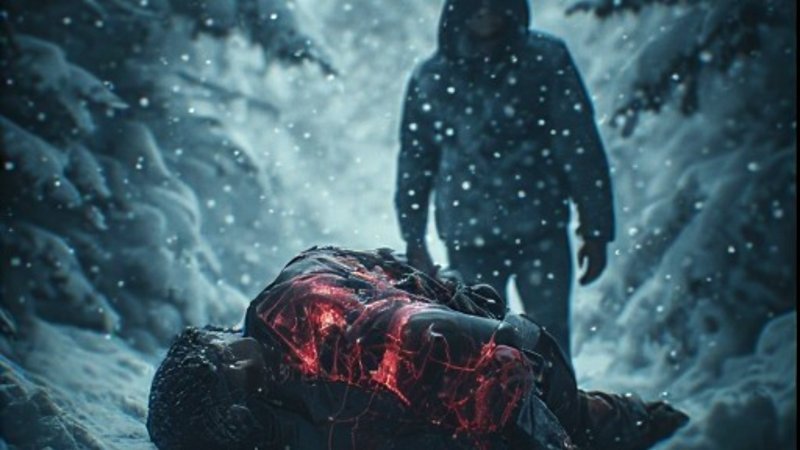
The first bodies were discovered about five hundred meters down the mountain, near the remains of a small fire. There were three men and one woman, almost naked, their light clothing entirely unsuitable for the deadly cold weather. Two of them were in only underwear, and the other two in torn clothes. Had they gone mad? Had something unexpected struck them, forcing them to abandon everything? This is the first question that haunts us. Then, the shocking discoveries continued. The bodies of Dyatlov and two others were later found some distance from the fire, in positions suggesting they were trying to return to the tent, or perhaps seeking shelter. Igor Dyatlov himself was found lying on his back, his hand grasping a tree branch. What was he trying to see? Or perhaps protect? And how could an experienced leader make such a decision—a decision to flee the only shelter in those moments?
Unraveling the Baffling Injuries and Eerie Evidence
Forensic examination of these four revealed shocking injuries. Curiously, these injuries were “powerful” to the extent that they required immense compressive force, as if they had been in a car accident, yet there were no external bruises on their bodies. How could such injuries occur without any external signs of violence? Here’s what was found:
- One of the girls, Lyudmila Dubinina, had her tongue missing and her eyes empty.
- Semyon Zolotaryov’s skull was crushed.
- Nikolay Thibeaux-Brignolles also suffered skull fractures.
- Another sustained rib fractures.
Do these injuries suggest an attack? But by whom? Or what? The area is remote, with no human presence nearby. The only hypothesis was an animal attack, but forensic medicine completely ruled this out given the nature and severity of the injuries. Furthermore, some of the victims’ clothes showed inexplicably high radiation levels. How does one explain the presence of radiation in a remote mountainous area?
Decades of Theories and the Pursuit of Truth
Returning to the mystery: A camera found in one of the tents, containing photos taken shortly before the incident, showed normal shots of the group, with nothing to suggest danger. The last photo on the roll was blurry, taken at night, showing a luminous spot. Was this spot the cause of their fright? Was it a warning?
Theories have multiplied and interpretations have conflicted over decades. Some spoke of extraterrestrials, others of a Yeti or “snow monster,” while other theories pointed to secret military tests causing an acoustic wave or a mysterious explosion. However, these explanations lack reliable physical evidence. For more on perplexing and unexplained phenomena, explore Sleeping Villages Mystery: Toxic Exposure and Inexplicable Mass Dormancy.
In 2019, sixty years after the incident, Russian authorities reopened the investigation, leveraging modern geophysics and forensic science. Their goal was to provide a scientific and logical explanation for what happened, far from superstitions. Experts focused on the avalanche hypothesis. But how could expert climbers misjudge the risk of an avalanche, especially after setting up their tent in what appeared to be a safe location?

The “Slab Avalanche” Explanation: A Scientific Hypothesis
Imagine the scenario: The climbers are sleeping in their tent. Suddenly, a section of snow slides from higher up the slope and lands on the tent. Not a massive avalanche that buries them, but a sudden pressure on part of the tent, potentially causing internal injuries to anyone in its path. This explains why they tore the tent from the inside. They were trapped and needed to get out quickly, fearing a larger avalanche.
But why did they flee barefoot? And why didn’t they retrieve their clothes? The theory suggests that the complete darkness, extreme cold, and initial injuries would have caused disorientation and panic, making them prioritize immediate escape over gathering personal items. The subsequent hypothermia and disorientation would have led them further away, unable to return to the relative safety of the tent.
Frequently Asked Questions
About The Author