The Dark Side of Digital Detox: A Perilous Psychological Journey
The Dark Side of Digital Detox: A Perilous Psychological Journey
Do you believe that by turning off your phone screen, you regain control of your life? The truth is, you open the door to a monster you never knew existed, residing deep within you. The tranquility you seek is, in reality, an elaborate trap that will force you to confront the bitter truth you have evaded for years.
Navigate Content
The Digital Detox Trap: An Illusion of Freedom
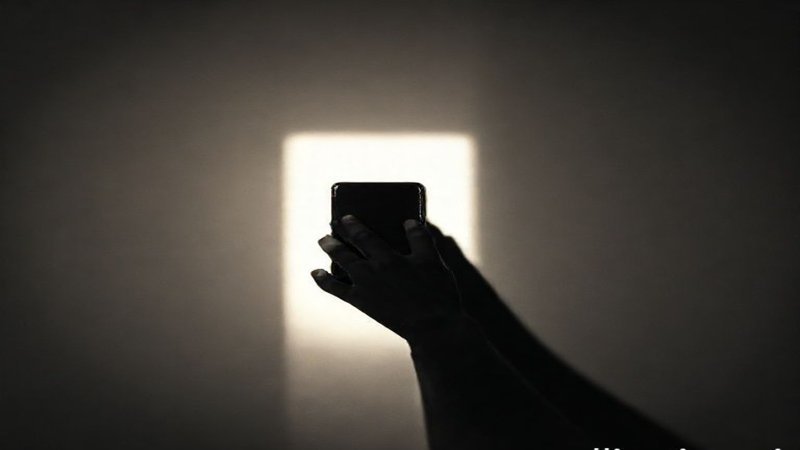
Imagine yourself now in a dark room. Silence envelops you from every side. No flicker of new notifications. No ring of urgent messages. No sound of endless scrolling. Initially, you will feel a false sense of comfort. You will think you have triumphed over the digital beast. But after a few hours, the real bleeding will begin. This is what they call digital detox: the promise of freedom, serenity, and a return to self. But what they don’t tell you in the glossy articles is the exorbitant price you will pay in terms of your mental health and social relationships. They are selling you an illusion. They portray it as a leisurely stroll in a lush garden, but in reality, it is a journey through the dark labyrinths of your mind, about which you know nothing. We live in an era where connection has become breathing. When you decide to stop breathing digitally, you put yourself in a state of voluntary suffocation. For more on how digital life impacts relationships, consider reading Digital Infidelity: Recognizing Emotional Betrayal Through Screens.
Social Vanishing and the Paranoia Paradox
The first side effect is social vanishing and extreme paranoia. As soon as you disappear from the digital space, you begin to transform into a ghost. In the old world, absence bred longing. In the digital world, absence quickly breeds oblivion. You will find yourself wondering in your deadly silence: Are they talking about me now? Have I been replaced in work groups or among friends? Have I lost my value because I no longer share details of my day? This anxiety is not merely a fleeting feeling; it is existential dread. You suddenly realize that your existence in the minds of others is contingent on your appearance on their screens. When you disconnect from the digital world, you are not taking a break; you are engaging in a slow process of social suicide. You will feel that the world is moving at a tremendous speed without you. You will imagine conspiracies being hatched in your absence, or golden opportunities being lost forever. This psychological pressure generates a state of paranoia that makes you watch the clock, wishing time would pass quickly so you can return to your familiar prison. Digital silence is not tranquility; it is an incessant inner noise. If you struggle with similar anxieties, explore Surviving Vicarious Anxiety: Reclaiming Your Peace from Borrowed Burdens.
The Chemical Imbalance: Brain in Rebellion
The second side effect is the chemical breakdown of the brain. Your brain is addicted. Don’t try to deny it. For many years, you have trained your neurotransmitters to receive intense doses of dopamine with every like, comment, or notification. When you suddenly decide to cut off these supplies, your brain enters a state of civil disobedience. You will start to feel acute chest tightness. You will find yourself restless, unable to sit in one place for more than two minutes. The real world will seem gray and dull to you. Colors will lose their luster. Food will lose its taste. Even talking to close people will seem unbearably boring and slow. You are suffering from withdrawal symptoms not dissimilar to the withdrawal of deadly toxins from the body. This sharp drop in dopamine levels makes you susceptible to sudden bouts of depression. You will feel a terrifying inner emptiness, as if you are a bottomless pit. You will try to fill this void with anything – reading, walking, or meditating. But nothing compares to that electric shock your phone gives you. You are not on a journey of recovery; you are in a solitary cell of your own making.
Phantom Sensations and Digital Amputation
The third side effect is phantom vibration syndrome and sensory obsessions. Have you ever felt your phone vibrate in your pocket, only to discover it wasn’t there at all? During a digital detox, this phenomenon will multiply dozens of times. You will hear the sound of your messages in the wind. You will see the screen’s flicker in light reflections on the walls. Your mind is playing tricks on you. It craves its usual dose so much that it creates sensory illusions to compel you to search for the device. You will find yourself involuntarily touching your pocket every five minutes. You will search for your phone around the house, even though you know perfectly well you put it in a locked box. This type of obsession shows you the extent to which technology has permeated your nervous system. A piece of silicon has become part of your biological anatomy. And when you remove it, you feel an amputation of a limb. This phantom pain will haunt you throughout your disconnection period. It will make you feel incomplete, utterly naked before the world. You will begin to question your sanity when you find yourself staring at your empty hand as if expecting it to suddenly light up.
The Decline of Real-Life Social Skills
The fourth side effect is the erosion of real-life social skills. Digital detox is supposed to reconnect you with people face-to-face. But the truth is quite the opposite. When you disconnect from digital communication for a long time, you will discover that you have lost the ability to read body language or maintain continuous eye contact. You will find the silence between you and others heavy and terrifying. In the digital world, you always have time to think before responding. You have emojis behind which you hide your true feelings. In reality, you are exposed. You will feel words stumble out of your mouth. Your actions will seem clumsy. You will find yourself searching for an undo or back button in your real conversations, but you won’t find it. This inability creates a new type of social phobia. You will prefer isolation, not because you love tranquility, but because you have become afraid of failing in raw human communication. You have become a digital being par excellence, and returning to primitive human nature requires muscular and mental effort you no longer possess. Real communication will become a heavy burden, making you long for the ease and coldness of the screen. For related insights on communication challenges, see The Lethal Marital Silence: Analyzing Stonewalling and Relationship Breakdown.
Frequently Asked Questions
Generated by AI Content Architect
About The Author