The Cursed Chamber B: India’s $22 Billion Treasure & The Unopenable Door
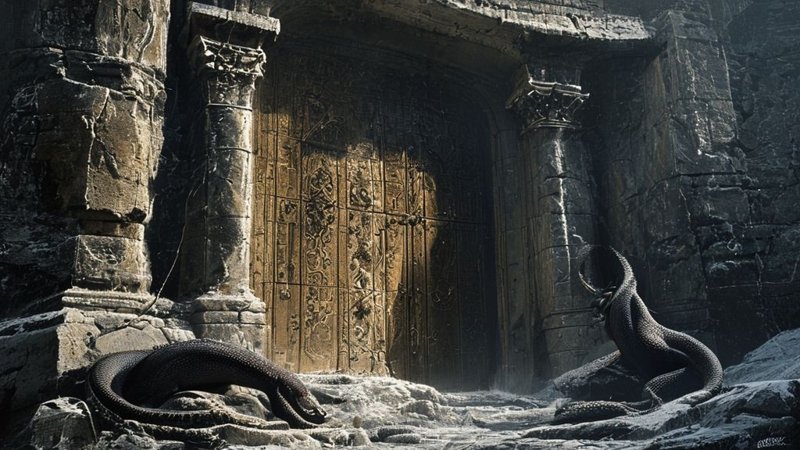
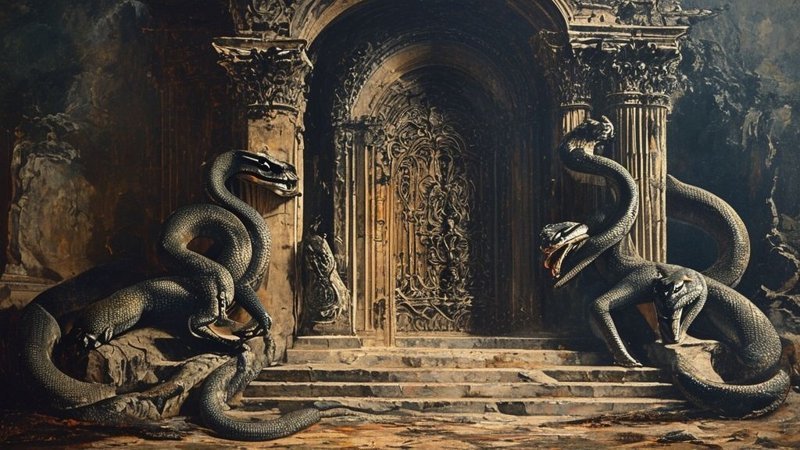
Imagine standing before a solid stone door devoid of a handle, key, or even a single aperture allowing light to penetrate. Sculpted royal cobras intricately entwined around this door whisper to you in the language of silence, signifying that what lies beyond this barrier is not meant for humankind in this era. You are deep within the Sree Padmanabhaswamy Temple in the heart of Kerala, India, where ancient legends intersect with tangible reality, and modern technology confronts an impenetrable wall of enigma that no one dares breach.
Have you ever felt the chill of stone beneath your fingertips when it touches a secret thousands of years old? This temple is not merely a structure of stone and gold; it is a black box containing history yet to be read in our textbooks. In 2011, the world was shaken when the Supreme Court of India ordered the opening of the secret vaults beneath the temple floor. Initially, the task appeared administrative and routine, but what was discovered in the first five chambers left experts breathless. Envision mountains of gold coins dating back to archaic eras, ropes of natural pearls, some several meters long, and crowns encrusted with priceless diamonds. The material worth of these treasures was estimated at over twenty-two billion US dollars, yet their historical value remains incalculable.
Chamber B: The Door Science Cannot Open
However, you are here to learn what transpired at the sixth chamber, designated Chamber B. Upon reaching this massive iron door, the team encountered a perplexing engineering riddle. The door possessed no visible bolts, hinges, or mechanical locks operable by conventional means. This is when murmurs began to rise in the temple’s dimly lit corridors. Priests and clerics warned that this door was protected by an ancient incantation known as the Naga Bandham or the Serpent’s Knot. They claim the door was sealed not with a lock and key, but by specific sonic frequencies that can only be undone by correctly reciting the Garuda Mantra, and only by an individual possessing exceptionally pure spiritual energy.
Catastrophic Consequences & Ancient Tech Theories
Do you dismiss this as mere folklore and myth? Pause before judging. Indian authorities and scientific committees considered employing modern technology to open the door or even survey what lay beyond. They contemplated using X-rays, advanced sonar equipment, or even laser technology to map the interior of this iron barrier. Curiously, these proposals met with staunch and absolute refusal, not only from the clergy but also from the former royal family overseeing the temple. The argument was consistently the same: any attempt to force entry using technology would result in catastrophic consequences, not just for those attempting the opening, but for the entire region.
Consider the depth of this fear. There is a profound belief that Chamber B is somehow connected to the Indian Ocean via secret water channels, and that improperly opening the door would cause seawater to flood and submerge the entire temple and city. Yet, some venture much further. Certain alternative history researchers believe this chamber does not house gold or jewelry, but rather extremely advanced ancient technologies left behind by a preceding civilization. They speak of flying machines or energy devices unknown today. This, they suggest, is the true reason official bodies insist on keeping the door sealed: fear of technology we neither control nor fully comprehend.
Mysterious Incidents & The Science of Sound
You might wonder why they are not compelled to open the door in an age of science and logic. The answer lies partly in respecting cultural and religious sanctity, but also in mysterious events that have befallen those who have sought to investigate this file. Have you heard of the lawyer who filed the original petition to open these vaults? He passed away suddenly shortly after the inventory process began. There are also reports of peculiar incidents affecting some members of the inventory committee. While these coincidences may be logically explainable, they only amplify the mystique surrounding the door and the apprehension it inspires.
As you walk through the narrow temple corridors, you inhale the scent of incense mingled with the dampness of ancient stone. You feel as though the walls are watching you. The temple’s architecture is designed to make one feel minuscule before the grandeur of the Creator, or perhaps before the ancient knowledge upon which these walls were built. The vaults beneath the temple are not mere storage rooms; they are integral parts of a complex engineering structure designed to distribute loads and pressures in such a way that any attempt at drilling or breaking would trigger a cascading collapse. Is it conceivable that engineers centuries ago possessed mechanical knowledge surpassing our current expertise in security engineering?
The prevailing belief among the priests is that this chamber is a resting place for deities, and that modern technology, with its electromagnetic frequencies and radiation, constitutes a desecration of this serenity. They maintain that the material composing the door and its operating mechanism respond solely to precisely programmed human sonic vibrations. This leads us to ancient acoustics. Is it possible that our ancestors discovered a method of encoding matter using sound? If so, we are not discussing magic, but advanced physics yet to be attained.
The Ongoing Mystery
Observe the state’s perspective on this matter. There is a delicate balance between the desire to uncover the truth and protect Indian national security, and the imperative to respect the beliefs that form the fabric of society. The armed guards outside the temple protect not only the gold but a door that could potentially alter human history if opened. As a 21st-century individual, you may find it difficult to accept that a handful of words or incantations could prove more potent than hydraulic drills, but in this specific location, your confidence in modern science takes a step backward. Contemplate the silence enveloping Chamber B, a silence that speaks volumes about the limits of human understanding and the enduring power of ancient beliefs.
Frequently Asked Questions
What is the Sree Padmanabhaswamy Temple known for?
The Sree Padmanabhaswamy Temple in Kerala, India, is famous for its immense hidden treasures, particularly gold, jewels, and ancient artifacts, discovered in its secret vaults in 2011. It’s also known for its mysterious Chamber B, which remains sealed.
What is Chamber B, and why is it significant?
Chamber B is the sixth secret vault within the Sree Padmanabhaswamy Temple. It is significant because, unlike the other five vaults, it has no visible opening mechanism and is believed to be sealed by ancient incantations, defying all attempts at modern scientific investigation or entry.
Why do authorities refuse to open Chamber B using modern technology?
Authorities, including the clergy and former royal family, staunchly refuse modern technological intervention due to a profound belief that it would lead to catastrophic consequences, such as the temple and city flooding from hidden water channels, or unleashing unknown dangers.
What theories exist about what lies beyond Chamber B?
Theories range from a resting place for deities, immense hidden gold and jewels, to extremely advanced ancient technologies left by a preceding civilization. There’s also a fear of an ancient curse or mechanism that would trigger a disaster if improperly opened.
What is the ‘Naga Bandham’ and ‘Garuda Mantra’?
The ‘Naga Bandham’ (Serpent’s Knot) is an ancient incantation believed by priests to have sealed Chamber B. They claim it can only be undone by correctly reciting the ‘Garuda Mantra’ by an individual possessing exceptionally pure spiritual energy, rather than by physical means.