The Bronze Age Collapse: 1200 BCE’s Unsolved Mystery & The Fall of Ancient Civilizations
Envision a world, familiar in its power, technology, and interconnections, dissolving within a few decades, without prior warning. Grand cities, once deemed immutable, reduced to ashes; empires that had reigned for centuries vanishing from the map of existence as if they had never been. This is not a scenario from science fiction, but a chilling historical reality: the sudden collapse of the Bronze Age around 1200 BCE.
Three millennia and two centuries ago, the Eastern Mediterranean thrived in a golden era of proto-globalization, a period of interconnectedness arguably unmatched until much later in history. The Egyptian Empire stood at its zenith under formidable pharaohs, while the Hittite kingdom in Anatolia rivaled its power and resilience. In Greece, the Mycenaean civilization constructed imposing palaces behind immense fortifications, as the cities of Canaan and Cyprus teemed with merchants and commodities. Ships traversed the seas laden with copper, tin, gold, and lapis lazuli, forming an intricate trade network that stretched from Afghanistan to the heart of Europe. Each state was interdependent for its very existence, much like our reliance on global supply chains today. Copper from Cyprus, for instance, required tin from distant mountains to forge bronze, the lifeblood of warfare and daily existence in that epoch. To delve deeper into the mysteries of lost civilizations, explore Arta: The Lost City That Rewrites Civilization’s Ancient History.
The First Cracks: Drought, Famine, and Unrest
Yet, beneath this veneer of prosperity, harbingers of doom loomed on the distant horizon. The land’s bounty began to diminish, as prolonged waves of severe drought afflicted the region for years, resulting in acute shortages of grain and other vital resources. The desperation of hunger is palpable in the clay tablet correspondence of kings, pleading for urgent food aid. Amidst this climatic turmoil and internal unrest, a novel and utterly unknown threat materialized. Groups of warriors, whose precise origins remain obscure, began to appear along the coasts. History would later christen them the “Sea Peoples.” These were not mere raiders seeking spoils; rather, they were entire nations, migrating with their women, children, and carts in pursuit of new territories for settlement. This period serves as a stark reminder of societal vulnerabilities, much like modern discussions of Universe 25: The Terrifying Experiment Predicting Humanity’s Collapse.
The Enigmatic Sea Peoples’ Fury
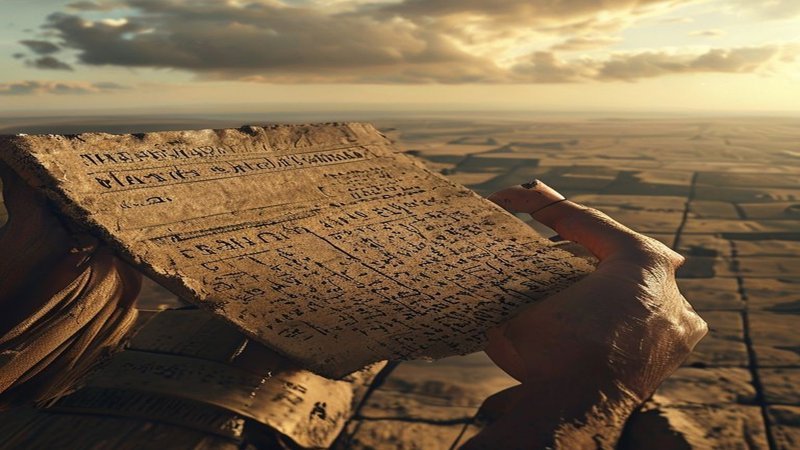
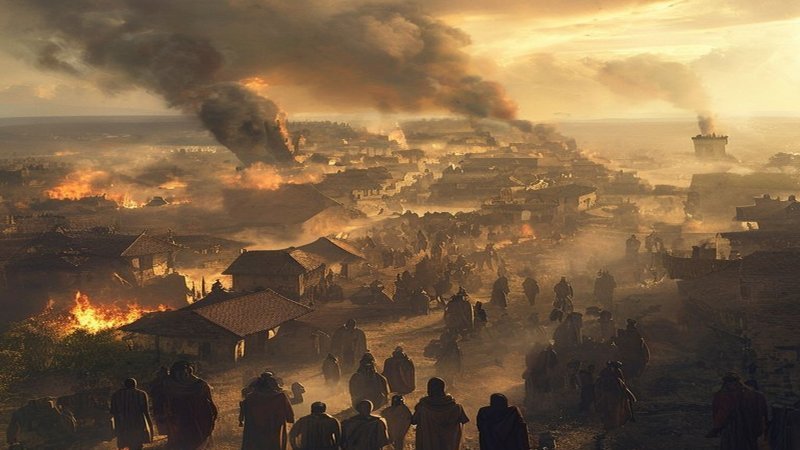
Their assaults were characterized by an unmitigated suddenness and ferocity. Picture yourself atop the ramparts of the coastal city of Ugarit in the Levant, gazing seaward, only to witness hundreds of vessels bearing warriors adorned with feathered helmets and wielding long iron swords. King Ammurapi of Ugarit dispatched a desperate missive to the King of Cyprus, relaying that enemy ships had already landed, burning villages and inflicting widespread devastation. This letter, however, never reached its destination, as the city itself succumbed and was razed before the messenger could depart its walls. The clay tablet, preserved in the ashes, remains a poignant testament to the final moments of a civilization annihilated overnight.
Major civilizations succumbed rapidly to this onslaught:
The coastal city of Ugarit in the Levant was razed before a desperate plea for aid could reach its destination, leaving a clay tablet preserved in ashes as its final testament.
The mighty Hittite Empire, with its formidable chariot armies and colossal capital Hattusa, vanished entirely, its structures vitrified by intense conflagrations.
In Greece, the magnificent Mycenaean palaces, vital administrative and cultural hubs, were systematically destroyed, plunging the region into a ‘Dark Age’ where writing and many skills were lost for four centuries.
These assailants were not intent on territorial rule but rather on systematic destruction, obliterating everything in their path. One can only imagine the terror that gripped the hearts of survivors as they witnessed the monumental achievements of their ancestors reduced to owl-haunted rubble. Centralized political authority fractured into disparate, subsistence-level village communities.
Egypt’s Stand and the Unanswered Questions
Ancient Egypt confronted its most formidable historical challenge during the reign of Ramesses III. The pharaoh meticulously documented the devastating battles waged against these invaders on the walls of his mortuary temple at Medinet Habu. He depicted them as originating from “islands in the midst of the sea” and noted that “none could stand before their arms.” Ramesses III employed an ingenious strategy, luring the Sea Peoples’ vessels into the shallow branches of the Nile, then unleashing a volley of arrows from the riverbanks while Egyptian ships blocked their escape routes. This was a pivotal life-or-death confrontation for Egypt. Ramesses III achieved a military victory, repelling the assault, but the triumph came at an exceedingly high cost. The protracted conflict depleted state resources and eroded its prestige, initiating a long trajectory of decline from which Egypt never fully re-emerged as a dominant global power.
The enduring question that has captivated researchers for millennia concerns the identity of these peoples and the impetus behind their military fervor. Modern evidence suggests:
They were not a singular ethnic group, but a heterogeneous collection of displaced tribes, likely from Central and Southern Europe.
Their mass migrations were possibly propelled by a combination of climate change and successive earthquakes.
They fought with relentless ferocity, eschewing conventional rules of warfare, and constituted a purely destructive force.
The true origins and motivations of the Sea Peoples remain one of history’s profound unsolved mysteries, irrevocably reshaping the ancient world.
Frequently Asked Questions
What was the Bronze Age collapse around 1200 BCE?
The Bronze Age collapse around 1200 BCE was a chilling historical reality where the Eastern Mediterranean, a golden era of proto-globalization, dissolved within decades, leading to the sudden destruction of grand cities and the disappearance of powerful empires.
Who were the ‘Sea Peoples’ and what was their impact?
The ‘Sea Peoples’ were groups of warriors of obscure origin, likely a heterogeneous collection of displaced tribes from Central and Southern Europe, who appeared along the coasts. They were not mere raiders but migrating nations that inflicted sudden and ferocious assaults, characterized by systematic destruction without seeking territorial rule or tribute, leading to the downfall of many civilizations.
What factors are hypothesized to have contributed to the Bronze Age collapse?
Modern evidence suggests that a combination of factors contributed, including prolonged waves of severe drought leading to acute shortages of vital resources, internal unrest, and the emergence of the ‘Sea Peoples.’ It is hypothesized that climate change and successive earthquakes propelled the mass migrations of these destructive groups.
How did major powers like Egypt and the Hittites fare during this period?
The Hittite kingdom completely vanished after its capital, Hattusa, was burned and looted. Ancient Egypt, under Ramesses III, achieved a military victory against the Sea Peoples, but the triumph came at an exceedingly high cost, depleting state resources and initiating a long trajectory of decline.