The Black Pharaohs: Unveiling the Hidden History of Kush and Egypt
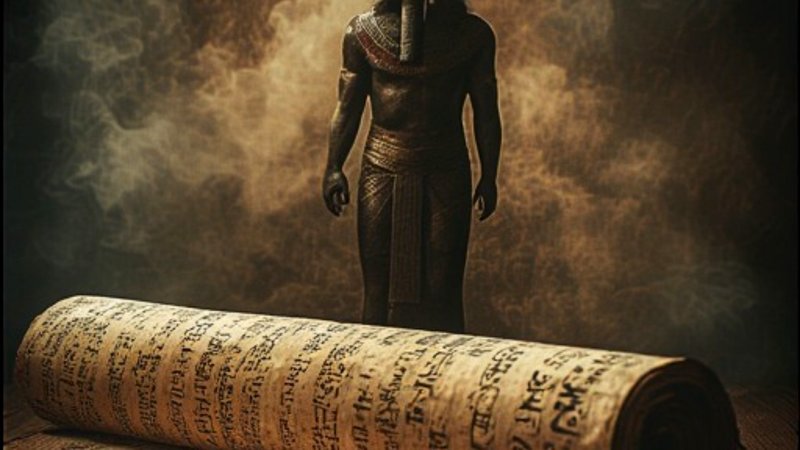
You believe you understand the history of Egypt. The reality is that half of what you have learned is a deliberate silence. The history now in your hands is not merely textbook pages; it is a battlefield where identity was forged and the features of kings who ruled the Nile Valley with an iron, ebony fist were erased. Have you ever asked yourself why Sudan possesses two hundred and fifty-five pyramids while Egypt only has one hundred and eighteen? This number is not a mere statistic; it is evidence of a civilization ignored because it does not fit the narrative constructed by 19th-century Orientalists. A secret lies buried beneath the sands of Jebel Barkal in northern Sudan—a secret concerning kings who did not come to invade Egypt, but rather to reclaim it from oblivion. These are the Black Pharaohs, the monarchs of the great Kingdom of Kush, who seized control of the Egyptian Empire during its fatal moment of weakness. Yet, the question that will pursue you throughout this discussion is: Why has the world, for millennia, attempted to convince you that these kings were merely transients in the history of the Nile?
In 744 BCE, Egypt was engulfed in profound chaos. The land was fragmented into petty principalities ruled by squabbling princes. Prestige had vanished; unity had dissolved. Meanwhile, deep in the South, in the heart of what is now Sudan, a rising power silently observed the scene: the Kingdom of Kush, with its capital at Napata. The Kushites were not strangers to Egyptian culture; they worshipped the god Amun, built temples, and revered the Nile. However, they possessed something the northern princes lacked: the absolute conviction that they were the true guardians of the legacy of the early Pharaohs. Can you imagine the feeling of a Kushite soldier standing on the border of Thebes, witnessing the Karnak Temple desecrated by internal strife? In that moment, King Piye made his momentous decision.
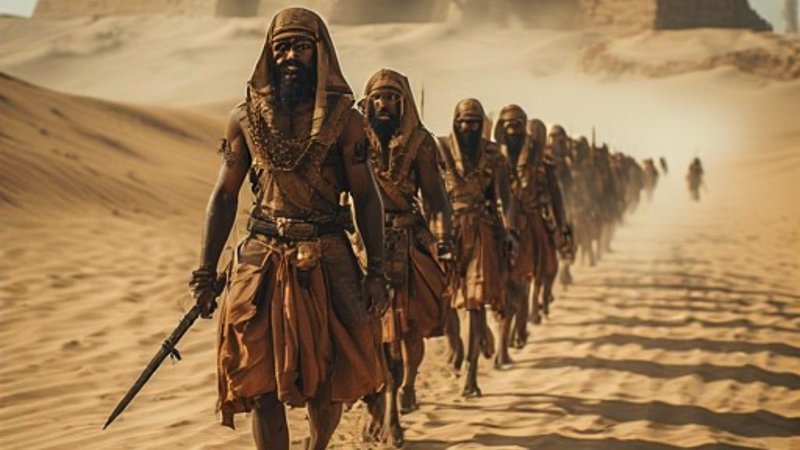
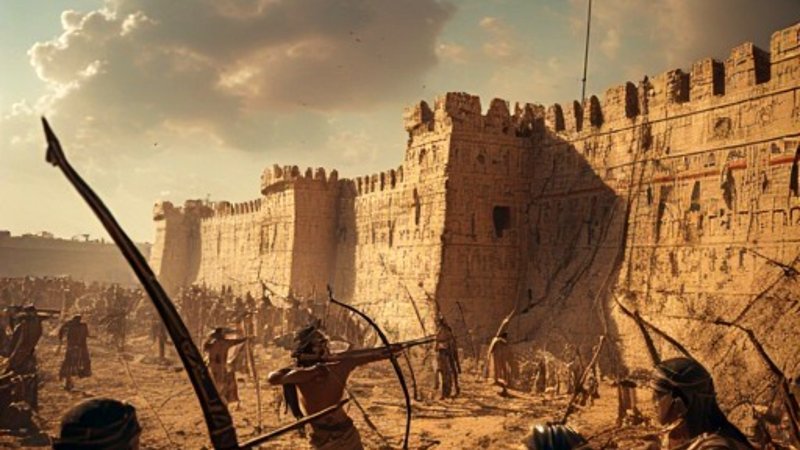
Piye was more than a warrior; he believed he was an emissary of the god Amun, sent to purify Egypt. He led his army north, and his journey was not merely a military conquest but a prolonged religious rite. He ordered his soldiers to ritually bathe in the Nile before battle; prayer in the temples preceded the beating of the drums. Was Piye attempting to legitimize himself as a true Pharaoh, or was he simply safeguarding his southern kingdom’s borders? This is the query that must remain in your mind. He fought grueling battles at Hermopolis and Memphis. Fortresses fell one by one to the valor of the Kushite archers—archers so renowned for their accuracy that the Arabs would later call them the ‘Slingers of the Eye.’ After his victory, Piye did not annihilate his opponents; instead, he made them bow before the majesty of Amun. Then, he did something highly unusual: he returned to his capital in Sudan, leaving Egypt to be governed by local rulers under his oversight. Why would the victor withdraw after reaching the zenith of glory?
The Twenty-Fifth Dynasty: A Unified African Empire
The answer lies in the Kushite philosophy of power: land was not the ultimate goal; identity was. However, his son, Shabaka, was not content with remote supervision. He decided to relocate the capital to Memphis itself. This marked the beginning of the Twenty-Fifth Dynasty—the dynasty that unified the Nile Valley from the cataracts of Sudan to the Mediterranean Delta. You are now confronted with a purely African empire, ruled through a potent blend of overwhelming military force and deep religious devotion. During this era, Egypt experienced an architectural renaissance unseen for centuries. Dilapidated temples were restored, and ancient texts were inscribed on the famous Shabaka Stone—a stone that preserves the creation philosophy of Memphis; without the care of the Kushite kings, this heritage would have been lost forever. Do you grasp the irony? Kings from the heart of Africa were the ones who saved ancient Egyptian philosophy from oblivion.
In my personal estimation, we are not dealing here with a foreign occupation of Egypt, as some propagate, but rather a ‘case of reclamation.’ If you look closely behind the conventional titles, you will find that the Kushite kings saw themselves as the legitimate heirs to the Nile civilization, which originally commenced in the South. Most people ignore the fact that the Nile flows from south to north, and that civilization followed the same trajectory. This is where the dominant narrative collapses—the narrative that attempts to render Egyptian civilization ‘white’ or ‘isolated’ from its African milieu. The bitter truth that may disturb some is that the Black Pharaohs did not imitate the Egyptians; rather, they practiced the oldest rituals born in the Nubian mountains, long before Memphis or Thebes understood the meaning of the crown. It’s akin to how some historical sites, like Cholula’s Hidden Pyramid, were overlooked despite their immense significance.
Taharqa: A Global Power Faces the Assyrian Threat
Then came Taharqa, the greatest king of this dynasty, whose name is etched in Hebrew texts and Assyrian records. Taharqa built the largest pyramid in Sudan at Nuri and turned his empire into a global power competing with the Assyrians in the Levant. Imagine the tension in the world at that time: Kushite military might was the sole obstacle to brutal Assyrian expansion. Taharqa sent his armies to support kingdoms in Palestine and Jerusalem. Was this merely foreign policy, or was he attempting to secure the Nile from an approaching, merciless threat? The tension escalated with every sunrise; the clash between Assyrian steel and Kushite bronze was inevitable.
The Retreat to Meroë and an Enduring Legacy
Here arises a central question: Why did the Kushites ultimately fail to withstand the Assyrians? Was the failure in military tactics or technology? The Assyrians made extensive use of iron, while the Kushites clung to their ancient fighting traditions. After years of grinding warfare, the Kushites withdrew south to Meroë. There, in the heart of Sudan, they built a new civilization that endured for over six hundred years after their departure from Egypt. The civilization of Meroë is the chapter everyone attempts to tear out of the history books, much like other lost but significant ancient cities.
Frequently Asked Questions
Who were the Black Pharaohs and the Kingdom of Kush?
The Black Pharaohs were the monarchs of the ancient Kingdom of Kush, located in what is now Sudan. They ruled the Egyptian Empire during its 25th Dynasty (c. 744–656 BCE), unifying the Nile Valley and initiating an architectural and cultural renaissance, often viewing themselves as the true guardians of early Egyptian legacy.
Why is the history of the Black Pharaohs often concealed or ignored?
The text suggests that the history of the Black Pharaohs and Kush has been deliberately ignored or misrepresented since the 19th century by Orientalists, because it does not fit a constructed narrative that attempts to render Egyptian civilization ‘white’ or ‘isolated’ from its African roots. This suppression conceals a significant African contribution to ancient Egyptian history.
How many pyramids are in Sudan compared to Egypt?
Sudan possesses approximately 255 pyramids, significantly more than Egypt’s 118. This numerical disparity is presented as evidence of the ignored or downplayed civilization of Kush, which continued to build pyramids long after the practice ceased in Egypt.
What was King Piye’s role in the rise of the Black Pharaohs?
King Piye, from Kush, observed Egypt’s chaos in 744 BCE and decided to lead a military and religious expedition north. He unified the fragmented land, believing he was an emissary of the god Amun sent to purify Egypt, effectively beginning the Kushite reclamation of Egypt before his son Shabaka formally established the 25th Dynasty.
What happened to the Kushite civilization after their rule in Egypt?
After their eventual withdrawal from Egypt due to conflicts with the Assyrians (partially attributed to technological differences like the Assyrians’ use of iron), the Kushites established a new civilization in Meroë, in the heart of Sudan. This Meroitic civilization thrived for over six hundred years, representing an important but often overlooked chapter of ancient African history.