
Stonehenge’s Gravity-Defying Secret: Ancient Physics & Engineering Marvels

0
image_1-32


Stonehenge’s Gravity-Defying Secret: Ancient Physics & Engineering Marvels
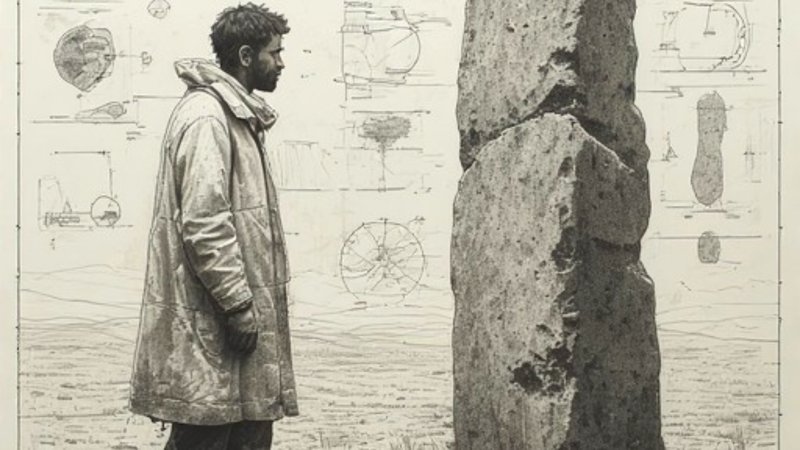
Imagine standing before a fifty-ton rock. The ground beneath your feet is muddy and wet. You possess no crane, no engine, not even a single wheel. Yet, you must transport it two hundred kilometers across rugged terrain and dense forests. Do you feel helpless? This helplessness is precisely what your ancestors, five thousand years ago on the plains of Salisbury, did not experience. The secret left behind by these builders is not merely an accumulation of inert stones; rather, it is a direct and undeniable challenge to the laws of physics you believe you understand in your modern era. Should you leave this scene now, this gap in your comprehension will persist indefinitely, and you will forever wonder how they managed to harness gravity without a shred of digital technology.


The Monumental Challenge: Defying Gravity in Neolithic Times

When you behold Stonehenge, you are not merely observing an ancient temple. You are witnessing the pinnacle of Neolithic structural mechanics. Those massive sarsen stones and the smaller bluestones are not mere ornamentation; they are lessons in stability and equilibrium. How did primitive humans, armed with tools crafted from antler and hard stone, manage to shape these rocks? And how did they transport them from the Preseli Hills in Wales, a distance of one hundred and sixty miles from the construction site? Gravity is the quintessential adversary of any engineer—it is the unseen force that relentlessly pulls everything towards the Earth’s center. Yet, in this place, gravity appears to have yielded to human will and engineering insight.

The Monumental Challenge: Defying Gravity in Neolithic Times


The Art of Movement: Transporting the Megaliths Across Ancient Landscapes

Visualize the cold texture of those stones, the scent of earth dampened by English rain, and the terrifying sound of friction as a multi-ton block slides over logs. Were logs the secret? Scientific hypotheses suggest they employed “structural mechanics” long before theories or textbooks codified it. They understood that friction posed the greatest impediment. Thus, they might have used animal fat to reduce resistance, transforming the path into a slick slide that eased the movement of these colossal stone ‘beasts.’ But was this sufficient? Physics dictates that the force required to move these blocks far exceeds the muscular capacity of hundreds of men. This leads to a central, startling question: What if it wasn’t about sheer physical strength, but rather the ingenious manipulation of the center of gravity?


Raising the Heavens: The Enigma of Elevating the Lintels

Every step in the construction of this edifice was a perilous gamble between life and death. Imagine a rope made of plant fibers snapping unexpectedly. The consequences would not merely be a delay in work, but the crushing of bones and the tearing of flesh. This constant tension, this apprehension of failure, spurred their innovation. They had no margin for error. Precision here was not a luxury, but a prerequisite for survival. But wait, the true astonishment lies not in transportation, but in elevation. How does one lift a six-ton lintel and place it with extreme accuracy atop two upright stones?

This profound solidarity, this enduring patience in the face of the impossible, is what constructs immortal marvels. Precisely as we, here, build our knowledge-based community, piece by piece. Our loyal followers, you understand well that profound knowledge is the true power in this era. Your continuous support – by liking the video, sharing it with those who value science, and subscribing to this journey – is the vital engine that propels us to continue exploring the hidden depths of history. This sacred trinity of interaction requires merely ten seconds of your time, yet it grants us the capacity to persist in uncovering the secrets that time has buried. Let us now return to the breathtaking enigma. How were those horizontal lintels raised skyward without hydraulic cranes?

Modern studies suggest they likely employed a “progressive lifting” technique. Imagine constructing a wooden platform around the upright stones. They would raise the horizontal stone a few centimeters using levers, then place a wooden plank beneath it. The process would then be repeated. Centimeter by centimeter. Day after day. Month after month. It was an operation demanding divine patience and a profound understanding of load distribution. Can you imagine the immense psychological pressure resting upon the supervising engineer? Any slight imbalance would signify the collapse of the platform and the destruction of a stone that took years to transport.

Raising the Heavens: The Enigma of Elevating the Lintels


Enduring Legacy: Precision, Purpose, and the Human Spirit

Upon the stone reaching its apex, another engineering marvel emerges: “interlocking.” If you examine the tops of the upright stones closely, you will discover rock protrusions resembling buttons. And on the underside of the horizontal lintels, precisely corresponding cavities exist. This is the mortise-and-tenon joint system used in wooden furniture craftsmanship, yet applied to stones as hard as steel. This system is what allowed Stonehenge to withstand earthquakes and the elements for millennia. It represents the perfect balance between mass and void. Between gravity and resistance.

Why did they expend such extraordinary effort? Was it merely veneration of the sun during the summer and winter solstices? Or was there a deeper psychological impetus? Humanity fears oblivion. It fears passing through this world without leaving a trace. Stonehenge is a human cry against forgetfulness. It is tangible proof that the human mind, even in its most technologically nascent eras, possessed engineering foresight and an ability to analyze physical forces that surpasses what we imagine today. They did not conquer gravity with computers, but rather with meticulous observation and disciplined collective effort.

Observe the shadows cast by these stones at sunrise. They are not random; they are precisely calculated to the degree. This signifies their possession of astronomical knowledge intertwined with structural engineering. A connection between earth and sky forged through stone. Do you now perceive the insignificance of contemporary technology in the face of this achievement?


Frequently Asked Questions

What is the primary mystery surrounding Stonehenge’s construction?
The primary mystery discussed is how Neolithic humans, without modern technology, managed to transport colossal fifty-ton stones over vast distances and then precisely lift and place them, seemingly defying the laws of physics and gravity.
How did the ancients likely transport the massive stones?
Scientific hypotheses suggest a combination of methods. These include using logs as rollers, applying animal fat to reduce friction for smoother movement, and ingeniously manipulating the stones’ center of gravity to reduce the required force far beyond sheer muscular capacity.
What technique is believed to have been used to raise the horizontal lintels?
Modern studies suggest a ‘progressive lifting’ technique. This involved gradually raising the horizontal stones centimeter by centimeter using levers, inserting wooden planks underneath, and slowly building a wooden platform around the upright stones over an extended period, demanding immense patience and understanding of load distribution.
What engineering feature contributed to Stonehenge’s long-term stability?
Stonehenge’s remarkable long-term stability is largely attributed to the use of a mortise-and-tenon joint system. This involved rock protrusions (tenons) on the top of upright stones fitting precisely into corresponding cavities (mortises) on the underside of the horizontal lintels, creating a strong, interlocking structure that withstood millennia of elements and even earthquakes.
Beyond astronomical alignment, what deeper purpose might Stonehenge have served?
Beyond astronomical observations for solstices, Stonehenge is suggested to represent a profound human cry against oblivion. It serves as tangible proof that the human mind, even in its most technologically nascent eras, possessed extraordinary engineering foresight, an ability to analyze physical forces, and a disciplined collective effort to leave an indelible mark on the world.

Generated by AI Content Architect

About The Author

Leave a Reply

Your email address will not be published. Required fields are marked *