Son Doong Cave: Inside the World’s Largest Cavern with its Own Clouds and Forests
We often believe the Earth’s surface holds all its wonders, yet beneath our feet lies a secret realm: Sơn Đoòng Cave. This isn’t just a hole in the ground; it is a gargantuan, self-sustaining world, hidden for millions of years, challenging our understanding of geology and ecology. Its discovery in 1991 by Ho Khanh—and its official exploration in 2009—unveiled a monument of nature so immense it sustains its own climate, complete with rain and clouds.
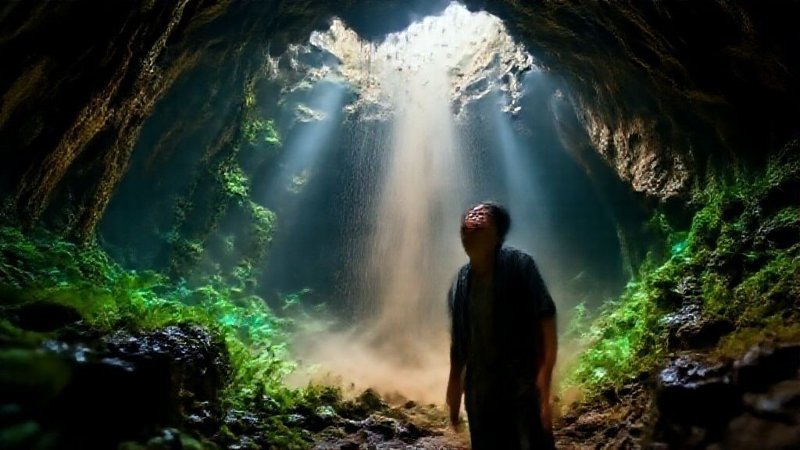
The saga of Sơn Đoòng began in 1991 with Ho Khanh, a local man who stumbled upon an opening shrouded in mist and echoing with the roar of a subterranean river during a storm. Frightened, he retreated, and the entrance was subsequently swallowed by the jungle. This mystery haunted him for nearly two decades until a team from the British Cave Research Association successfully tracked down the legend in 2009. What they found redefined superlatives: the largest cave passage ever recorded, dwarfing any known subterranean space.
Dimensions That Defy Imagination
Sơn Đoòng is a geological titan. Consider these mind-boggling measurements:
Length: Exceeds five kilometers.
Height: Reaches up to 200 meters.
Width: Spans 150 meters across.
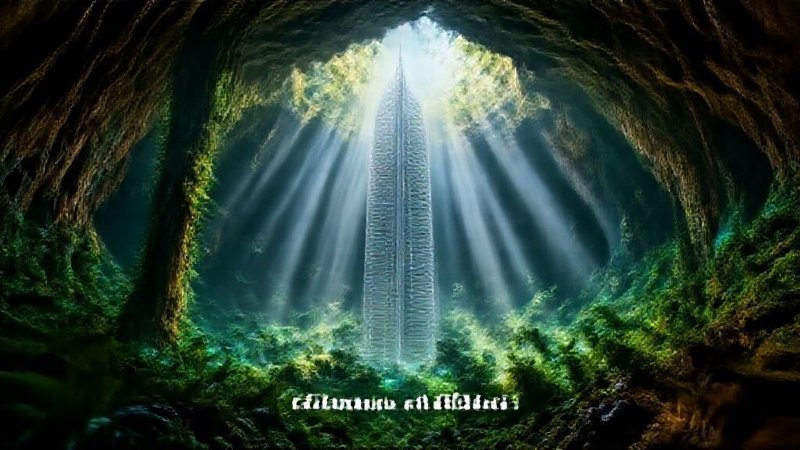
To put this into perspective, you could comfortably place a forty-story skyscraper inside one of its chambers, or an entire neighborhood from a city like New York, vanishing without touching the ceiling. This monumental void serves as a testament to the sheer, untamed power of erosion over eons.
The Ecosystem Under the Surface: Forests and Clouds
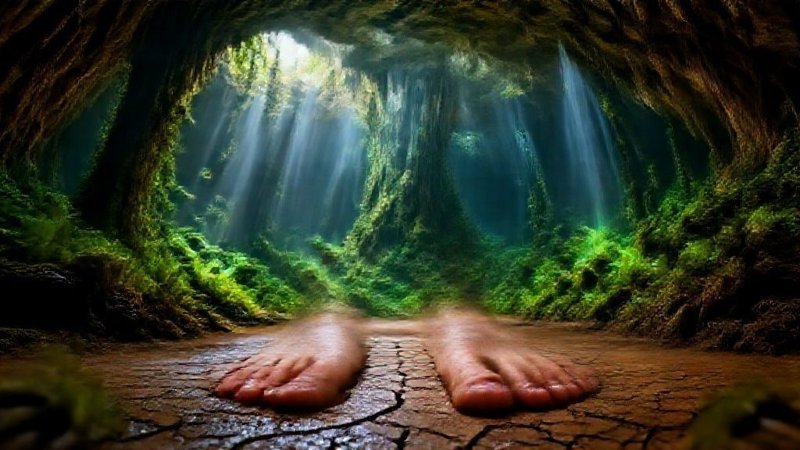
What elevates Sơn Đoòng from merely large to legendary is its self-contained ecology. Certain sections of the ceiling have collapsed, allowing shafts of sunlight to pierce the darkness. This infiltration has fostered a complete, thriving tropical forest on the cave floor—a veritable Garden of Eden hidden from the surface world. Furthermore, the interaction between warm, humid air seeping from above and the deep, cool environment creates a complex, independent weather system. Here, real clouds form, condensing humidity and producing rain inside the Earth itself.
Listening to the Earth’s Living Breath
Exploring Sơn Đoòng means confronting the raw, primal sounds of the planet. Visitors are constantly accompanied by:
The incessant roar of the “Raging River”, the ancient sculptor of the caverns.
The solemn melody of the wind whistling through limestone structures.
The atmosphere suggests an entity observing you, guarding its deepest secrets behind formations like the “Great Wall of Vietnam,” a barrier marking the edge of explored territory. This journey is less an exploration of rock and more a dive into the Earth’s ancient history, forcing a confrontation with the unknown. It prompts the question: If this exists, what other dimensions remain hidden?
Frequently Asked Questions
Who first discovered Son Doong Cave?
The cave was initially stumbled upon by a local man named Ho Khanh in 1991, though it remained lost until a team from the British Cave Research Association formally explored it in 2009.
What makes Son Doong’s ecosystem unique?
It is unique because sunlight penetration from ceiling collapses allows a complete tropical forest to thrive inside, and it possesses its own internal weather system, generating actual clouds and rain deep underground.
How large is Son Doong compared to surface structures?
It is so massive that a 40-story skyscraper could fit comfortably inside its main passages without touching the ceiling.
What is the ‘Great Wall of Vietnam’ inside the cave?
The ‘Great Wall of Vietnam’ refers to rock formations that act as a barrier, separating the explored parts of the cave from the deeper, undiscovered regions.