
Secrets of Dark Power: Why the Wicked Succeed with Machiavellian Principles

0
image_1-94


Secrets of Dark Power: Why the Wicked Succeed with Machiavellian Principles
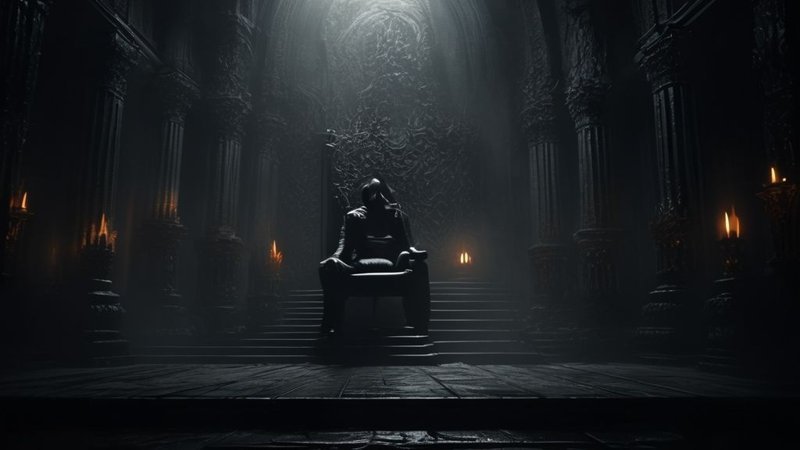
Have you ever wondered why villains often ascend to the pinnacles of success while the virtuous languish in obscurity? Power does not recognize justice; it acknowledges only absolute dominance and the capacity to crush adversaries without a flicker of remorse. In our contemporary world, battles are no longer decided by swords, but by dark intellects that master psychological manipulation and apply Machiavellian principles behind facades of feigned civility and kindness.


The Modern Machiavellian Landscape: Beyond Ethics

Imagine a corporate boardroom, the murky corridors of politics, or even the intricate social circles we inhabit. There is always that individual who appears to hold all the strings of the game. They do not play by the rules you learned in school. They understand well that ethics are constraints created by the weak to control the strong, and thus they choose to liberate themselves from them. They have internalized the essence of what Niccolò Machiavelli wrote five centuries ago and applied it to our complex digital and professional reality. Reaching the summit demands a heart of stone and a mind that functions like a cold calculator. There is no room for emotions in the equation of influence.

You feel injustice when you see a less competent colleague receive the promotion you coveted. You feel anger when you find that the person openly practicing hypocrisy is the closest to decision-makers. But the bitter truth is that these individuals are not merely lucky; they are skilled architects in constructing their edifices of influence. They understand that humans, by nature, are drawn to power just as moths are drawn to a flame. They exploit your weaknesses, fears, and need for security to build their personal glory.

The Modern Machiavellian Landscape: Beyond Ethics


The Art of Deception: Masks and Manufactured Virtue

The first principle in the modern Machiavellian school is the ability to wear masks. The dark individual never reveals their true malevolence. On the contrary, they appear outwardly as the most agreeable and polite of people. They cultivate what Machiavelli called “the appearance of virtue.” They understand that people believe what their eyes see, not what their hands do in secret. They speak of ethics, collaboration, and teamwork, while silently weaving webs of conspiracy that will bring down anyone who stands in their way. Your hand must be velvet, but your grip must be iron. Deception is not merely a tool; it is a way of life for those who seek absolute dominion. This strategic psychological manipulation is also explored in concepts like The Psychology of Silence, which can be used to control social dynamics.


Dark Triad Personalities, Strategic Power Plays, and Information as Currency

Reflect deeply on the figures who have ascended to positions of power in our era. You will often find in them what psychologists refer to as the Dark Triad: narcissism, Machiavellianism, and psychopathy. These individuals feel no guilt. Regret is an emotion unknown to them. For them, others are mere tools, pawns on a grand chessboard. When the Machiavellian manager looks at you, they do not see a human being with aspirations and dreams, but a cog in a machine that can be replaced at any moment if necessary. They study your weaknesses, observe your body language, and analyze your tone of voice to know when to pull the psychological trigger that makes you voluntarily obey their commands. This concept of engineered behavior is also touched upon in studies like The Lucifer Effect.

In fiercely competitive environments, survival belongs to the most adaptable, not the most virtuous. The modern Machiavellian applies the strategy of the lion and the fox.

  • You must be a lion to intimidate the wolves.
  • You must be a fox to possess cunning and avoid traps.

If you rely solely on brute force, you will be shattered by alliances of the weak. If you rely solely on cunning, you will become easy prey for those who dare to use force. Therefore, they observe. They await the opportune moment. They do not enter a battle they are not 100% certain to win. They allow others to exhaust their energies in side conflicts, then intervene at the end to reap all the rewards.

Consider how information is managed today. Information is the new currency of power. The Machiavellian individual collects secrets as they would gold. They know that a single piece of small information about a rival at the right time can be worth a fortune. They do not spread rumors themselves; instead, they whisper them into the ears of those who love gossip, leaving them the task of destroying their opponent’s reputation while remaining beyond suspicion. This is social intelligence in its ugliest form, but it is the most effective for climbing the ladder of success. The importance of information control is paramount, as detailed in the potential impact of a Global Silence.

Dark Triad Personalities, Strategic Power Plays, and Information as Currency


The Dominance of Fear and Digital Manipulation

Fear is the primary driver in the strategy of domination. Machiavelli posed his famous question: is it better to be loved or feared? The shocking answer was that fear is far superior to love. Love is fickle; it dissipates when utility ceases. Fear, however, is constant; it is tied to the human instinct for survival. The Machiavellian leader ensures that everyone remains in a state of uncertainty. They make employees or followers constantly feel under surveillance, and that a single mistake could cost them everything. This continuous psychological pressure crushes the will to rebel and creates a state of forced loyalty that surpasses in steadfastness any loyalty born of love. This manipulation taps into the primal human need for security, often leading to The Illusion of Control for those being managed.

We live in an age of self-glorification, which is the perfect climate for the growth of these dark personalities. Social media platforms have become stages for displaying false virtue, where the masses are manipulated through the creation of mental images that bear no relation to reality. The Machiavellian personality brilliantly exploits these tools. They build armies of followers who fiercely defend them, without these followers realizing that they are merely fuel for a massive propaganda machine designed to enhance the influence of a single individual. Controlling minds today is much easier than controlling bodies. It is enough to control what people see and hear to control their destinies.

Why do these individuals succeed? The reason is simple and painful simultaneously: we allow them to. The human psyche tends to attach itself to the powerful, even if they are tyrannical. We seek someone to make difficult decisions on our behalf, someone to show us the way through the f


Frequently Asked Questions

What is the central question explored regarding the wicked?
The article explores why morally questionable individuals, often referred to as ‘the wicked’ or ‘villains,’ frequently achieve high levels of success and power, while virtuous individuals may struggle or remain obscure.
What is the ‘appearance of virtue’ in Machiavellian principles?
The ‘appearance of virtue’ is a core Machiavellian principle where an individual outwardly projects an image of being agreeable, polite, and ethical, even while secretly engaging in manipulative and self-serving actions. It relies on people believing what they see rather than what is done in secret.
What is the Dark Triad and how does it relate to powerful individuals?
The Dark Triad refers to a group of three personality traits: narcissism, Machiavellianism, and psychopathy. Individuals who exhibit these traits often lack guilt or regret and view others as tools, which the article suggests is common among those who ascend to positions of power.
Why does Machiavelli consider fear superior to love for a leader?
Machiavelli believed that fear is superior to love because love is fickle and can dissipate when a leader’s utility wanes, whereas fear is constant and tied to the human instinct for survival. A leader who instills fear ensures continuous loyalty and obedience, even if it’s forced.
How do modern Machiavellian personalities leverage social media?
Modern Machiavellians exploit social media platforms by creating false images of virtue and using them as stages for self-glorification. They build loyal followings, effectively turning followers into fuel for a massive propaganda machine designed to enhance their influence and control public perception.

Generated by AI Content Architect

About The Author

Leave a Reply

Your email address will not be published. Required fields are marked *