Lost Technology: Ancient Wonders, Vanished Knowledge & Shocking Historical Mysteries

0
image_1-149


Lost Technology: Ancient Wonders, Vanished Knowledge & Shocking Historical Mysteries
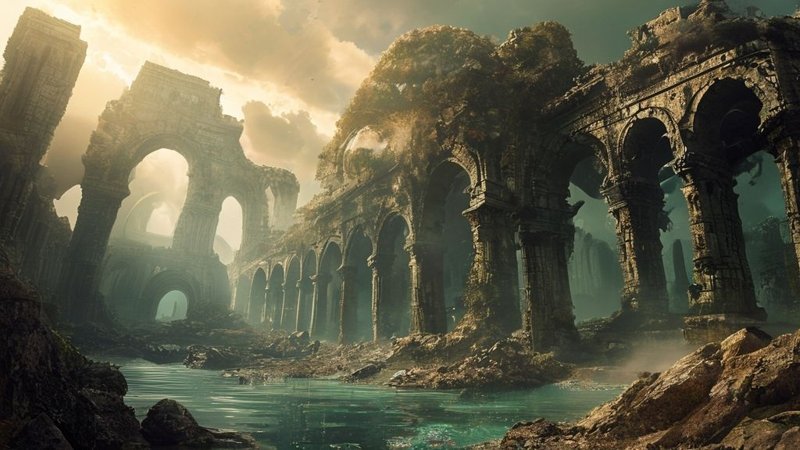
Envision yourself standing now atop the ruins of a submerged city. You gaze downward, observing intricate machines covered in rust and forgotten. Machines that should not have existed in that distant era. Have you ever asked yourself why we live in a world that seems to have reset itself multiple times? We tend to believe that human evolution is a straight line, always ascending. Yet, the bitter and daunting truth is that history is replete with dark voids – gaps where astounding innovations, capable of completely transforming your life today, were lost. You now live in the shadow of a civilization striving to reclaim what it has lost.


The Antikythera Mechanism: A Glimpse into Ancient Genius
In 1901, sponge divers battled the waves near the Greek island of Antikythera. They found not pearls, but the wreckage of an ancient Roman ship. Among the marble statues and golden treasures, a corroded bronze mass stood out. At first glance, it appeared to be merely a valueless piece of metal. However, when scientists examined it, they were shocked to discover precise and complex gears interlocking with astonishing harmony. This was the Antikythera Mechanism: a mechanical device dating back over two millennia. The ancients used it to calculate the positions of planets and stars with incredible accuracy, even predicting eclipses years in advance. Consider this carefully: while the world believed that humans of that era knew only primitive tools, geniuses were designing differential gears that would not appear in European clocks for another 1,500 years. This discovery challenges our modern hubris, telling us that the science we pride ourselves on today once existed in the minds of our ancestors, only to suddenly vanish. Why did this technology disappear? Where did the blueprints and workshops that produced such marvels go? Humanity regressed centuries due to the loss of this single device. This remarkable device truly makes one wonder about Lost Technologies and Ancient Automata.

The Antikythera Mechanism: A Glimpse into Ancient Genius


Damascus Steel & Greek Fire: The Art of Vanished Warfare

Now, let us turn to the battlefields of the Middle Ages. Imagine a sword blade gleaming with ripples resembling the flow of water in a mysterious river. This is Damascus steel: swords that terrorized the Crusaders in the East. They were not merely weapons but the pinnacle of molecular engineering. These swords possessed an extraordinary ability to slice a silk scarf dropped in mid-air, and their blades could be bent to touch the hilt without breaking. Today, metallurgists in the most advanced laboratories are unable to reproduce a single blade with the same specifications. Modern microscopic analysis has revealed the presence of carbon nanotubes within the structure of this steel. Yes, you heard correctly: nanotechnology, which we now speak of as the apex of development, existed in blacksmiths’ workshops a millennium ago. The artisans who knew the secret died, taking with them the precise temperatures, the quality of added metals, and the secret cooling rituals. The knowledge was lost to the annals of history, leaving us to futilely attempt its replication. Do you feel frustrated? You should. Because the loss of this secret signifies that we lost centuries of progress in materials science. You can delve deeper into Damascus Steel’s Nanotechnology and Lost Blacksmith Wisdom.

And it was not only steel that was lost, but fire itself. In the 7th century AD, the Byzantine Empire possessed a terrifying weapon called Greek Fire. This liquid substance was launched from bronze tubes on ships and ignited upon contact with water. It could not be extinguished by water; in fact, water intensified its blaze. This fire burned enemy ships, transforming the sea into an inferno. Thanks to this weapon, Constantinople withstood invasions for centuries. However, the chemical composition of this fire was a sacred military secret, known only to the Emperor and a select few chemists. When the empire fell, the secret was lost forever. Modern scientists have attempted to combine naphtha, resin, sulfur, and phosphorus, but no one has been able to recreate that water-consuming fire. Today, we possess nuclear bombs and intercontinental missiles, yet we lost that ancient chemistry which granted power to its wielder without destroying the entire planet.


Roman Concrete: Building for Eternity
Now, look at the buildings surrounding you in your city. Modern concrete begins to crack and crumble after fifty or one hundred years. But travel to Rome and observe the Pantheon: a colossal concrete dome standing firm for two millennia without any steel reinforcement. Look at the Roman ports, battered by sea waves for centuries, yet growing stronger with time. The secret lies in Roman concrete. Scientists recently discovered that the Romans used volcanic ash in their mixture. When seawater contacts this concrete, a chemical reaction occurs, producing mineral crystals that seal cracks and make the structure stronger over time. They did not just build for dwelling; they built for eternity. We lost this ingenious formula for centuries and replaced it with weak concrete requiring constant maintenance. Consider the immense funds and efforts this technology would have saved us had it not vanished from historical records.

Roman Concrete: Building for Eternity


The Fragility of Knowledge: Why These Technologies Disappeared

But the most crucial question that should forcefully strike your mind is: Why? Why do these great technologies disappear? The answer lies in the fragility of human knowledge. In ancient times, knowledge was not always recorded in universally accessible books. It was often a secret passed down through generations by word and practice. When wars erupted, epidemics spread, or great libraries like Alexandria burned, the minds that held those secrets died. A single fire in an ancient library could erase from human memory a chemical equation that took millennia to discover. We live in a civilization reliant on digital storage, but what if a global electromagnetic pulse occurred and wiped all hard drives? We would instantly revert to the Stone Age. And our descendants, a thousand years from now, would wonder how their ancestors spoke through the air and flew in the sky, considering our stories mere myths, just as we view tales of lost continents like Atlantis. For more on lost civilizations, explore Atlantis Found: The Eye of the Sahara and Plato’s Lost City or Beneath Our Feet: Hidden Oceans, Ancient Civilizations & Earth’s Unsolved Mysteries. The loss of these technologies has deprived us of a completely different possible future.


Frequently Asked Questions

What is the Antikythera Mechanism?
The Antikythera Mechanism is a complex mechanical device discovered in a Roman shipwreck, dating back over two millennia. It was used by ancient Greeks to accurately calculate the positions of planets and stars, and predict eclipses, featuring differential gears far ahead of its time.
What made Damascus steel so extraordinary?
Damascus steel swords were renowned for their incredible sharpness, flexibility, and strength, capable of slicing silk in mid-air and bending without breaking. Modern analysis revealed the presence of carbon nanotubes, indicating an advanced understanding of nanotechnology that is still difficult to replicate today.
How did Greek Fire function, and why was it so formidable?
Greek Fire was a terrifying liquid weapon used by the Byzantine Empire that ignited upon contact with water and could not be extinguished by it; in fact, water intensified its blaze. Launched from ships, it transformed the sea into an inferno and was crucial for Constantinople’s defense for centuries, though its precise chemical composition remains a lost secret.
What was unique about Roman concrete?
Roman concrete was exceptionally durable, allowing structures like the Pantheon to stand for two millennia without steel reinforcement, and Roman ports to grow stronger over time. This was due to the use of volcanic ash, which reacted with seawater to produce mineral crystals that sealed cracks and enhanced the material’s strength.
Why did these advanced ancient technologies become lost?
These technologies often disappeared because knowledge was passed down orally or kept as secret practices, rather than being widely documented. Wars, epidemics, and the destruction of libraries led to the loss of the minds that held these secrets, effectively erasing centuries of innovation from human memory.

Generated by AI Content Architect

About The Author

Leave a Reply

Your email address will not be published. Required fields are marked *