Fermi Paradox: Where Are All the Aliens? Great Filter & Dark Forest Theories
Fermi Paradox: Where Are All the Aliens? Great Filter & Dark Forest Theories
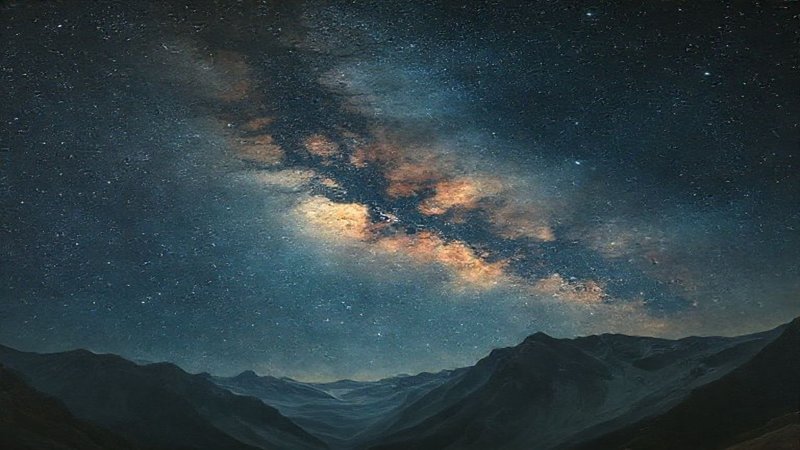
Observe the sky on a clear night, far from the spurious city lights. You will feel the awe of the silence enveloping the universe around you. This majestic scene conceals, behind it, a purely mathematical terror that has baffled minds for many decades. You are currently standing on a minuscule planet orbiting a medium-sized star called the Sun. Our Sun is just one of two hundred billion stars in the Milky Way galaxy alone. Modern astronomical studies, relying on advanced telescopes such as the James Webb, indicate that most of these stars possess orbiting planets. Imagine this immense number of potential worlds in a single galaxy. If we cautiously assume that only one percent of these planets share geological and chemical similarities with Earth, we are talking about millions of worlds capable of supporting life. The observable universe contains two trillion galaxies beyond our own. This number entirely surpasses the human mind’s capacity for comprehension or logical visualization. It simply means that there are more planets in existence than all the grains of sand on every beach of planet Earth. Mathematics here does not whisper; it shouts at us with force: life must exist everywhere around us. Cosmic dust is rich in essential organic elements. Water exists abundantly in the great gas clouds and within the depths of icy moons. Furthermore, sufficient time has elapsed for miracles to occur. The age of the universe is estimated at approximately thirteen billion eight hundred million years, whereas the age of planet Earth does not exceed four billion five hundred million years. This clearly implies that other civilizations could have begun billions of years prior to us.
Navigate Content
Fermi’s Profound Question: Where Is Everybody?
In the summer of 1950, the renowned Italian physicist Enrico Fermi was walking with his colleagues toward lunch at the Los Alamos National Laboratory. The discussion revolved around reports of unidentified flying objects and scientific articles addressing the probability of extraterrestrial life. Suddenly, without preamble, Fermi posed his question that forever shook the foundations of astronomy and physics: “Where is everybody?” This question was not merely a passing query from a great scientist; it was a sharp and provocative logical paradox. If advanced civilizations are as numerous in the universe as the numbers suggest, then logically, we should see clear evidence of them everywhere. Even with the primitive technology humans possess today, we could theoretically colonize the entire galaxy in just a few million years. Relative to the galaxy’s vast age, this time span is merely a fleeting instant. If even one civilization had started its journey a million years before us, it would have, by now, filled every corner of the Milky Way with radio broadcasts, colossal structures, or intelligent robots. Yet, the shocking reality is that we look into deep space and find nothing. We perceive only absolute silence and profound darkness. We detect no strange radio signals with our instruments, no traces of light-powered propulsion, and no evidence of megascale engineering altering the shapes of stars. This stark contradiction between high mathematical probabilities and the utter absence of tangible evidence is what we now know as the Fermi Paradox.
The Great Filter: Humanity’s Cosmic Sieve
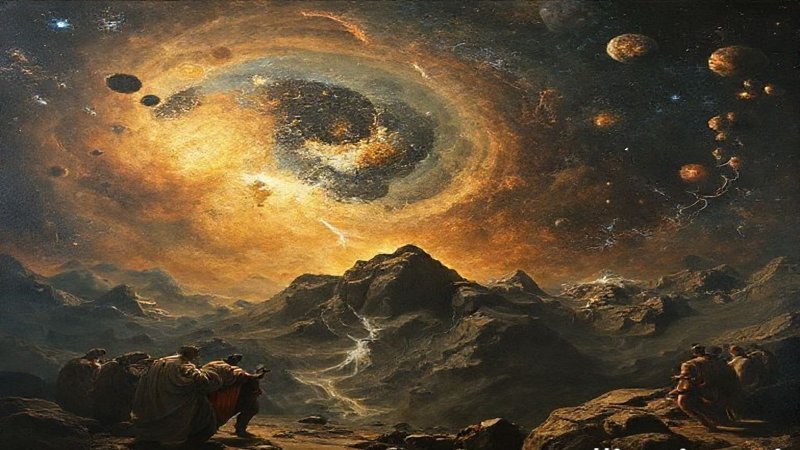
Let us now delve into one of the most terrifying explanations for this paradox, known as the Great Filter theory. This concept posits the existence of an evolutionary barrier or a cosmic obstacle that is extremely difficult to overcome. This barrier functions as a sieve, preventing life from reaching the stage of an intergalactic cosmic civilization. The crucial, existential question each of you must ask is: Where does this filter lie in relation to our human trajectory? Is it behind us in the past, or does it await us in the near future? If the Great Filter is behind us, this represents the best possible news for humanity. Perhaps the most arduous and seemingly impossible step was the genesis of the first living cell from inanimate matter, or perhaps the transition from single-celled organisms to complex multicellular life was the greatest hurdle. If so, we are the fortunate ones who have survived this deadly cosmic sifting. However, the alternative possibility is more somber and bleak: that the filter lies directly ahead of us. Perhaps, whenever an intelligent civilization reaches a certain level of technological advancement, it inevitably and necessarily destroys itself. Maybe uncontrollably powerful artificial intelligence, devastating nuclear weaponry, or destructive genetic engineering are the traps into which all civilizations fall before they can leave their solar systems. In this chilling scenario, the silence of the universe is not proof of emptiness, but rather a silent warning scream directed at us. Every silent star you observe in the sky might be the cold graveyard of a magnificent civilization that attempted to soar but had its wings burned by the fires of its own technology.
The Dark Forest: A Universe of Hunters
There is another intriguing hypothesis known as the Dark Forest theory. This hypothesis does not assume the rarity of life but rather its extreme peril and the inevitability of conflict within it. Imagine the universe as a dense, dark forest, teeming with armed and skilled hunters. Every civilization in this forest is a hunter moving with extreme caution and apprehension among the thick trees. Any hunter who reveals their location or makes an audible sound will be immediately and ruthlessly eliminated by the other hidden hunters. The motivation behind this action is not hatred or malice, but existential fear of competition for finite resources. In such an environment, silence is the only viable survival strategy. We humans foolishly and naively broadcast radio signals into deep space, sending out our sounds and information. We resemble a small child screaming at the top of its lungs in the middle of this desolate, dark forest. We never realize that cosmic monsters might be listening to us at this v
Frequently Asked Questions
Generated by AI Content Architect
About The Author