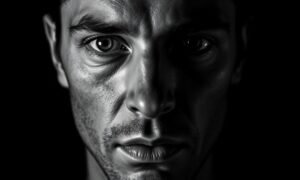
Digital Immortality: The Terrifying Truth of Uploading Your Consciousness
Imagine waking up tomorrow to find yourself merely a line of code within an infinite digital cloud. You sense your existence, you recall your memories, yet you possess no breathing body. Is this truly you? Or are you merely an electronic phantom deluding itself into continued being? This question is not mere science fiction; it represents the greatest challenge confronting humanity in the 21st century. We are nearing a moment of truth—a moment when death as we know it may cease to exist. Yet, the cost could be the eternal loss of your identity. Stay with me, for what I am about to reveal will compel you to reconsider the very essence of what it means to be human.
The Ancient Fear, Modern Promise: Mapping the Mind
Currently, you harbor a fear of oblivion. This fear has been the fundamental driver of all our civilizations. We constructed pyramids to immortalize our bodies and penned epics to immortalize our names. However, science today presents an entirely different proposition: a pact promising eternal life within a superpowerful computer server. Scientists are currently developing what is termed a “whole brain map,” endeavoring to chart every single neuron in your brain—every synapse, every electrical impulse, every memory stored within the folds of your gray matter. The objective is to transmute this organic material into digital code—ones and zeros. Can you truly conceive of this? Your first love, your fear of the dark, and your grandest ambitions, all reduced to an extended sequence of numbers. This pursuit raises profound questions about the nature of our existence, especially in an era where digital realities and simulations are blurring the lines of what is real.
The Enigma of ‘You’: Is Consciousness Just Code?
Yet, herein lies the terrifying chasm. Is consciousness merely an emergent property of computation? If we could simulate every chemical reaction in your brain with one hundred percent fidelity, would consciousness spontaneously arise from this code? Or is there something fundamentally missing—something that cannot be touched or programmed? Philosophers refer to this as “the hard problem of consciousness.” You feel the warmth of the sun on your skin; you taste the sweetness of fruit. Can a digital replica truly feel, or would it merely simulate feeling?
This enigma leads us into a profound and unsettling territory. Suppose we successfully copied your brain while you were still alive. Now, two versions exist: the biological you and the digital you. Both assert themselves as “you”; both possess identical memories. If we then decided to terminate the biological version, would your life truly have continued? Or would you have, in fact, died, leaving behind merely a highly sophisticated electronic parrot? This constitutes the dilemma of continuity. You believe you are the same person who awoke this morning, yet your body is in constant flux; cells die and regenerate. What, then, fundamentally defines “you”? Is it the pattern, or is it the underlying matter? If the pattern is paramount, then digital immortality might be conceivable. If matter is the essence, then we are, paradoxically, merely digging our graves in the cloud. These are questions that challenge the very patterns of self and subconscious we often take for granted.
The Perilous Path: Risks of Digital Disassembly
Consider the technological requirements for such a transformation. We are discussing nano-precision brain scanning, necessitating scientists to slice the brain into incredibly thin sections to image every single cell. This implies that the path to digital immortality traverses through inevitable physical death. You cannot upload your consciousness without the irreversible dismantling of your original brain. Are you truly prepared for such a leap of faith? To place your absolute trust in a software engineer to preserve the very essence of your being? What if a coding error occurred? What if the digital cloud were breached? Imagine your consciousness being replicated thousands of times, destined to function as a digital slave in an unending simulation, or your memories being manipulated, transforming you into an entirely different individual. These are not merely hypothetical scenarios; they represent genuine threats in an increasingly vulnerable digital landscape, where encryption and secrets face unprecedented challenges.
Corporate Custody and the Loss of Autonomy
The underlying fear here is not of death, but rather the profound loss of self-autonomy. In the digital realm, you would cease to be a free entity; you would become data, proprietary to major corporations. Would Apple or Google effectively own your digital soul? Would a monthly subscription be required to maintain your consciousness? And if your heirs were unable to remit payment, would your very existence be terminated with a single click? These are not frivolous questions; they represent the impending reality we are accelerating towards without adequate contemplation. The idea of a personal digital identity controlled by external forces is already emerging with concepts like CBDCs. We pursue immortality because we reject finality, yet we may find ourselves confined within an eternal prison of silicon.
Scientists involved in Switzerland’s “Blue Brain Project” are striving to construct a computational model of the human brain. While they are achieving remarkable advancements, they invariably encounter the formidable barrier of enigma. Consciousness is not merely electrical impulses; it is a subjective experience, the very “I.” Consider a cinematic experience: you watch a film and are moved by it. The film itself is nothing more than points of light on a screen, yet its meaning is constructed within your own mind. Digital immortality endeavors to transform the “viewer” into “points of light.” Can a screen truly feel?
Frequently Asked Questions
What is “digital immortality”?
“Digital immortality” refers to the concept of transferring human consciousness, memories, and identity into a digital format, such as within a superpowerful computer server, allowing for a form of eternal life independent of the biological body.
What is the “whole brain map” concept?
The “whole brain map” is a scientific endeavor aiming to chart every single neuron, synapse, electrical impulse, and memory within the human brain. The ultimate goal is to translate this organic structure and function into digital code (ones and zeros).
What is the “hard problem of consciousness”?
The “hard problem of consciousness” is a philosophical term describing the challenge of explaining how physical processes in the brain give rise to subjective experiences, feelings, and awareness (the ‘what it’s like’ aspect) rather than merely objective functions or simulations.
What are the primary ethical and practical risks of pursuing digital immortality?
The risks include the necessity of physical death for brain scanning, potential coding errors, data breaches, the possibility of consciousness being replicated into digital servitude, manipulation of memories, and the profound loss of self-autonomy as corporations might own and control one’s digital existence through subscription models.
Does digital immortality guarantee true continuity of self?
The article raises the “dilemma of continuity,” questioning whether a digital copy of a brain, even with identical memories, would genuinely be the same “you” if the biological original ceases to exist. It debates whether identity is defined by pattern or by the underlying biological matter.