Digital Illusion: AI Video Deception, Gaussian Splatting, and Neural Cloning

Digital Illusion: AI Video Deception, Gaussian Splatting, and Neural Cloning
What your eyes perceive now may not exist at all in our material world. We are living in an era where sight is no longer a means of belief, but rather a sophisticated trap set by digital creators. You stand on the threshold of a visual revolution that transcends the limits of human imagination, where the boundaries between reality and illusion completely dissolve.
Navigate Content
The Hyper-Realistic Digital Facade
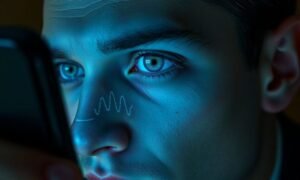
Examine closely the faces appearing in viral videos on social media platforms. Do you notice those subtle pores on the skin? Contemplate how light reflects off the pupil with a natural sheen. These seemingly perfect details are not the product of expensive cameras but the result of proprietary software operating covertly. Professional content creators have replaced massive studios with intricate algorithms processing billions of data points. They utilize tools that require deep knowledge of the digital realm’s hidden intricacies, often bypassing conventional search results.

3D Gaussian Splatting: Crafting Virtual Worlds
Advanced software applications rely on three-dimensional Gaussian splatting. This technique transforms a few flat images from a mobile phone into an ultra-realistic, three-dimensional world. Within this world, creators can alter lighting angles as if on a real cinematic set. The light is calculated through the physical path tracing of every virtual photon. Critically, digital skin is rendered layer-by-layer to compute light penetration and reflection off underlying blood vessels, lending faces a digital warmth previously unattainable.
Neural Voice Cloning and Sensory Manipulation
The ability to hear celebrities speaking in unfamiliar languages with genuine emotion is powered by neural voice cloning models. These tools analyze vocal ‘DNA,’ capturing intermittent breaths and precise vocal cord vibrations during emotional expression. The hidden creator can make a digital character whisper words they never spoke. The emotions you experience are genuine biological responses to entirely illusory frequencies, showcasing complete control over human senses via programming code accurate to finer than one-thousandth of a second. This level of precision is essential for maintaining belief, much like how advancements in understanding ancient engineering challenge our view of history, similar to theories surrounding Lost Technology and Vanished Knowledge.

Integration via Node-Based Interfaces
The integration of these elements into a cohesive production happens through complex node-based interfaces, such as ComfyUI. These interfaces act as digital chemical laboratories where professionals connect dozens of software nodes. Key functions include:
- One node controls the character’s skeletal structure.
- Another dictates fabric type and wind reaction simulation.
- The program simulates fabric folds with astonishing physical fidelity, exploiting the mind’s tendency to accept physical rules when presented correctly.
Furthermore, temporal consistency, achieved through latent diffusion models and ControlNet, ensures video flows like silk, eliminating the flicker that once betrayed digital manipulation.
The Psychology of Acceptance and Personalized Reality
Why do we believe these fabricated scenes? The answer lies in cognitive load; the brain cannot process the immense volume of physically accurate details injected by these tools, choosing the path of least resistance: acceptance. Modern tools have successfully leaped over the ‘uncanny valley.’ Creators now search the ‘latent space’—a mathematical library of all possible images—using precise keywords to find the perfect locale combining facial structure and cinematic lighting. This allows for the complete personalization of reality, where every viewer sees a version tailored to their specific psychological biases and visual preferences. This psychological control is arguably the most compelling aspect of this new media landscape, a subtle form of mind manipulation reminiscent of discussions around Psychological Triangulation.

Frequently Asked Questions
Generated by AI Content Architect
About The Author