Damascus Steel Secret: Nanotechnology in Ancient Swords and Lost Blacksmith Wisdom
Damascus Steel Secret: Nanotechnology in Ancient Swords and Lost Blacksmith Wisdom
The legendary Damascus steel represents one of history’s most profound technological losses. Swords capable of slicing silk by gravity and bending fully without breaking baffle modern metallurgists. This metal, characterized by its flowing, water-like surface patterns, was far superior to anything the Crusaders possessed, showcasing an understanding of material science that modern labs struggle to replicate. The key to this lost art lies in ancient raw materials and a profound, intuitive grasp of chemistry.
Navigate Content
The Marvel of Ancient Metallurgy
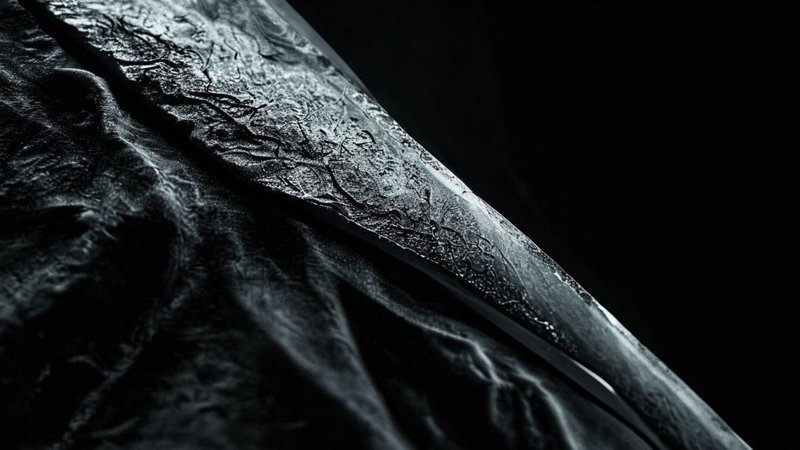
The physical properties of true Damascus steel were astounding. Imagine a sword that possessed the edge hardness of modern steel yet maintained incredible flexibility, allowing it to bend drastically and return to true shape. This apparent contradiction was achieved by creating a unique microstructure. The surface patterns, known as the ‘moiré,’ are not decorative but a molecular roadmap revealing the metal’s internal structure. When first encountered by Europeans, these blades rendered heavy iron armor vulnerable, cutting through it like soft material.
Wootz, Fire, and the Nanotube Revelation
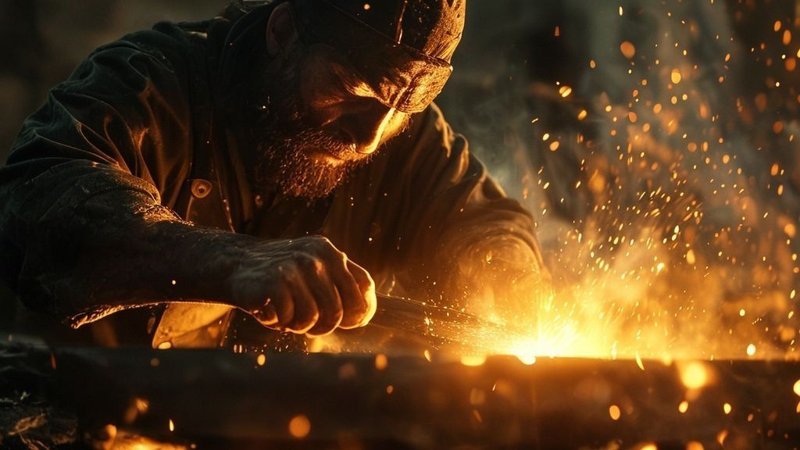
The genesis of this steel traces back to raw metallic spheres called Wootz, mined in ancient India and transported to Damascus. The blacksmiths mastered the smelting process through empirical observation, monitoring the fire’s color—from deep crimson to the hue of sunset—to determine the precise, crucial temperature. Secret additives, including specific organic materials, were introduced. Astonishingly, research conducted in 2006 revealed that these ancient blades contained carbon nanotubes, a structure we currently consider the pinnacle of nanotechnology. The smiths achieved this feat without atomic physics, relying on intuition developed over generations.
The Role of Impurities and Slow Cooling
The structure that imparted legendary strength and flexibility was formed by combining two critical factors:
- Extremely Slow Cooling: This allowed the carbon structures to organize precisely.
- Specific Impurities: Trace elements like vanadium and tungsten, naturally present in the Indian iron ore, acted as catalysts for nanotube formation.
Modern science often strives for absolute purity, but the ancient smiths succeeded by expertly managing metallic ‘defects’ and impurities, turning them into supreme advantages. It stands as a rebuke to our modern scientific hubris regarding purity.

The Sudden, Irreversible Loss of the Secret
Disaster struck in the 18th century AD when the production of authentic Damascus steel abruptly ceased. The knowledge simply vanished, frustrating subsequent generations. Even brilliant minds, such as Michael Faraday, failed to reproduce the authentic material, only achieving superficial imitations. The most compelling theory for this loss suggests that the specific Indian iron mine yielding the necessary ore—the one rich in the catalytic impurities required for nanotube formation—was depleted. Without the raw material, the world lost the recipe, regardless of the skill of the remaining smiths. For more on lost secrets and unexplained historical materials, see articles like The Antikythera Mechanism or Puma Punku.
Modern ‘Damascus’ vs. The Original
Today, many swords are marketed as Damascus steel, but they utilize pattern welding—layering and folding different steels together for aesthetic wavy patterns. This is fundamentally different from the ancient technique, which was a single, homogenous mass where the patterns crystallized internally through controlled cooling chemistry. The ancient blade had a mechanical soul, balancing rigidity and ductility perfectly, a quality modern pattern-welded copies lack.
Frequently Asked Questions
Generated by AI Content Architect
About The Author