Arab Genius in Cryptography: Manuscripts AI Cannot Crack

Arab Genius in Cryptography: Manuscripts AI Cannot Crack
Ancient manuscripts, layered with forgotten mathematics and cryptic symbols, stand as monuments to human ingenuity that even today’s most powerful artificial intelligence struggles to conquer. This is the realm of historical cryptography, where human minds, armed only with ink and quill, crafted protective shields against enemies, priests, and time itself. Why do these seemingly simple historical codes remain impenetrable puzzles when faced with quantum computing power?
Navigate Content
The Dawn of Cryptanalysis: Al-Kindi and Linguistic Fingerprints
The journey into cryptology begins in the 9th century at the House of Wisdom in Baghdad, spearheaded by Ya’qub ibn Ishaq al-Kindi. He pioneered a revolutionary concept: that language is inherently statistical. Al-Kindi realized that every language has a ‘genetic fingerprint’ based on letter frequency (e.g., the recurrence rate of ‘Alif’ in Arabic). This insight formed the basis for breaking simple substitution ciphers, establishing the cornerstone of modern intelligence analysis.
Escalation of Secrecy: Polyalphabetic Ciphers and the Vigenère Square
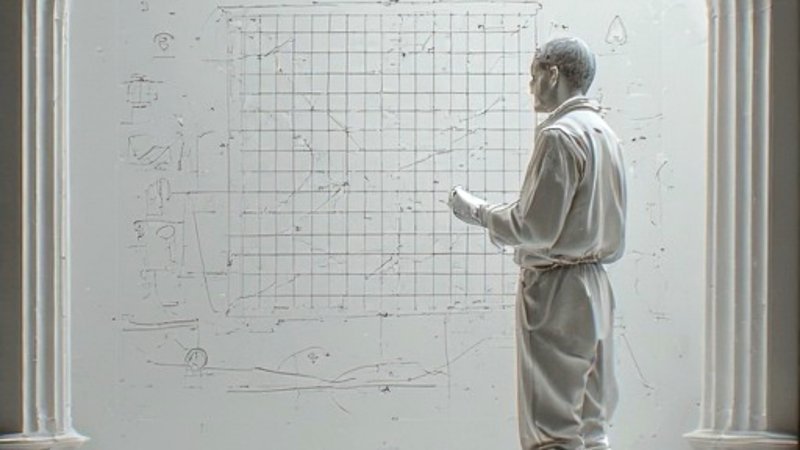
The initial triumph of frequency analysis was short-lived. Code-makers evolved, refusing to let their secrets be exposed by statistics. The next defense was the polyalphabetic substitution cipher, exemplified by the Vigenère Square—a mathematical matrix designed to make a single letter change its encoded value every time it appeared. This complexity meant simple frequency counts were useless, turning the cryptographic battle into a puzzle within a puzzle, demanding manual creativity far surpassing modern expectations.
The Unyielding Enigma: The Voynich Manuscript
The ultimate test of ancient encryption prowess remains documents like the 15th-century Voynich Manuscript. Filled with drawings of imaginary flora and written in an unknown language, this text has defied centuries of scrutiny. Key facts about its resistance include:
- Attempts by top mathematical experts from both World Wars failed.
- Even the supercomputer systems of the U.S. National Security Agency yielded no coherent results.
How could a 15th-century mind create a defense that surpasses modern AI algorithms?

Layered Defense and Creative Inspiration
The failure to crack these texts stems from their structure: they operate like an onion, using multiple, interlocking layers of protection. These ‘Forbidden Books’ often utilized complex manual techniques like:
- Polyalphabetic Substitution Ciphers: Encryption logic shifting with every word.
- Nature-Based Ciphers: Inspiration drawn from natural patterns, such as leaf arrangements or constellation counts, forcing analysts to contend with creative spirit rather than pure mathematics.
This demands a patience and dedication foreign to the speed of the digital age.
The Precision of Geometric Ciphers
By the 18th century, the complexity involved circuit geometry, where text was segmented and encoded using interlocking physical rings. Decryption required manual rotation of these rings by precise, often prime, degrees (e.g., 33 degrees, 47 degrees). This system highlights an incredible nerve strain: a single incorrect calculation by the scribe could permanently erase the message, even for the recipient holding the key. Modern science now employs spectral analysis to trace the writer’s hand movements, seeking clues in the physical act of writing itself.
Frequently Asked Questions
Generated by AI Content Architect
About The Author