Al-Jazari: The Forgotten Genius Who Sparked the Industrial Revolution in 1205 CE
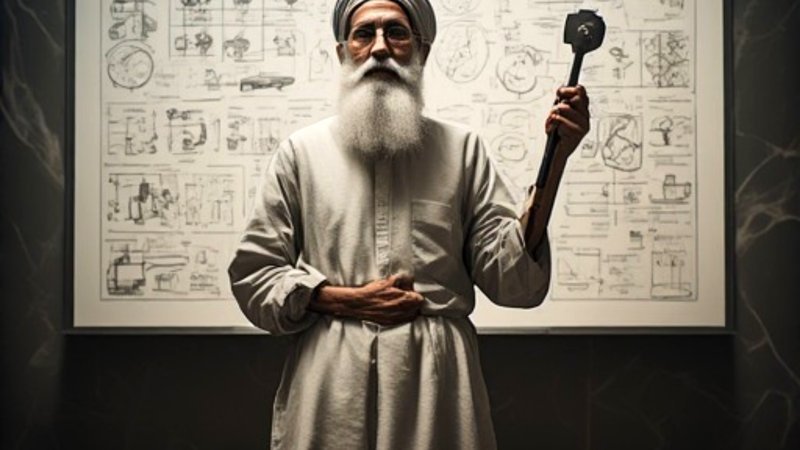
Al-Jazari: The Forgotten Genius Who Sparked the Industrial Revolution in 1205 CE
Navigate Content
The Dawn of Automation: Al-Jazari’s Palace Inventions
Imagine the court of King Nasir al-Din Artaq in 1205 CE. Al-Jazari presented automatic servants designed with unparalleled hydraulic sophistication. This was not superstition; it was rigorous mechanical engineering, detailed in his masterpiece, The Compendium of Knowledge in the Inventions of Mechanical Devices. The sophisticated devices, termed Hiyal, represented the peak of mechanical understanding, demonstrating principles that historians often attribute to much later eras.
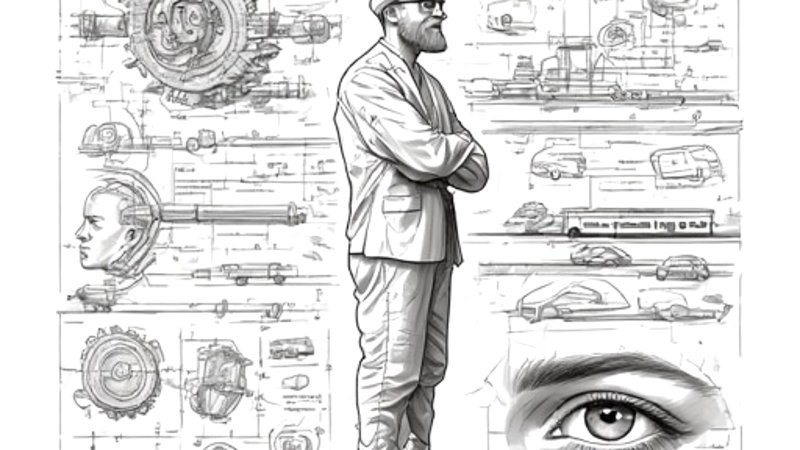
The Elephant Clock: A Microcosm of Global Power
The Elephant Clock stands as a monumental achievement—far more than a timekeeper. It functioned as a moving political and cultural map:
- Symbolism: The elephant represented India, the phoenix Arab thought, and the dragon symbolized China.
- Mechanism: Regulated entirely by gravity and water flow, it utilized a precisely perforated reservoir acting as a ‘regulator’—the same principle used in high-precision Swiss timepieces today.
This intricate system proved that complex mechanics could operate reliably without electricity.
The Birth of Modern Motion: The Crankshaft and Programming
Al-Jazari introduced inventions critical to every vehicle currently moving. Perhaps most significantly, he invented the crankshaft, the essential component converting rotary motion into linear motion. Every car engine and aircraft owes its functionality to this 12th-century innovation. Furthermore, his ‘Robotic Orchestra’ featured a boat with musicians controlled by a ‘programmed cylinder,’ anticipating modern binary programming:
- Small pins on the cylinder triggered levers, defining the melody.
- Changing the pin pattern directly altered the performance sequence—the wooden pins serving as the ‘zeros and ones’ of early computation.
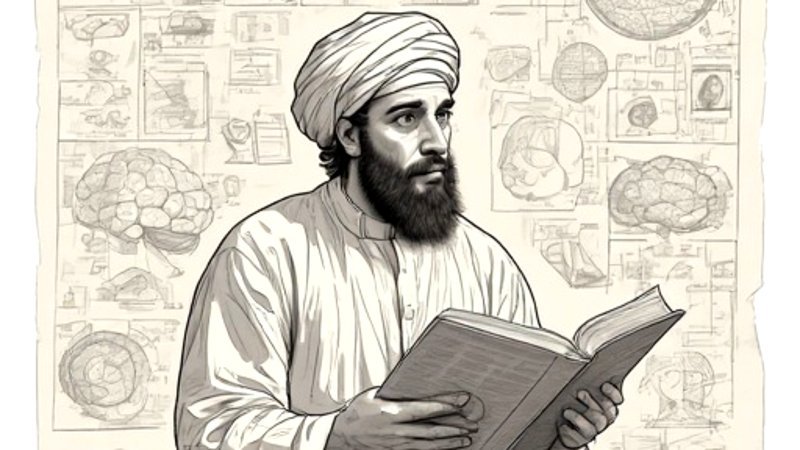
The Philosophical Divide: Art vs. Consumerism in Engineering
The text posits that modern technological development has devolved. While Al-Jazari integrated nature and sought to simulate life as a loyal servant, elevating human potential, today’s focus is on software consumption. The author argues:
“Al-Jazari’s machines were works of art; they appealed to the spirit and the eye before fulfilling their function. Today, our devices are soulless, mere cold pieces of plastic and metal.”
This loss of aesthetic integration and respect for natural systems is seen as a fundamental step backward from the vibrancy of Al-Jazari’s era, a brilliance interrupted by conflict and the loss of crucial manuscripts.
Frequently Asked Questions
About The Author