Palmyra: How a Trading Oasis Became Rome’s Greatest Rival
In the heart of the Syrian desert lies a place whose geographical existence defies all logic. Palmyra was not merely a resting station for caravans; it was a global commercial hub that managed the flow of capital between immense empires such as Rome and Persia, eventually transforming into one of the ancient world’s greatest threats.
When you look at a map today, you ask yourself: How did a city with a population exceeding 200,000 manage to thrive and grow in such a harsh environment? It was no accident. The city was meticulously planned, featuring wide streets, massive marble columns, and theaters and temples that rivaled those in the heart of Rome. Palmyra functioned as an integrated system, operating day and night to ensure that the arteries of East-West trade remained open and channeled revenue straight into its treasury. Similar feats of ancient ingenuity can be explored through topics like The Ancient City of Caral: Thrived 1,000 Years Without an Army or Walls.
The Tariff of Palmyra and Ancient Taxation
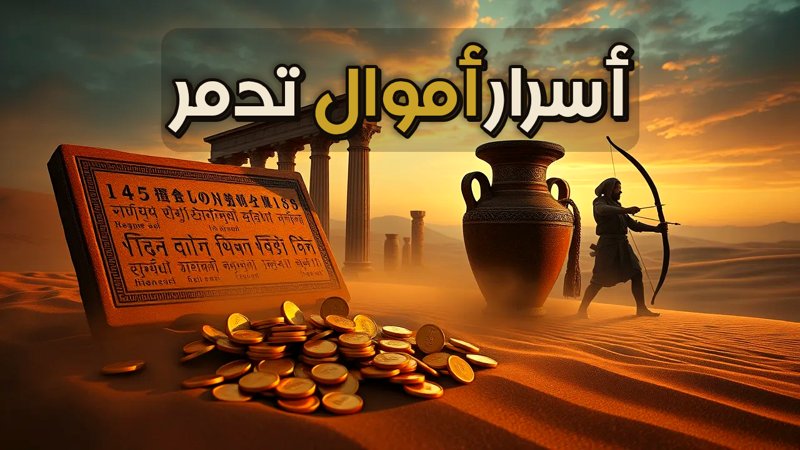
Evidence of this economic precision is preserved in a real, documented artifact known as the “Tariff of Palmyra.” This tablet served as their tax code, inscribed with details that leave one astounded by the precision of the people of that era.
Taxes on camels, salt, and water
Levies on animal hides and luxury goods
Strict tracking of every single penny entering and leaving the treasury
The Palmyrenes did not grow rich by chance; they built an administrative structure that transformed a small oasis into a genuine economic powerhouse. For more insights into how ancient societies tracked wealth and debts, read Why History Preserved Debts Instead of Heroic Deeds.
Route Security as a Global Business
The entire enterprise was built upon a single principle: the concept of “route security” as a global business. The Palmyrenes transformed challenging geography into a genuine logistical service center. The trade routes linking the Persian and Roman empires were fraught with peril, ranging from highwaymen to harsh terrain. Here, Palmyra offered the product the whole world needed: security in exchange for a clear tax.
This gave rise to the legendary Palmyrene archers, a security brand for which merchants were willing to pay substantial sums. This created a comprehensive insurance system that turned Palmyra from a mere waypoint into the primary engine of East-West trade.
Luxury Commodities and Global Capital
To imagine the scale of liquidity flowing through the city, one must examine the nature of the goods passing through their hands. We are talking about the ancient world’s most luxurious commodities:
Chinese silk: The pinnacle of luxury in Rome
Indian spices: Sold by weight in gold
Frankincense and myrrh: Consumed in massive quantities by temples
All of this passed through the “Gates of Palmyra,” and every shipment was taxed and meticulously recorded in official ledgers. Their control over global capital movement allowed the oasis to sustain the region’s entire economy and rival the wealth of venerable Roman cities.
Odaenathus and the Shift to Military Authority
Palmyra’s prosperity relied on a delicate balance among surrounding superpowers—a balance that fractured when Rome descended into political chaos. In 260 AD, the capture of Roman Emperor Valerian by the Persians left the eastern frontiers exposed. Odaenathus, the ruler of Palmyra, mobilized an army and pursued the Persians all the way to Ctesiphon. Rome had no choice but to bestow upon him the title Corrector totius Orientis (Corrector of the Entire East). This legally transformed Palmyra from a trading post into an official military authority, setting the stage for even greater ambitions before his mysterious assassination in 267 AD.
Frequently Asked Questions
What was the Tariff of Palmyra?
The Tariff of Palmyra was a documented tax code inscribed on a stone tablet that detailed precise taxes on commodities such as camels, salt, water, and animal hides, reflecting the city’s advanced administrative structure.
How did Palmyra ensure the security of trade caravans?
Palmyra created a professional protection service featuring specialized archers who acted as an elite security brand. Merchants paid substantial sums to have these archers guard their caravans against highwaymen and harsh terrain.
What role did Odaenathus play in Palmyra’s rise?
Odaenathus was the ruler of Palmyra who capitalized on the capture of Roman Emperor Valerian by defeating the Persians and pushing them back to Ctesiphon. For his success, Rome granted him the title Corrector of the Entire East, turning Palmyra into a recognized military authority.
What luxury goods passed through Palmyra?
Palmyra’s trade network handled the ancient world’s most valuable commodities, including Chinese silk, Indian spices, and large quantities of frankincense and myrrh.