Uruk: The Ancient City That Invented Taxation and Cuneiform
Uruk: The Ancient City That Invented Taxation and Cuneiform
Imagine standing in the middle of a crowd for the very first time in human history. Before this moment, every individual knew the faces of everyone around them by name. Yet here, in Uruk, you are merely a number on a ledger—a single cog in a machine that began turning long ago and has not stopped to this day.
Navigate Content
The Birth of the World’s First Megalopolis
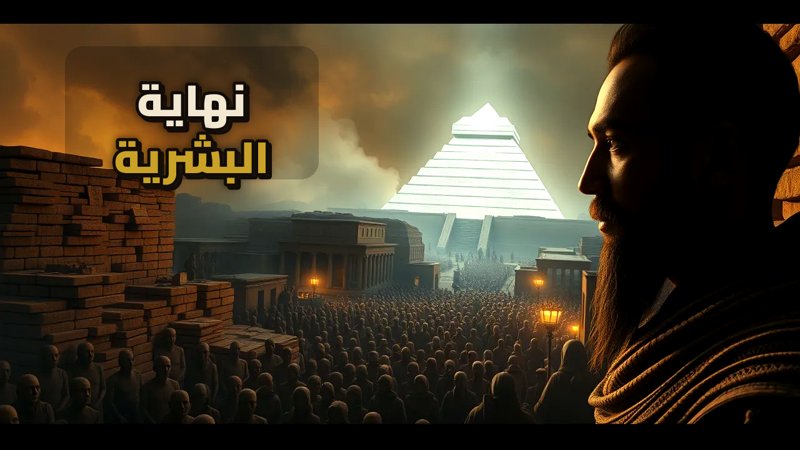
We are now in the year 3200 BC. The streets are so narrow that people’s shoulders brush as they walk. The scent of wet mud from the Euphrates River mingles with the smoke rising from the kilns, accompanied by a chaotic murmur echoing from every direction. You are not in a small village; you are at the heart of the world’s first megalopolis. Fifty thousand human beings live behind these city walls, navigating a shared space for the first time. The contrast between the quiet village life humanity had grown accustomed to for millennia and the din of Uruk was a genuine psychological shock. In the village, you were known by everyone and shared in your burdens, but in Uruk, the earliest traces of alienation emerged.
The White Temple and Social Stratification
Amidst the low mud-brick houses stood a single entity that compelled you to lift your gaze: the White Temple, perched atop the ziggurat. Coated with a layer of white plaster that reflected the blinding sunlight, it appeared like a fragment of the sky descended to dwell among them.
- It served as a place of worship.
- It acted as the granary and command center.
- It drew the earliest lines of social stratification in history.
To maintain this aura of awe, the Sumerians employed advanced craftsmanship, utilizing baked clay and colored mosaics to make individuals feel dwarfed by the grandeur of the monument. For more context on ancient societal structures, you might find connections in Before Rome: The Truth Behind Hammurabi’s Laws of Justice.
The Invention of Writing: Not for Art, But for Taxes
With the growing crowds and the influx of goods, human memory began to falter regarding numbers. Accounts multiplied, and debts and promises required documentation. The story began with clay balls, or bullae, containing small tokens representing livestock. In time, the Sumerians realized they could impress those same marks onto the surface of the soft clay. From there, these marks evolved into cuneiform. Take note: the first text written in human history was neither a love poem nor a prayer to a deity; it was a tax ledger or a receipt for barley. Writing was born for accounting, not for art.
The Bureaucratic Control of the Scribe
This gave rise to the figure of the scribe—the first bureaucratic official in history, keeping watch over every sack of wheat entering or leaving. For the first time, your name was no longer merely a voice called out in the street; your name was written in the temple records. The state knew you existed, how many palm trees you owned, and how many jars of barley you owed. Writing in Uruk was an instrument of administration and control—the fetter that bound every individual in the city so the system could keep running.
Frequently Asked Questions
Generated by AI Content Architect
About The Author