Point Nemo: The Most Remote Place on Earth and Its Space Graveyard
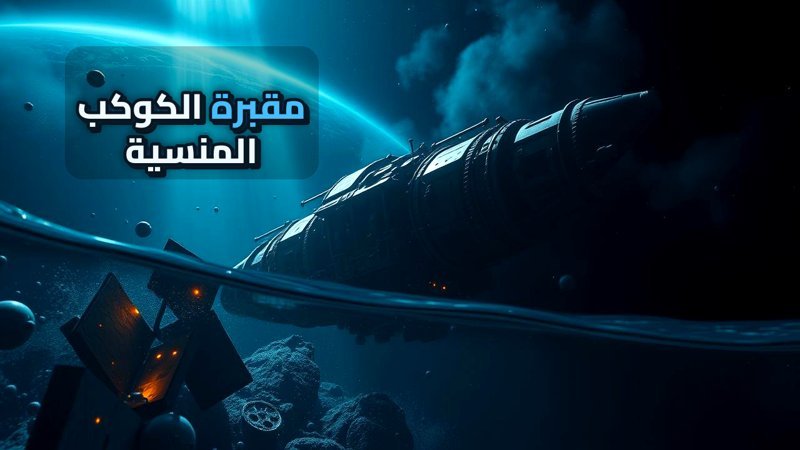
Point Nemo: The Most Remote Place on Earth and Its Space Graveyard
If you look at a map of the South Pacific, you will find a vast, featureless expanse. In this place, you are truly alone—so much so that the closest humans to you are not walking on Earth, but are astronauts orbiting 400 kilometers above in the International Space Station. This is Point Nemo, the most isolated location on our planet.
Navigate Content
The Pole of Inaccessibility
Point Nemo, or the ‘Pole of Inaccessibility,’ is the furthest point from any coastline in any direction. To reach it from the nearest inhabited land, you would need to travel approximately 2,700 kilometers across the open ocean. The region is an ‘oceanic desert’ where ocean currents do not reach, resulting in a lack of nutrients, fish, and birds. For more on mysterious locations, see Nan Madol: The Ancient City Built Over the Ocean.
A Digital Discovery
The irony of Point Nemo is that its discoverer never set foot on a boat. In 1992, Croatian-Canadian engineer Hrvoje Lukatela used advanced computer software to calculate the point furthest from land. He named it ‘Nemo,’ which is Latin for ‘no one’ and a nod to Captain Nemo from Jules Verne’s Twenty Thousand Leagues Under the Sea.
The Graveyard of Spacecraft
Because of its extreme isolation, international space agencies use Point Nemo as a ‘space graveyard.’ Decommissioned satellites and space stations, such as the famous Russian station Mir, are directed to crash here.
- It is far from human populations.
- Shipping lanes are non-existent.
- Marine life is virtually non-existent.
This ensures that heavy metal components settle safely on the seabed without risking human life.
The Mystery of ‘The Bloop’
In 1997, U.S. Navy microphones detected a powerful, low-frequency sound known as ‘The Bloop.’ Because of its proximity to the fictional city of R’lyeh from H.P. Lovecraft’s stories, many speculated about sea monsters. However, the NOAA later clarified that the sound was actually an ‘icequake’ caused by massive Antarctic icebergs cracking and collapsing. For other unexplained phenomena, check out The Tunguska Event: Siberia’s Mysterious Craterless Explosion.
An Aquatic Desert
The clarity of the water at Point Nemo is not a sign of a thriving ecosystem, but rather a lack of life. The ‘South Pacific Gyre’ acts as a barrier, preventing nutrient-rich waters from entering the area. Without these nutrients, microorganisms cannot survive, making it the most barren and lonely place in the ocean.
Frequently Asked Questions
Generated by AI Content Architect
About The Author