Mount Roraima: The Evolutionary Prison Where Life Defies Modern Rules
Mount Roraima: The Evolutionary Prison Where Life Defies Modern Rules
Navigate Content
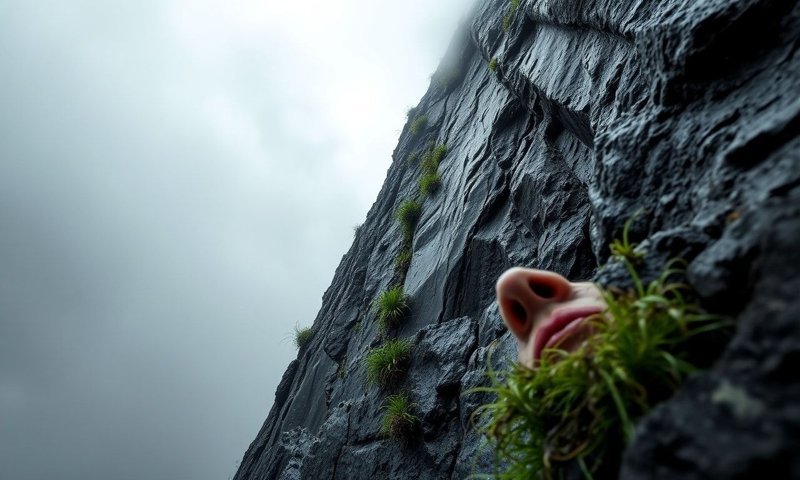
A Laboratory Sealed Before the Dinosaurs
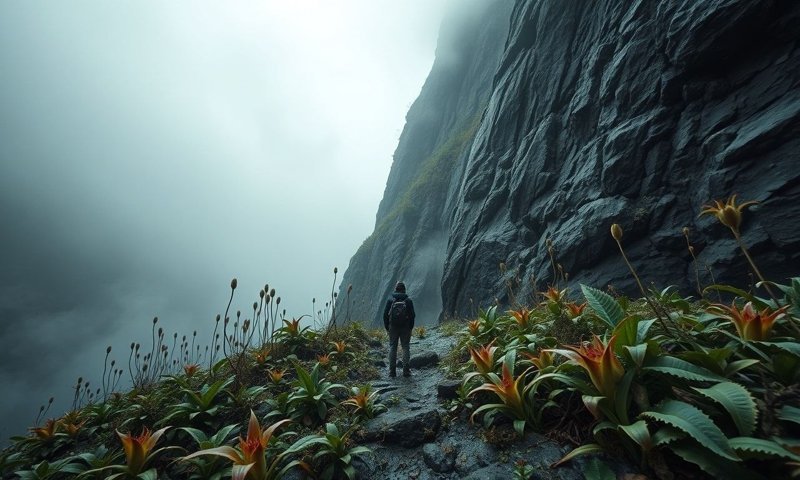
Two billion years of sheer isolation have rendered Roraima a place where conventional time seems irrelevant. The thirty-one square kilometers of flat summit are untouched by external evolution. Here, gravity feels different, and the rain actively washes life away from the dead, nihilistic soil. This environment forces life to make drastic choices:
- Carnivorous Necessity: Since the earth provides no nutrients, the native flora, like the Heliamphora pitchers, turned predator.
- Savage Digestion: These traps use scent to lure prey, relying on savage bacteria within the rainwater to decompose victims alive.
- Evolutionary Rebellion: This aggressive adaptation demonstrates a biological rebellion against environmental scarcity, choosing to steal life from the air.
This deep disconnection from the mainstream evolutionary path makes Roraima a crucial, if terrifying, study site.
The Black Roraima Frog: Survival Through Primitivism
Venture onto the black, moon-like rocks, and you might encounter the Black Roraima Frog, an amphibian that challenges everything we know about its class. This creature, no larger than a fingertip, has abandoned the defining characteristic of its kind:
- It Does Not Hop: Instead of leaping for escape, this frog rolls like a charcoal-colored ball when threatened.
- Clinging to Antiquity: It has remained virtually unchanged for millions of years, suggesting that survival in this brutal environment sometimes demands clinging to absolute primitivism rather than adapting toward ‘progress.’
This phenomenon forces us to question whether evolution always signifies forward movement, or if stasis is sometimes the superior strategy. For context on how evolutionary narratives can mislead, consider theories on ancient disasters like the Glass Rain Secret: How Tektites Killed the Dinosaurs, Not the Asteroid.
The Genetic Prison: Addicted to Hardship
The profound existential truth often ignored by popular accounts is that Roraima is less a ‘lost world’ and more a perfectly functioning ‘genetic prison.’ The organisms here are prisoners of an environment that has neither allowed them to leave nor allowed the outside world to easily intrude. This isolation has profound biochemical consequences:
- Alien Biochemistry: The lifeforms have become so specialized that they cannot tolerate success.
- Killed by Prosperity: If a Heliamphora plant were moved to the fertile Amazon rainforest, it would perish from “overfeeding.” They are genetically addicted to ecological poverty.
This is the ultimate form of specialization: an inability to cope with anything other than the environment that forged it.

The Primordial Threat Beneath the Surface
The mystery deepens when considering the subterranean world of Roraima. In the deep caves, scientists have found bacterial formations that defy current classification. These microbes:
- Feed exclusively on pure minerals.
- Exist in perpetual darkness under bizarre atmospheric pressure.
The fear is that these caverns conceal ancient pathogens—microbes that predate mammals entirely. Are we prepared for a primordial past to suddenly awaken? This unsettling idea contrasts sharply with the human tendency to believe we control our narrative, a mistake also seen in narratives about The Sumerian Enigma.
Frequently Asked Questions
About The Author