The Sumerian Enigma: Uruk’s Ruthless Rise to Empire from Nothing | Ancient History’s First Global System

0
image_1-8


The Sumerian Enigma: Uruk’s Ruthless Rise to Empire from Nothing | Ancient History’s First Global System

Five thousand five hundred years ago, the Sumerians possessed not a single gram of copper in their land, yet they inundated the world with merciless bronze weaponry. You are now confronting a profound enigma. How did a handful of mud-brick villages in Southern Iraq manage to dominate the resources of an entire continent without even possessing the stone to build a single wall? You might believe civilization began with a seed of wheat in fertile soil. The reality is that civilization began with the cry of a soldier defending a hijacked caravan. This is Uruk expansionism: the first global system in human history. A journey that will fundamentally alter your understanding of the state and borders, inviting comparisons to other complex ancient societies like The Black Pharaohs: Unveiling the Hidden History of Kush and Egypt.


The Paradox of Power from Poverty

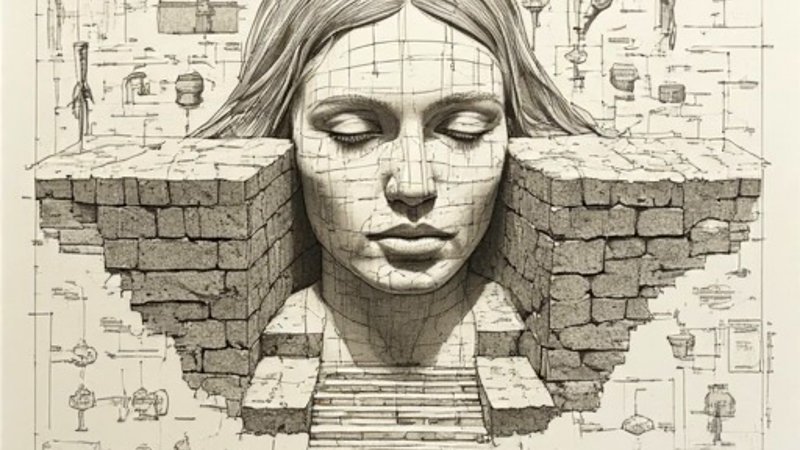
Imagine standing in the city of Uruk. You are surrounded by colossal fortifications. Temples tower toward the heavens. Yet, a hidden malady gnaws at the heart of this glory. The ground beneath your feet is impoverished. No timber for roofing beams. No metals for forging swords. No precious stones to adorn the crowns of kings. You reside in the wealthiest city in the world, yet it lacks the very essentials for survival. This contradiction forged the Sumerian behemoth. Desperate necessity birthed a ruthless ingenuity. Have you ever considered how poverty can fabricate an empire?

The Paradox of Power from Poverty


Uruk’s Colonial Blueprint: Replicating Power

Picture the map in your mind. The Sumerians did not wait for caravans to arrive; they chose to venture out into the world. The journey began northward along the Tigris and Euphrates rivers. These were not mere transient trade expeditions; they were acts of cultural and geographical replication. You are witnessing the birth of the ‘colony.’ At every strategic point along the trade routes, the Uruk expansionists established exact replicas of their mother city: the same pottery, the same cylinder seals, the same rigid administrative system. Why would a people insist on transplanting their entire identity to distant mountains thousands of kilometers away?

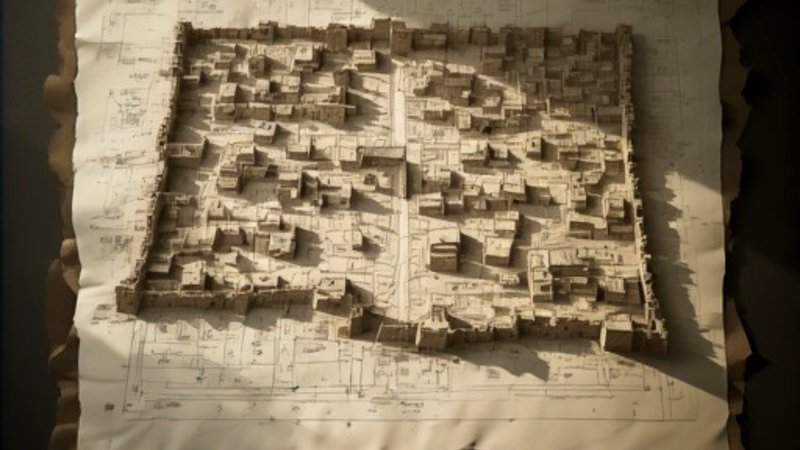
The answer lies in the archaeological strata of the site of Habuba Kabira in Syria. Here lies the irrefutable evidence. This city did not grow organically; it was constructed in a single stroke, a deliberate political and military decision. Straight streets, massive defensive walls, advanced sanitation systems—you are observing an armed commercial outpost. Initially, the inhabitants did not integrate with the locals; they lived in an isolated cultural ‘ghetto.’ Can you imagine the terror felt by the mountain dwellers as they watched these strangers erect an entire city within months? The scale and speed of this undertaking hint at an organizational prowess that echoes other remarkable ancient technological feats, such as those discussed in The Nebra Sky Disk: The Device That Rewrites Ancient Human History and Technology.


The Tools of Control: Proto-Currency and Surveillance

The central question that must now occupy your mind is the source of funding for all this. The answer is held within an unassuming piece of pottery called the ‘Beveled-Rim Bowl.’ You see a simple clay vessel; I see the first ‘currency’ in history. These bowls were mass-produced in standardized molds and used to distribute rations of barley to workers and soldiers. The Uruk expansionists invented mass production millennia before the Industrial Revolution, a feat of organizational genius that predates many documented technological leaps, much like the ingenious systems explored in Al-Jazari: The Arab Engineer Who Built Robots 800 Years Ago. They were not exporting pottery; they were exporting an organized system of dependency. If you believe you are free in your work today, remember that this rationing system is your distant ancestor.

In the archaeological layers of Tell Brak, we find something horrifying: the Eye Temple. Thousands of small statues featuring vigilant eyes watching everything. This reveals the Urukian psychology: control is maintained not only by swords but also by surveillance and psychological intimidation. You cannot escape the gaze of the state. Trade was not a mutual exchange of benefits; it was a continuous process of resource absorption.
The Tools of Control: Proto-Currency and Surveillance


The State as Parasite: Bureaucracy and Resource Absorption

Here, I present my personal interpretation, which may be rejected by traditional historians. In my view, the Uruk expansion was not a peaceful ‘cultural diffusion’ as textbooks suggest. Looking beneath the surface narrative, we find the first instance of ‘intercontinental armed robbery.’ Most scholars ignore the fact that these settlements were excessively fortified. Why would a merchant require walls four meters thick if his neighbors welcomed him? This is where the prevailing narrative crumples. The Uruk expansionists were cultural parasites, draining resources from the periphery to construct the palaces of the center. Do you see parallels with today’s global order? Tell me in the comments: do you believe empires change, or does only the facade shift? This aggressive expansion contrasts sharply with other historical models of societal development, such as the intriguing, seemingly peaceful existence of Peru’s Caral: The 1,000-Year Warless Civilization.

Consider the ‘Cylinder Seal.’ This small artifact was the Bronze Age equivalent of ‘blockchain.’ Every jar, every bag of wool, every metal ingot was stamped with the mark of the owner or administrator. You could not touch goods without authorization. Bureaucracy was born here. Expansion would have been impossible without this invention. The capacity to track property across vast distances is what created the ‘state.’ Without the seal, soldiers would have looted the caravans, and nothing would have reached Uruk. Do you feel gratitude for this bureaucracy, or is it the very thing that shackled human freedom forever?


The Inevitable Fall and Enduring Echoes

But death always lurks at the peak. In the upper strata of the Uruk settlements, we find an abrupt gap. Around 3100 BCE, everything vanished. The colonies were abandoned. The walls collapsed. Urukian pottery ceased appearing in the north. What happened? Did the local populations revolt against the colonizers? Or did the center in Uruk collapse economically, unable to sustain the guards’ salaries? You are witnessing the first collapse of a globalization system in history. When supply chains break, great cities fall like autumn leaves, a phenomenon eerily similar to the catastrophic events described in The Minoan Collapse.

You live in a world more similar to Uruk than you might imagine. We depend on resources crossing oceans. We utilize digital tracking systems analogous to cylinder seals. And we, too, establish economic ‘colonies’ to secure energy flows. History does not repeat itself, but it echoes its mistakes in a continuous loop.
The Inevitable Fall and Enduring Echoes


Frequently Asked Questions

What was the Sumerian Enigma?
The Sumerian Enigma refers to how the ancient city of Uruk, located in resource-poor Southern Iraq, managed to become a global power, dominating continental resources and establishing an empire without possessing essential materials like metals or stone within its own territory.
How did Uruk manage its expansion and resource acquisition?
Uruk expanded by establishing exact replicas, or ‘colonies,’ at strategic points along trade routes, replicating its culture and administrative system. They used ingenious methods like standardized ‘Beveled-Rim Bowls’ as proto-currency for worker rations, establishing a system of dependency and organized resource absorption.
What was the significance of the ‘Beveled-Rim Bowl’ and ‘Cylinder Seal’?
The Beveled-Rim Bowl was an early form of currency, mass-produced to distribute barley rations, symbolizing Uruk’s invention of mass production and a system of organized dependency. The Cylinder Seal acted as an ancient ‘blockchain,’ used to track property and goods across vast distances, making large-scale bureaucracy and state control possible.
What is the ‘intercontinental armed robbery’ interpretation of Uruk expansion?
This personal interpretation suggests that Uruk expansion was not peaceful cultural diffusion, but rather the first instance of ‘intercontinental armed robbery.’ This view is supported by the excessive fortifications of Urukian settlements in distant lands, implying resource extraction through military and political dominance rather than mutual trade.
What led to the collapse of the Uruk expansion around 3100 BCE?
The exact cause of the Uruk expansion’s collapse is an unsolved mystery. Theories suggest that local populations might have revolted against the colonizers, or the central Uruk economy might have collapsed, rendering it unable to sustain its distant outposts and maintain its supply chains.

Generated by AI Content Architect

About The Author

Leave a Reply

Your email address will not be published. Required fields are marked *