
Bimini Road Enigma: Atlantis Myth vs. Geological Reality
Bimini Road Enigma: Atlantis Myth vs. Geological Reality
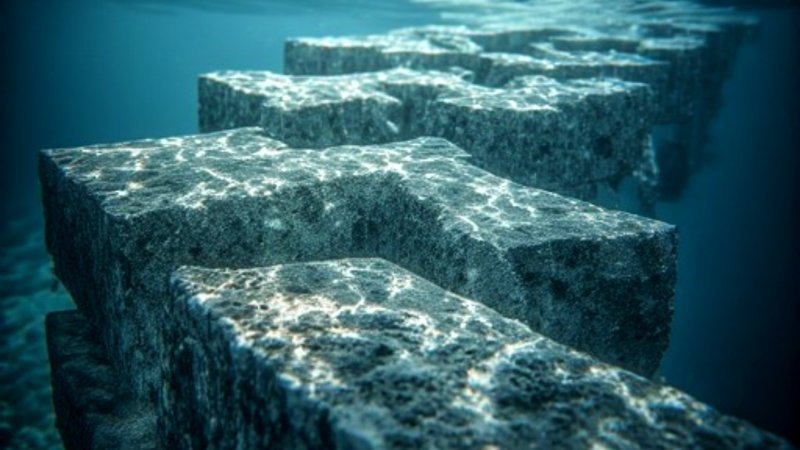
For decades, the perfectly aligned stones of the Bimini Road, stretching beneath the Bahamian waters, have fueled speculation about the lost continent of Atlantis. However, the true explanation lies not in ancient civilizations, but in the powerful, often deceptive, mechanics of Earth’s geology. This exploration strips away the romance of lost cities to reveal the hard science behind this famous underwater enigma.
Navigate Content
The Allure of Atlantis: Appearance vs. Reality
When divers first encountered the Bimini Road in 1968, the sight was intoxicating: eight hundred meters of rectangular blocks with right angles suggesting undeniable human intervention. This perfectly matched ancient prophecies regarding Atlantis reappearing near the Bahamas. Yet, the text argues that our eyes deceive us without analytical reasoning. What proponents see as paved stones, science identifies as ‘beachrock formations’—geological formations composed of accumulated calcium carbonate, formed in place, neither moved nor carved by ancient builders.
The Mechanics of Fracturing: Nature’s Engineering
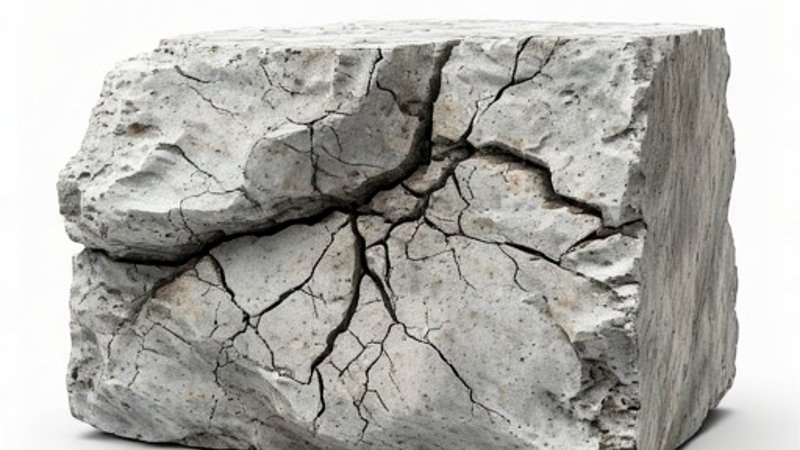
The key to the Bimini Road lies in biomechanics and tectonics. The sedimentary layers, created from millions of years of accumulated shell remains, are naturally layered horizontally. When subjected to immense, uniform tectonic pressure and the constant weight of the ocean, these brittle layers fracture along lines of molecular weakness. This process, similar to breaking a sheet of scored chocolate, results in longitudinal and transverse cracks intersecting at near-ninety-degree angles. This apparent ‘pattern’ is the result of shear stress fracturing, not stonemasonry.
Erosion, Weathering, and the Missing Evidence
A critical examination reveals the absence of features expected from advanced construction. The structure lacks:
- Traces of metallic tools.
- Chisel marks on the stones.
- Mortar binding the blocks.
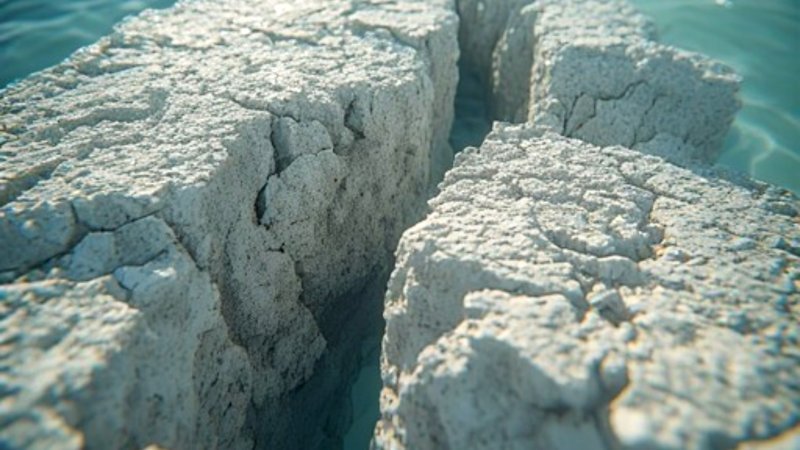
Instead, we witness mechanical weathering. Saltwater acts as the greatest sculptor, dissolving weak minerals within the cracks and widening the fissures until blocks separate, mimicking engineered joints. The rounding of the rock corners makes them resemble ancient Roman streets, a process caused by hydraulic pressure forcing abrasive sand through the joints.
The Commercialization of Myth and Contextual Bias
The insistence on a lost civilization is partly fueled by human arrogance—the belief that structured appearance necessitates human creation—and partly by economics. The Atlantis myth generates significant tourism revenue for the Bahamas, placing science at odds with investment. This bias is evident when comparing Bimini to similar geological sites, such as Australia’s Mosaic Pavement, which exhibits the same fracturing but lacks the dramatic context of the Bermuda Triangle. Separating emotion from geology reveals the structure for what it is: fractured rock.
The Definitive Test: Core Samples and Inclination
The final evidence against Atlantean origins lies within the stone itself. Core samples reveal undecayed shells and beach sand dating back to eras before human civilization existed. Furthermore, the slight slope of the blocks towards the sea aligns perfectly with ancient shoreline geometry, a detail that construction by an advanced society would likely not adhere to so precisely. This confirms the structure is a natural relic shaped by deep time and pressure, not a lost city’s entrance. If you are intrigued by geology masquerading as mystery, you might also explore how natural forces shaped other historic anomalies, like the secrets behind The Pyramid of Kukulcan.

Frequently Asked Questions
Generated by AI Content Architect
About The Author