Peru’s Caral: The 1,000-Year Warless Civilization and Its Terrifying Secret

Peru’s Caral: The 1,000-Year Warless Civilization and Its Terrifying Secret
For millennia, we have accepted that civilization requires conflict, walls, and coercion. Yet, the discovery of the Norte Chico civilization in Peru’s Supe Valley shatters this narrative. Standing alongside the Egyptian pyramids in age, the six colossal structures of Caral were built by a society that flourished for over twelve centuries without a single dagger or arrowhead found. This is the story of engineering genius, radical economic cooperation, and the unsettling question: what replaces the sword when true dissent is impossible?
Navigate Content
The Architecture of Peace: Engineering Without Conflict
Imagine the scale: pyramids spanning the area of two football fields, built concurrently with the Giza structures. Yet, Caral lacked the familiar hallmarks of contemporaneous power centers—no evidence of a despotic pharaoh, no glorification of military might. Archaeologist Ruth Shady uncovered a different kind of treasure: shicras, woven bags filled with stones, used ingeniously as earthquake shock absorbers within the foundations. This demonstrates advanced engineering mastery long before the wheel or metallurgy, proving their focus was on permanence and structure, not destruction.

The Economic Miracle: Trade as the Binding Force
If the Norte Chico people weren’t fighting, what occupied their vast labor force? The answer lies in a groundbreaking mutual dependency:
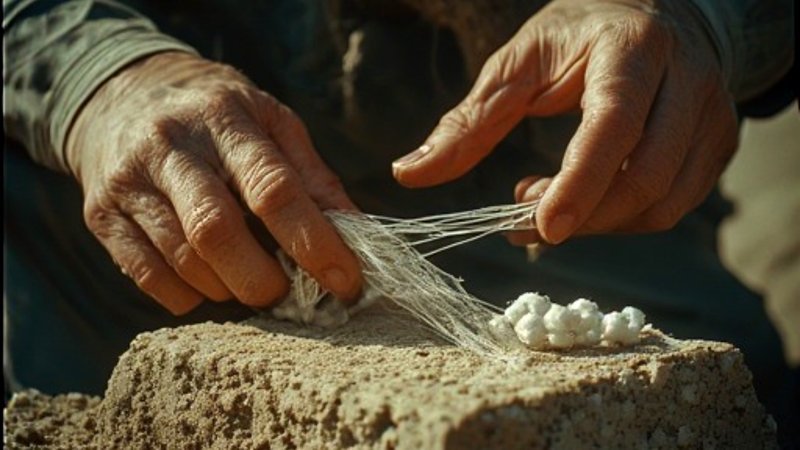
- Cotton for Fish: Inland communities cultivated cotton, which they traded to coastal dwellers.
- The Exchange: In return, the coast provided essential protein via the processed cotton, which was fashioned into strong fishing nets.
This cycle of mutual benefit, where necessities were guaranteed through shared productivity rather than conquest, sustained the builders. It raises a profound modern question: Can we truly trust a neighbor based solely on reciprocal need?
The Temples of Sound, Not Slaughter
The spiritual life of Caral reveals a society oriented toward internal harmony. Instead of reliefs depicting battlefield victories, excavators found instruments of celebration and ritual:
- Thirty-two flutes crafted from pelican and nandou bones.
- Ten trumpets made from deer and llama bones.
Furthermore, city layouts featured sunken, circular plazas compelling citizens to face each other directly, suggesting an authority rooted in collective spiritual experience rather than an elevated, dictatorial platform. This reverence for sound contrasts sharply with the monuments of violent empires.
The Ideological Iron Fist: When Silence Equals Control
While the lack of weapons is compelling, a deeper analysis suggests a terrifying alternative to martial law. This author posits that the absence of swords implies not a true utopia, but an effective totalitarian system enforced by religion. If the priests controlled the interpretation of astronomical events and natural cycles (like floods), they effectively controlled compliance. This ideological control served as the ultimate protective wall, eliminating the need for armies. This forces us to confront whether peace achieved through pervasive indoctrination is truly preferable to open conflict, where the enemies are clearly defined. Compare this silent control to the authoritarian structures explored in articles like Stanford Prison & Milgram: Are You a Monster Under Authority’s Spell?
The Sudden Silence and Collapse
The civilization endured for nearly 1,200 years—a stability unmatched by powers like the Roman Empire. Then, just as suddenly as it arose, it vanished, yielding its massive pyramids to the dunes. There was no sign of invasion or destruction. Scholars believe long-term climate change, specifically devastating El Niño cycles that dried rivers and destroyed crops, caused the collapse. When the Earth failed to provide, the priests lost their divine mandate, and the carefully constructed social contract based on religious compliance dissolved, illustrating how brittle even the most enduring social orders can be.

Frequently Asked Questions
Generated by AI Content Architect
About The Author