The Minoan Collapse: Mystery of Flying Palaces, Lost Elevators, and Thera’s Fury

The Minoan Collapse: Mystery of Flying Palaces, Lost Elevators, and Thera’s Fury
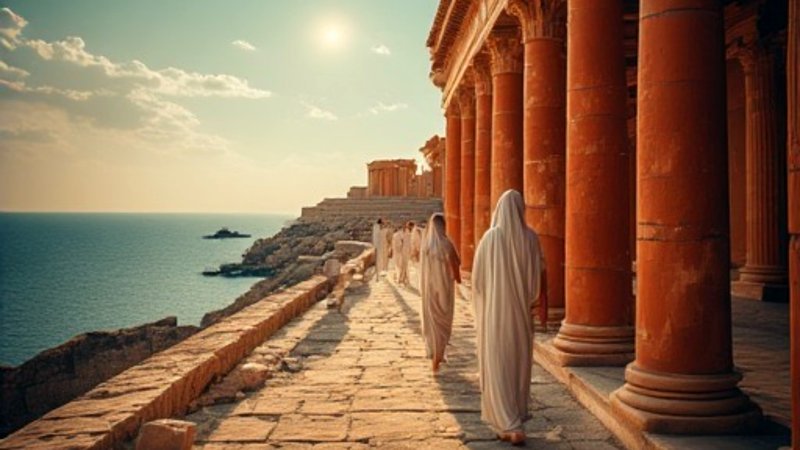
The Minoan civilization, flourishing on Crete, represents a profound historical anomaly—a Bronze Age society seemingly operating a millennium ahead of its time. Featuring multi-story palaces, complex engineering, and advanced sanitation, their sudden, near-total disappearance continues to baffle historians. We explore the seductive theories surrounding their engineered marvels, like rumored elevators, and the catastrophic natural event that may have served as nature’s ultimate debt collector.
Navigate Content
A City Out of Time: Engineering Marvels of Bronze Age Crete
It’s a widespread error to anchor technological progress solely to the Industrial Revolution. The Minoans of Crete exhibited startling sophistication. The Palace of Knossos is described not just as architecture, but as a ‘sophisticated stone computer.’ Scholars point to evidence suggesting they mastered vertical construction and transportation:
- Vertical Architecture: Palaces reached five stories high, far exceeding contemporaries.
- The Elevator Mystery: Researchers highlight precise vertical shafts and pathways interpreted as manual elevator systems using intricate pulley and rope mechanics.
- Sanitation Ahead of Its Time: They enjoyed sewage systems, flushable toilets, and hot baths, demonstrating advanced hydraulic engineering.
This engineering prowess raises questions about when and how they acquired such mechanical and physical knowledge.

Hubris and the Ticking Time Bomb: The Fatal Flaw
Despite their genius, the Minoans committed what the author terms a ‘fundamental existential error’: technological hubris. They trusted their mastery over nature too deeply. They built no protective walls, believing the sea was their shield, and failed to prepare for instability because they assumed technology had rendered them masters of their environment. This laid the groundwork for systemic collapse. While the Thera eruption was the catalyst, the true cause was:
- The disintegration of the social order when essential services failed.
- Loss of faith in the Minoan intellect when the ‘elevators stopped functioning.’
- The failure to see nature as a partner, viewing it instead as an adversary that could be fully controlled.
Thera Erupts: The Sky Darkens and the Sea Rises
The civilization’s zenith was violently interrupted by the cataclysmic eruption of Thera (Santorini). This event was geological violence on an unprecedented scale, equal to hundreds of atomic bombs. The immediate effects were devastating:
- The explosion sent an ash column high into the atmosphere, obscuring sunlight for years and annihilating agriculture.
- The most ‘fatal blow’ came from the ocean: a tsunami estimated at fifty meters high surged toward Crete.
- The powerful Minoan fleet, the backbone of their global trade, was instantly splintered, and coastal palaces were buried under silt and devastation.
In that moment, their advanced art and engineering proved utterly useless against raw natural power.
The Silence After the Storm: Lost Language and Lingering Questions
Following the combined assault of volcanic ash and the tsunami, Crete entered a deep silence. Agriculture failed, trade ceased, and the survivors faced an unrecognizable world. The collapse was absolute, severing the cultural thread connecting the Minoans to the future. This rupture is why their secrets remain locked away:
- Their written language, Linear A, remains completely undeciphered because the context and educators disappeared entirely.
- No detailed historical records or explanatory texts survived to pass on their advanced knowledge.
The author speculates that this highly advanced, suddenly vanished civilization may be the real-life inspiration for Plato’s legend of Atlantis, though the definitive truth remains buried.
Frequently Asked Questions
Generated by AI Content Architect
About The Author